

Mold Inspection & Testing Your Next Step in Central Florida


Visible growth, a musty odor, or a history of moisture can leave you unsure where to start. Talk with Hugo about your concerns and the assessment or remediation steps to discuss with qualified providers. Mold Detectives provides mold inspections for Hugo.
Call with your St. Cloud or Central Florida property address and the question you need answered. Assessment arrangements are discussed before any appointment is confirmed.
What have you noticed?
Describe the conditions without trying to identify the mold or its cause yourself.

Visible growth
Share where you see it and whether the material has been wet. Appearance alone does not identify a mold species.

A persistent odor
Describe the room, timing, and any connection to water damage or the HVAC system.

Previous water damage
Explain the source, when it occurred, and what cleanup or drying has already taken place.
A report or project requirement
Tell us whether an assessor, property manager, or other professional has requested specific information.
Start with the question you need answered.
An assessment is useful when it has a clear purpose. Share the concern, moisture history, previous work, and the decision you are trying to make.
Visible growth or persistent moisture
Describe where you see a concern, when you first noticed it, and whether a leak or condensation problem is known. Photographs can help explain the location, but appearance alone cannot identify a mold type, establish the full extent, or answer health questions.
Suspected concealed conditions
Tell the qualified assessor about odors, past water damage, inaccessible areas, and any previous repairs. The agreed assessment should explain access limits and whether further investigation is appropriate. Destructive access is not automatically part of every visit.
A remediation plan or protocol
If remediation may be needed, ask who prepares the assessment findings or protocol, what the document covers, and how it will be used to define the work. Remediation is a separate service with its own scope and authorization.
After remediation
Discuss whether independent verification is required, who provides it, and what criteria or documents apply. A verification visit and a general inspection serve different purposes. Hugo does not independently clear its own remediation work where independence is required.
Get the right next step for the property.

Describe your concern
Share the location, visible conditions, moisture history, and any existing report.

Discuss qualified assessment
Ask who will perform the assessment, whether sampling is useful, and what the written findings will explain.

Review the findings and work
Use the assessment information to discuss remediation and any independent follow-up required.
What sampling can—and cannot—tell you
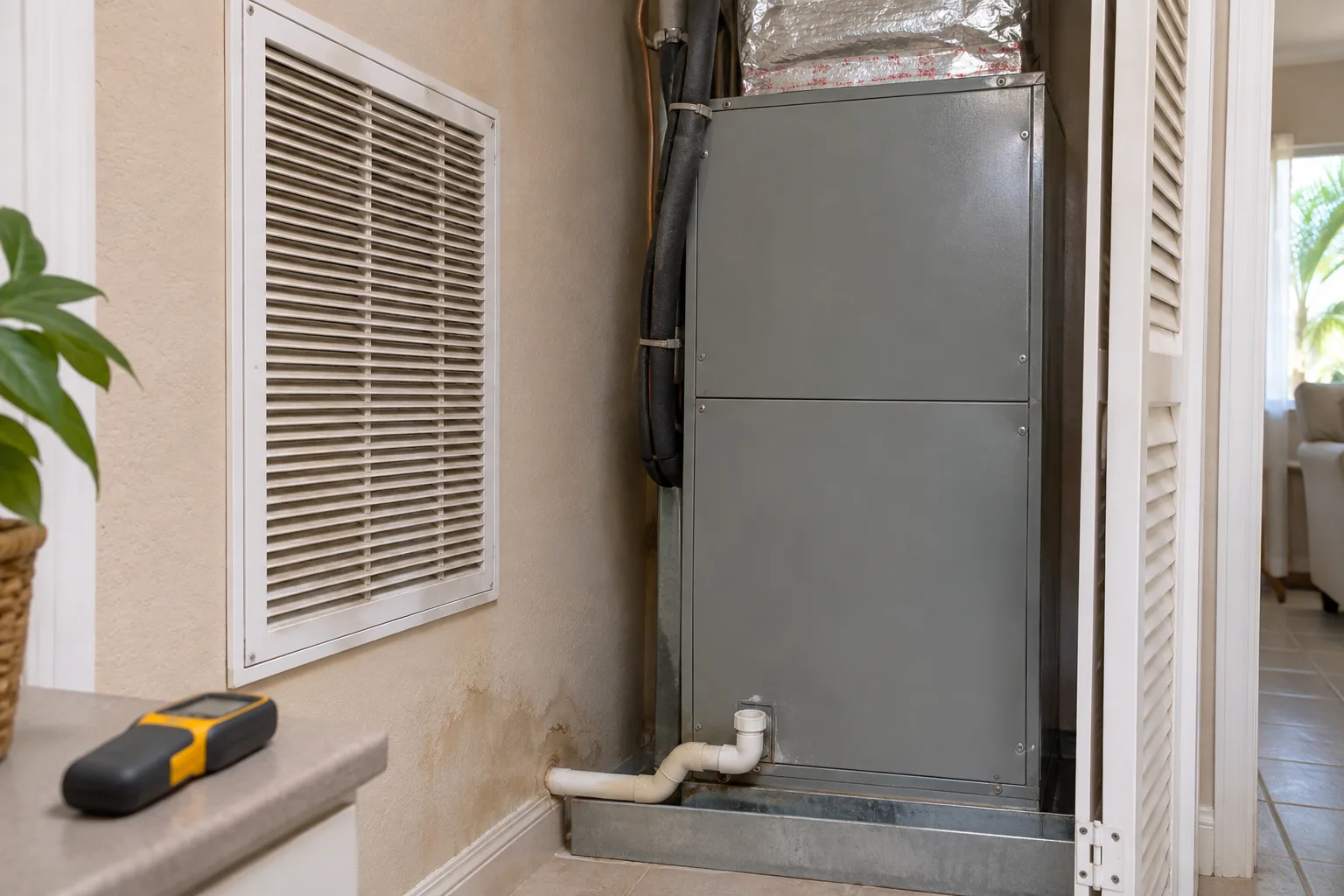
Sampling is not automatically needed in every situation. A qualified assessor can explain what a proposed test may clarify, its limits, and how the results relate to the property.
Understand mold remediationTesting should answer a useful question.
Not every mold concern requires sampling. The qualified assessor determines whether testing is appropriate and explains what the results can—and cannot—show.
Sampling and interpretation
Ask why a sample is proposed, what locations or materials are involved, who analyzes it, and who explains the result. A laboratory report must be interpreted in context; it is not a substitute for understanding moisture, materials, access, and the purpose of the assessment.
Limits of a result
A sample represents the conditions and method involved in that sampling. It does not by itself establish every concealed condition, diagnose an occupant, or guarantee future indoor conditions. Ask which questions remain unanswered and what follow-up is recommended.
Separate professional roles
Assessment, laboratory analysis, remediation, source repair, and independent verification may involve different professionals. Confirm the exact provider, applicable credential, responsibilities, and engagement terms before authorizing any stage. Hugo Fernando Rafael Licona Garcia holds Florida mold-remediator license MRSR5171; it is not an assessor credential.
Ask these questions before scheduling.
Who performs the assessment?
Confirm the qualified provider, applicable credentials, the work included, and who supplies the written report.
What does the report explain?
Ask how findings, moisture conditions, testing limits, and recommended next steps will be communicated.
Who checks the completed work?
Discuss any independent verification or follow-up with the appropriate assessor and responsible providers.
Prepare for the visit and the next step.
You can make the discussion more useful without disturbing suspected growth or entering an unsafe area.
Information to gather
Keep leak and repair dates, safe photographs, previous reports, relevant building information, and access instructions together. Identify the authorized owner or manager and any areas that cannot currently be accessed. Leave medical histories out of an online request.
Deliverables to clarify
Ask what written findings you will receive, who explains them, whether sampling or a protocol is included, and how recommendations lead to a separate work scope. Keep reports and later remediation records together so the responsible providers can follow the same information.
Cost and scheduling
Assessment scope, building size, access, sampling decisions, reporting, and follow-up affect the provider’s quote and schedule. Confirm who prices and performs each service. An inquiry is the start of arranging help, not a diagnosis or a guarantee that the property is cleared.
Questions about mold inspection & testing
Does every mold concern require testing?
No. The need for testing depends on the purpose of the assessment and the property conditions. A qualified assessor should explain the recommendation.
Can you identify mold from a photograph?
A photograph can help describe a concern, but it does not establish the mold species, extent, or the work required.
Is this a medical assessment?
No. Property assessment and remediation do not diagnose health conditions. Discuss personal health concerns with a qualified healthcare professional.
Can I request help if I do not have a report?
Yes. Describe what you have noticed and any moisture history so the appropriate assessment or restoration next step can be discussed.
Does sending a request book an independent mold assessment?
No. A request begins a discussion of the concern. Confirm the assessment provider, applicable credentials, scope, written findings and independence requirements before scheduling an assessment.
Who prepares the report and checks completed remediation?
Before authorizing an assessment, identify the report’s author and agree on its contents. Any required independent verification needs a responsible provider and agreed criteria of its own. Remediation records document the work; they do not replace the assessment findings.
Describe what you have noticed.
A short description is enough to start. You do not need to send medical information or sensitive documents.