
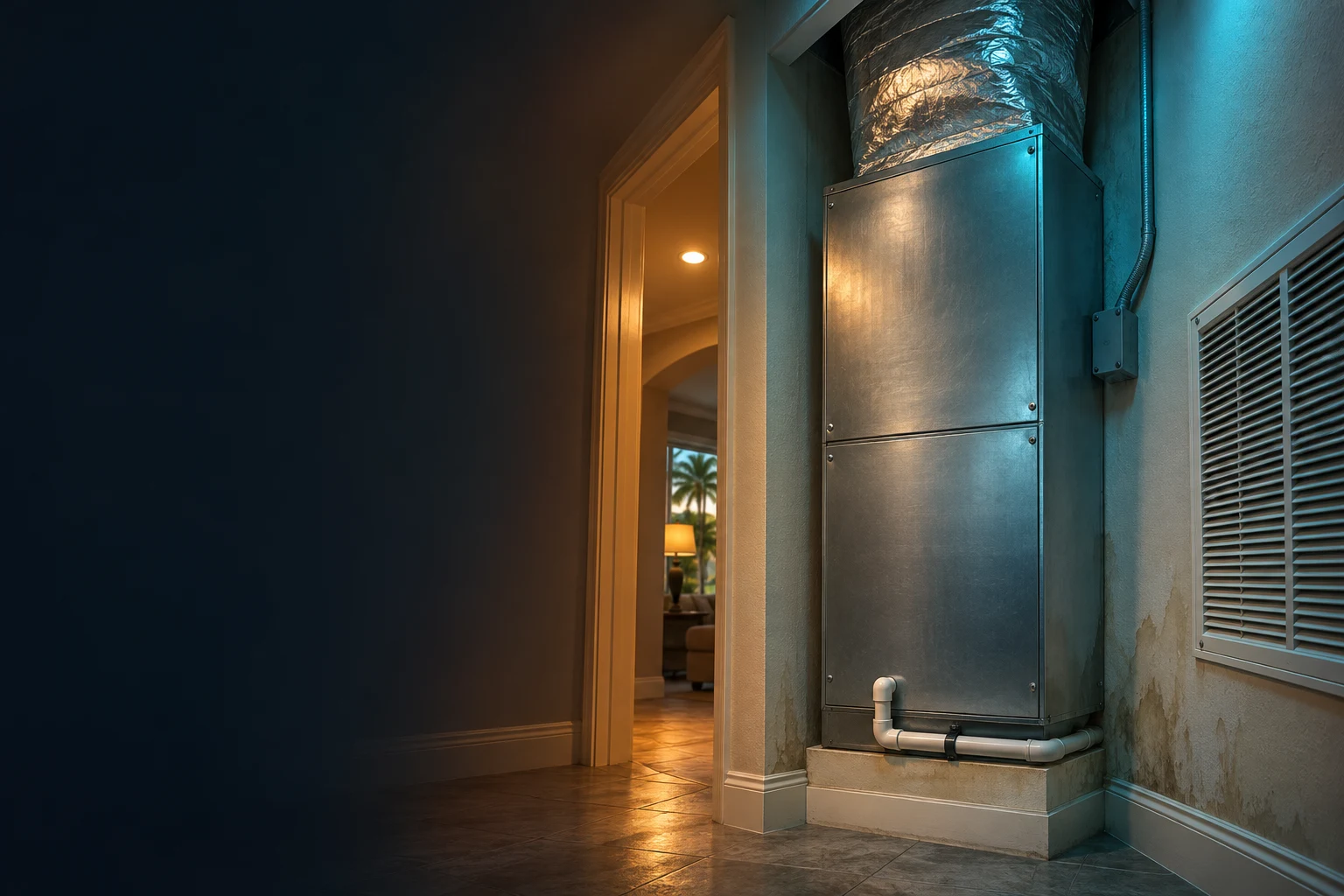
HVAC Mold Remediation in Central Florida


Concerns at an air handler, return, or connected materials need a clear review of the affected components. Discuss assessment, moisture conditions, remediation, and any separate mechanical repairs with Hugo.
Start with the affected component.
A concern in one area does not establish that the entire system is affected.
Air handler & cabinet
Describe visible conditions, condensate history, and where the concern was found.

Returns & accessible surfaces
Discuss the location and materials before deciding what should be cleaned or replaced.

Nearby building materials
Walls, ceilings, or other materials affected by moisture may need their own restoration review.

Existing assessment
Share relevant findings and recommendations so the responsible providers can coordinate.
Clarify the system and the surrounding damage.
Concerns near an air handler, grille, duct, or condensate line can involve building materials, mechanical conditions, or affected system components. The work should be matched to what is actually found.
Air handlers and nearby materials
Describe the concern around the cabinet, closet, drain pan, adjacent ceiling, or wall materials. An HVAC professional may need to evaluate mechanical operation, condensate drainage, insulation, or other system conditions. Remediation addresses the affected materials within an agreed scope.
Grilles, ducts, and insulation
Material and construction matter. Some accessible components may be suitable for cleaning; wet or mold-affected porous insulation may require a different decision. Do not assume every affected component can be cleaned, or that ordinary duct cleaning resolves a moisture problem.
Leaks and condensation
Report known AC leaks, condensation, drain problems, or humidity history. Remediation and correction of the underlying moisture condition should be coordinated. Mechanical repairs, refrigerant work, system replacement, and commissioning remain separate qualified-trade responsibilities.
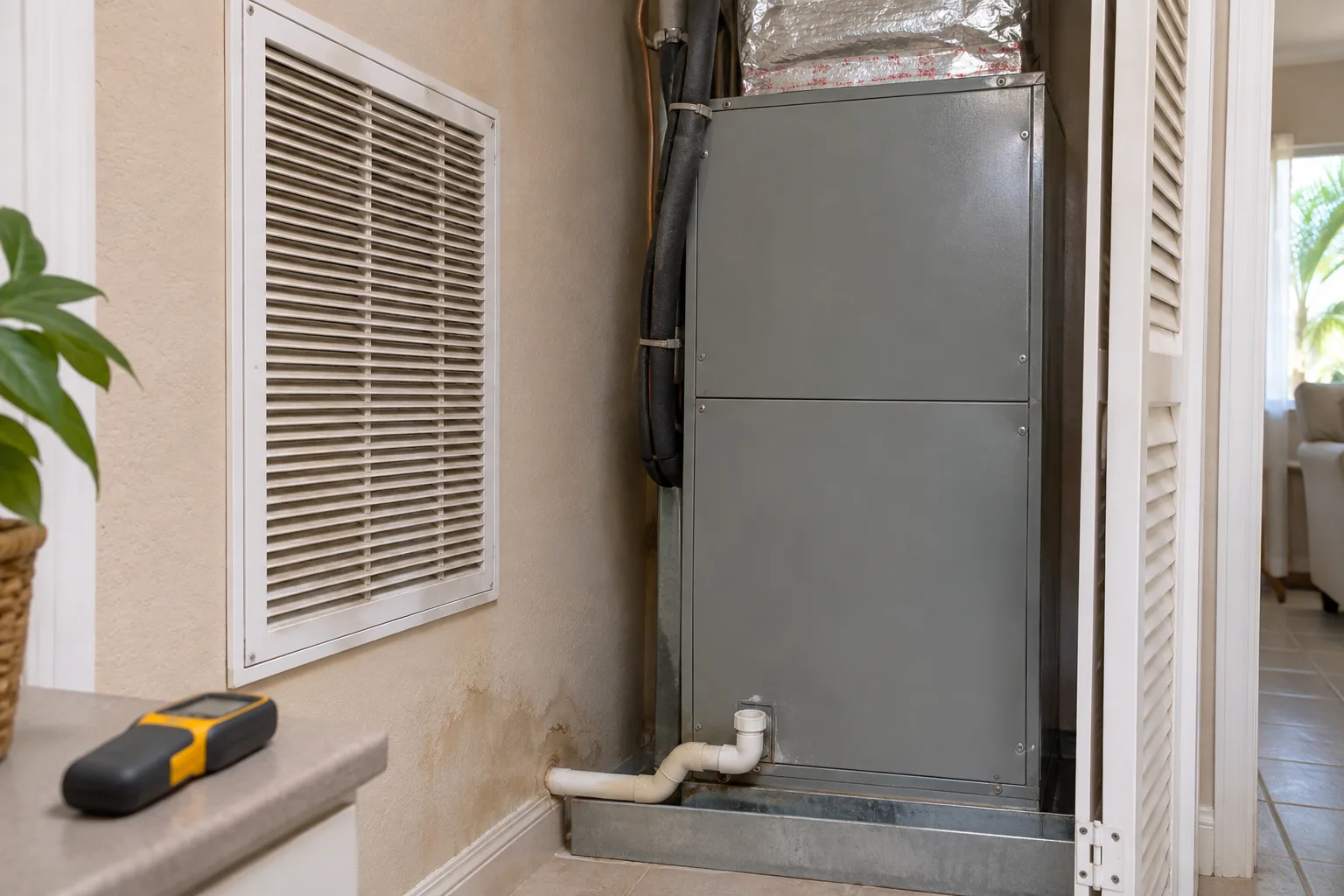
Address moisture as part of the plan.
Cleaning alone does not explain why a component became wet. Discuss condensate, leaks, or other conditions with the appropriate provider so source issues and affected materials are considered together.
Discuss mold assessmentCoordinate the work around the system.

Review the concern
Identify affected components, moisture history, and whether a qualified assessment is needed.

Agree on the work and roles
Discuss access, cleaning or replacement decisions, containment needs, and qualified trade responsibilities.

Review completion and follow-up
Keep work records and discuss any independent verification or mechanical checks required.
Different materials may need different decisions.
Cleaning or replacement
Suitability depends on the component, material, condition, access, and the qualified recommendations for the work.
HVAC performance
Mechanical diagnosis, repair, and system performance questions belong with the responsible HVAC professional.
Records and verification
Ask what will be documented and who will review any required assessment or completion criteria.
Know who is responsible for each stage.
Assessment, remediation, HVAC service, and any independent verification need clear boundaries and a shared understanding of the property.
Assessment and planning
Confirm whether a qualified independent assessor is needed and what information defines the work. Discuss the system areas and nearby building materials included, access limitations, containment, occupancy, and responsibility for specialist decisions.
Controlled work
The agreed remediation may involve work-area controls, appropriate filtration, controlled removal, and material-specific cleaning. Chemical treatment is not a universal solution and does not replace source correction or removal of unsuitable materials.
System operation and access
Avoid opening equipment or disturbing suspected growth to investigate. Ask the qualified project team how system operation, access, occupant needs, and affected zones should be handled before work begins. Hugo does not provide a medical diagnosis or an air-quality guarantee.
Review the documentation and follow-up.
A useful project record connects the initial findings with the work actually performed and the unresolved items handed to another provider.
Records to keep
Keep assessment information, safe photographs, affected-component notes, access limitations, work records, removal and cleaning details, mechanical-service findings, and any independent verification together. Ask which provider explains each document.
Cost and scope questions
System accessibility, component construction, affected area, containment, removal, cleaning, specialist involvement, and follow-up can affect cost and timing. Clarify who quotes mechanical repairs and replacements separately from remediation.
See a past mold and HVAC project
Explore a Jacksonville project involving affected building materials and HVAC components. Call with your Central Florida address to discuss current service availability. Read the Jacksonville mold and HVAC project.
Questions about HVAC mold remediation
Is this routine duct cleaning?
No. A mold concern requires a defined review of affected components and responsibilities. Routine cleaning and mechanical service are different work.
Does every component need replacement?
Not necessarily. The decision depends on the material, condition, accessibility, and recommendations for the specific project.
What does completion verification tell me?
Ask who reviews the completed work, which criteria apply and what the records establish. Verification addresses the agreed scope; it does not provide a blanket medical or future air-quality guarantee.
Should I send a photo?
A photo can help explain where you noticed the concern. It cannot replace an assessment or establish the full extent of the work.
What if the AC is leaking as well?
Report the water damage along with the suspected mold. The qualified HVAC provider handles the mechanical or condensate source; affected building materials and remediation require a separately defined scope.
Review AC leak water damageShould I open the air handler to investigate?
Do not open equipment or disturb suspected growth to investigate. Describe what you can safely observe, then ask the qualified project team how access and system operation should be handled.
Tell us where the concern appears.
Include the component, moisture history, and any HVAC or mold assessment already completed.