

Reconstruction After Fire, Water & Storm Damage in Central Florida


Once the immediate damage is addressed, the next step is understanding what needs to be rebuilt. Talk with Hugo about the affected areas, completed mitigation, and the repair work ahead.
Call with your Central Florida property address, completed mitigation details and the repairs still needed.
Start with the condition of your property.
A repair plan depends on what happened, what has been removed, and whether the property is ready for rebuilding.

After water damage
Review drying information, opened assemblies, flooring, walls, and other affected materials.

After fire damage
Discuss completed fire cleanup and the remaining repairs identified by the responsible professionals.

After storm damage
Review storm protection and cleanup, source repairs, and the work needed before permanent finishes.

Homes & businesses
Identify occupancy, access, scheduling needs, and the people authorized to approve work.
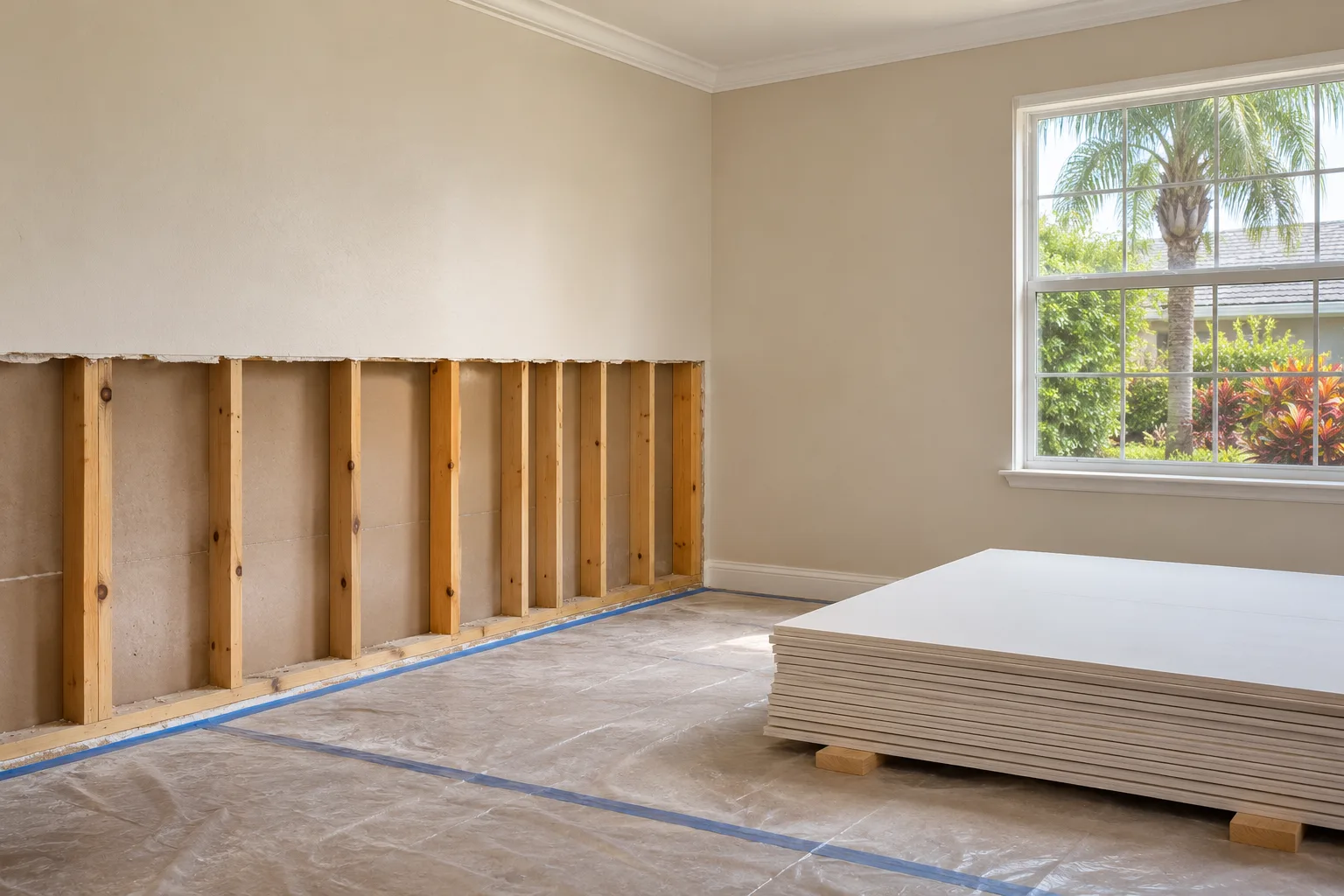
Drying and rebuilding are different stages.
Installing new finishes too early can conceal unresolved moisture or other damage. The repair team needs the relevant mitigation information and a clear handoff before work proceeds.
Review water damage restorationFrom completed mitigation to a repair plan.
Rebuilding starts with understanding the property’s current condition. Cleanup, drying, source repair, assessments, and construction may involve different providers and separate agreements.
Review what has already been done
Share mitigation records, moisture information, material-removal notes, photographs, and any specialist findings. Identify rooms that remain open or unfinished and any unresolved water source, electrical concern, roof issue, or structural question.
Confirm the responsible contractor
Before authorizing construction, confirm the exact contracting company, applicable licenses, insurance, qualified trades, and who is responsible for permits and inspections. Ask which work is performed directly and which providers are engaged separately.
Agree when the property is ready
New finishes should not conceal unresolved conditions. Discuss the information needed before walls, flooring, cabinets, insulation, or other assemblies are closed or replaced. Readiness depends on the affected materials and the requirements of the responsible professionals.
Mitigation, reconstruction and specialist trades
Mitigation
Cleanup, drying and records of affected materials establish the restoration work already performed.
Reconstruction
The agreed repair scope and finishes follow the property’s readiness for the planned construction.
Specialist trades
Source repairs, regulated work, permits and inspections belong with the responsible qualified providers.
Turn remaining damage into a repair plan.

Review the property
Share damage photographs, mitigation records, and the areas that still need attention.

Define the repairs
Confirm materials, responsibilities, permits, estimate details, and how changes will be approved.

Review completion together
Use an agreed completion list to discuss the finished work and any remaining items.
Make the written scope specific.
A useful repair estimate connects the affected rooms with the materials, quantities, finishes, and responsibilities being agreed.
Rooms, assemblies, and finishes
Identify which walls, ceilings, flooring areas, trim, cabinets, and other components are included. Discuss matching existing finishes, availability, owner selections, and any allowances. A repair proposal should make exclusions as clear as included work.
Permits and inspections
Confirm the authority for the exact address and who handles each required application, inspection, and approval. Requirements depend on the work and jurisdiction. Restoration documentation is useful context but does not replace a required permit or trade inspection.
Changes after opening materials
Previously concealed conditions can change the work. Agree how additional findings are photographed, explained, priced, and authorized before work proceeds. Identify who can approve a change when the owner is away or a manager is coordinating the property.
Property access and daily use
Discuss residents, guests, tenants, business operations, keys, utilities, work hours, delivery access, and protected areas. Occupancy and reopening decisions depend on actual conditions and responsible authorities; a universal completion or reopening date cannot be promised.
A written plan should answer these questions.
What is included?
Identify the rooms, materials, quantities, and finishes included in the estimate, along with exclusions.
Who handles approvals?
Clarify permit responsibility, qualified trade involvement, access, and who can authorize changes.
What affects the schedule?
Material availability, inspections, access, trade coordination, and newly discovered conditions can change timing.
Know what affects cost and scheduling.
Repair scope, materials, qualified-trade availability, inspections, access, and newly discovered conditions can all affect the project.
Estimate and payment questions
Review quantities, material selections, exclusions, payment milestones, change procedures, and any separate trade charges. Insurance estimates and the construction agreement may have different purposes; ask for clarification before signing.
Coordination with insurance
Photographs, mitigation records, estimates, and documented changes can help explain the work. Your carrier determines policy coverage, claim approval, and payment. Confirm your responsibilities under the actual agreement rather than assuming every repair will be reimbursed.
Completion and remaining items
Use an agreed walkthrough and completion list to review the finished work, inspections, documents, and unresolved items. Confirm whom to contact about questions and what written terms apply to the work performed.
Questions about reconstruction
When can rebuilding begin?
The property must be ready for the planned work. That may require completed mitigation, source repairs, required inspections, and agreement on the repair scope.
Who will perform the construction work?
Confirm the exact contracting company and the qualified providers responsible for each trade during the project review, before signing an agreement.
Will insurance pay for the repairs?
Your insurer decides coverage under your policy. Repair estimates and damage records can support that discussion but do not determine the outcome.
What if more damage is found?
Discuss how newly discovered conditions will be documented and priced, and who must approve a change before additional work proceeds.
What should I bring to a reconstruction review?
Bring mitigation records, photographs, source-repair findings, existing estimates and a list of affected rooms or finishes. Describe unresolved conditions, access needs and who can authorize the work.
Can reconstruction begin while materials are still wet?
New finishes should not conceal unresolved moisture. The responsible project team needs relevant drying and condition information before agreeing which work can proceed.
Tell us what still needs repair.
Share the loss type, location, completed cleanup, and the areas you want reviewed.