Keep clear of unsafe water
Stay away from water near outlets, panels, appliances, wiring, sagging ceilings, or unstable materials. Call 911 or the appropriate emergency authority for immediate danger.
Moisture readings, planned air movement, LGR dehumidification, progress monitoring, and drying documentation for water-affected building materials.
For homes, businesses, rentals, managed properties, and commercial facilities throughout Central Florida.
For electrical hazards, structural collapse, gas odor, active fire, medical danger, or unsafe standing water, call 911 or the appropriate emergency authority first.
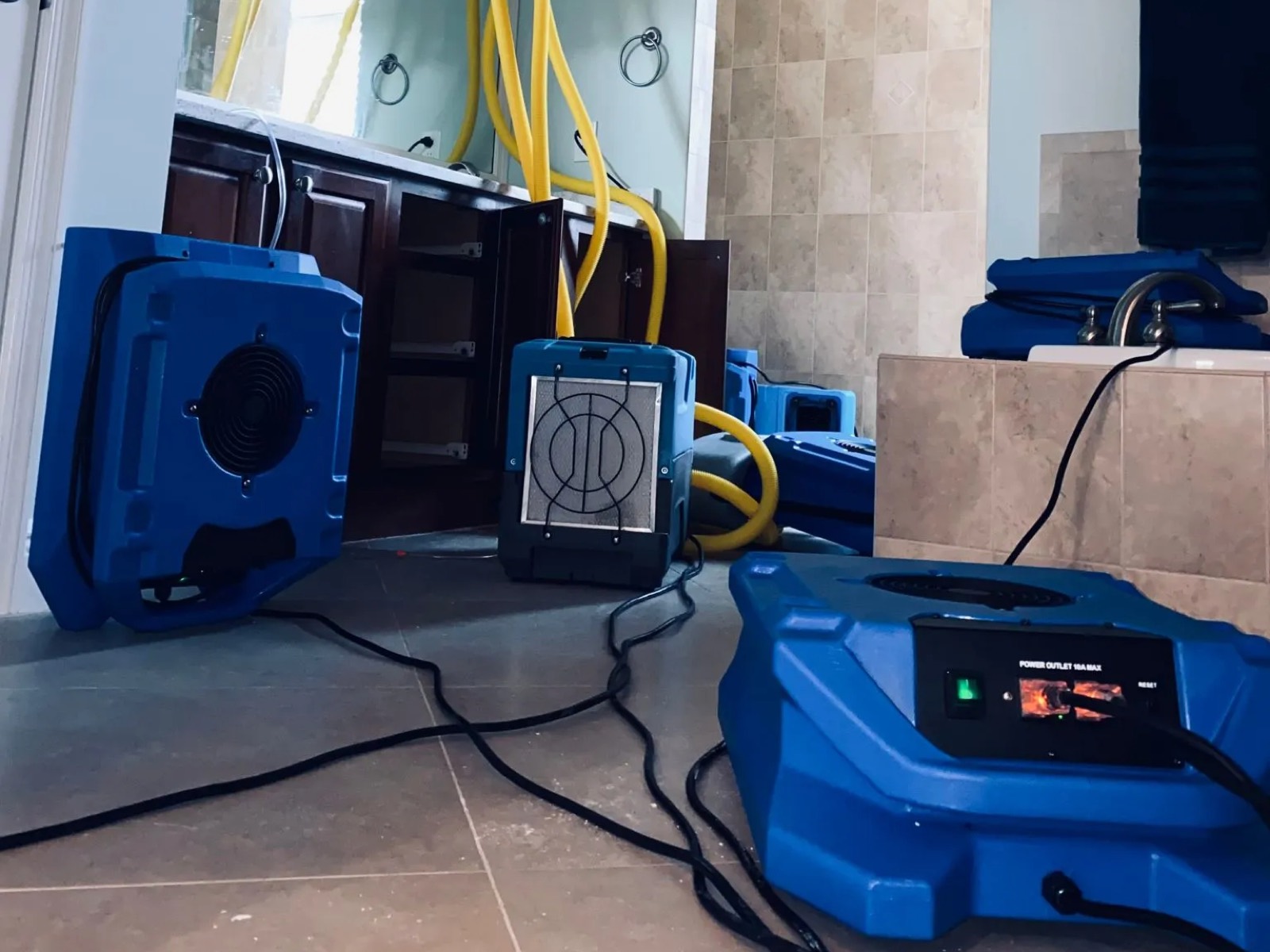
24/7 Emergency Line
Water-damage intake is available day and night.
Dispatch Within 15 Minutes
Coordination begins within 15 minutes; arrival time varies.
Licensed and Insured
Current business and licensing information is available.
IICRC-Certified Technicians
Certified technicians are available for applicable restoration work.
Based in St. Cloud
Hugo serves communities throughout Central Florida.
Bilingual Phone Support
English and Spanish phone support is available.
Structural drying is the controlled removal of moisture that remains in building materials after visible water is extracted. Hugo uses material-specific moisture readings, planned air movement, dehumidification, repeated monitoring, and documented drying goals to evaluate wet drywall, flooring, cabinets, framing, insulation, and other accessible assemblies in St. Cloud and Central Florida.
The goal is not to run fans for a preset number of days. It is to create appropriate drying conditions, measure how accessible materials respond, document changes, and verify project-specific goals before equipment is removed or the property moves to repair.
Thermal imaging is a screening tool, not proof of moisture. Concealed conditions may require access, further evaluation, or a different qualified specialist.
Safety and source control come first. Take only the actions you can complete without entering water, approaching electricity, disturbing unsafe materials, or exposing yourself to contamination.
Stay away from water near outlets, panels, appliances, wiring, sagging ceilings, or unstable materials. Call 911 or the appropriate emergency authority for immediate danger.
Use a reachable fixture or main shutoff only if it does not require entering water or approaching an electrical or structural hazard. A plumber, roofer, utility, or other qualified trade may need to control the source.
Dry-looking paint, flooring, or cabinet faces can conceal moisture in layered materials, wall cavities, toe-kicks, padding, insulation, or subflooring.
From a safe position, photograph the source, water path, affected rooms, wet materials, and belongings before cleanup changes the scene.
Have the service address, reported source, whether it is active, affected materials, property type, occupants, known hazards, and access instructions ready when you call.
When materials remain wet after extraction—or there was never enough standing water to extract—call for a moisture evaluation and drying plan.
Call 24/7Water follows seams, gravity, porous materials, and connected assemblies. The visible puddle can be removed while moisture remains in materials that affect finishes, repairs, indoor conditions, and the next phase of restoration.
Paper-faced drywall, joint areas, trim, and the wall-floor junction can retain or conceal moisture beyond the visible stain.
Cabinet boxes, backing, toe-kick voids, wall connections, and layered finishes can restrict access and slow moisture movement.
Carpet, padding, laminate, engineered wood, tile assemblies, adhesives, underlayment, and subflooring respond differently and may hold moisture between layers.
Insulation can store water against wood or metal framing. Accessible conditions, water source, material integrity, and contamination influence whether materials can be dried in place.
Water can move along framing, pipes, wiring paths, and ceiling assemblies before appearing in a different room or at a lower elevation.
Concrete, finishes, adhesives, base plates, and nearby porous materials exchange moisture differently. A surface reading alone does not establish the condition of every layer.
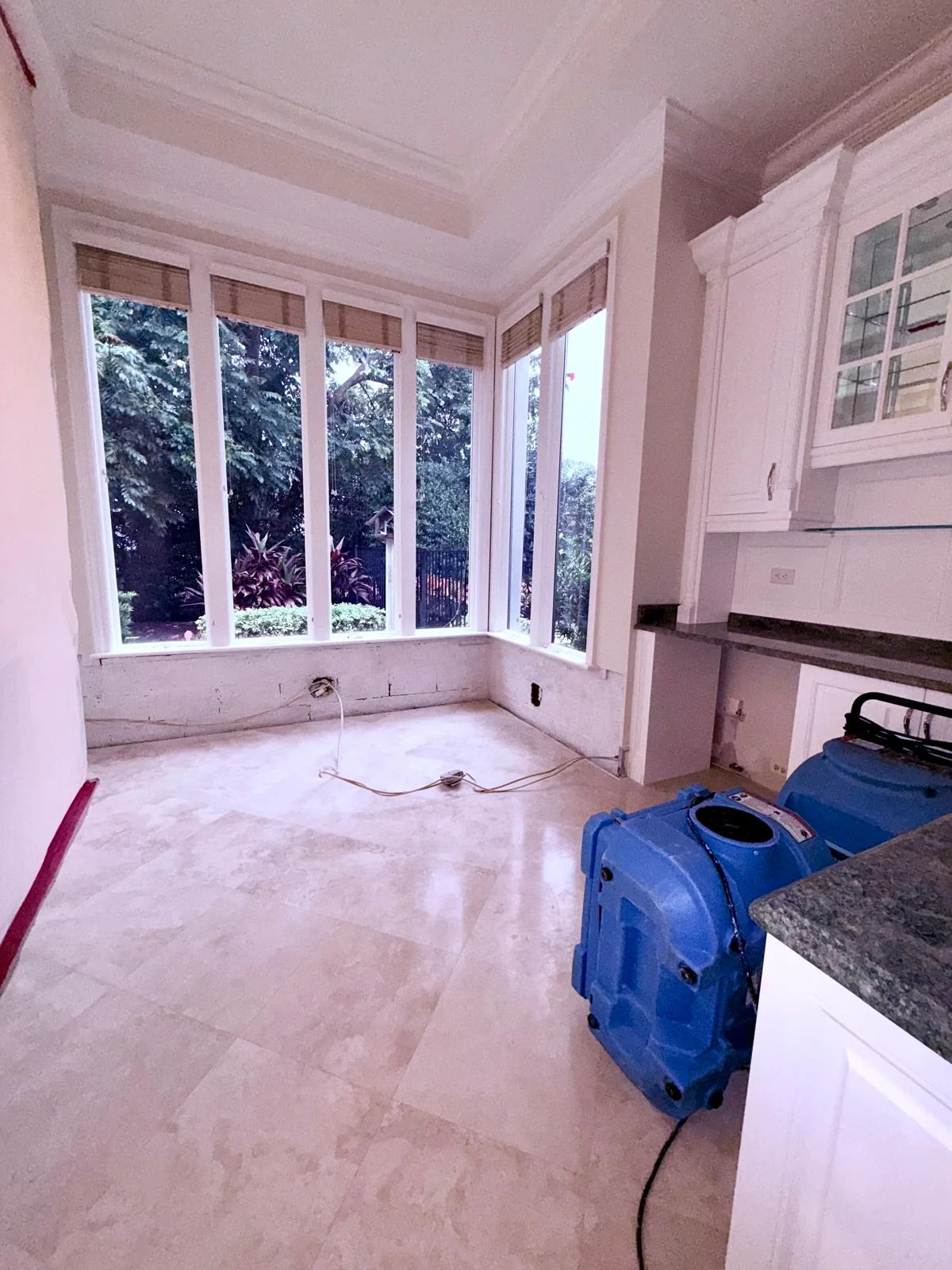
Equipment is only one part of the work. The drying plan connects affected-area mapping, environmental control, material response, adjustments, and final moisture checks.
Technicians combine observations and appropriate readings to map accessible materials that appear affected and compare them with similar, unaffected reference areas.
Air movement supports evaporation at material surfaces while dehumidification removes water vapor from the air. Temperature, humidity, access, and site safety affect the plan.
Repeatable reading points and environmental observations show whether materials are changing, whether progress has slowed, and whether equipment or access decisions need adjustment.
Drying completion is based on material-specific goals, comparable reference materials, manufacturer guidance when applicable, and project conditions—not appearance or a universal number of days.
These services can occur on the same project, but each addresses a different part of recovery. Understanding the difference helps you know what has been completed and what may remain.
Focus: Accessible liquid water
Removes standing or pooled water and water held in accessible carpet or surface materials. Extraction reduces bulk water but does not establish that the building assembly is dry.
Explore water extractionFocus: Moisture in building materials
Uses readings, air movement, dehumidification, monitoring, and material-specific drying goals to address moisture remaining after extraction.
You are viewing structural dryingFocus: The broader recovery process
May include extraction, drying, affected-material evaluation, cleanup, contents work, documentation, and repair or reconstruction coordination according to actual conditions.
See the full restoration processWater still in the materials?
Hugo can begin structural-drying intake 24/7 and explain the next on-site evaluation step.
Structural drying considers the relationship between air temperature and moisture alongside material readings. These concepts help explain how the drying plan works for your property.
The order can change with safety, source conditions, contamination, access, material damage, and project authorization. These steps show how the work moves from intake through handoff.
Review the reported source, active hazards, occupants, electrical concerns, affected areas, access, and whether another emergency authority or qualified trade must act first.
Confirm what can be safely observed about source control, water movement, affected materials, contamination indicators, and conditions that influence the authorized drying scope.
Document accessible affected materials, reference areas, readings, locations, and concealed-condition limitations. Thermal imaging may guide closer inspection, but meter readings confirm suspected moisture.
Remove accessible bulk water when needed and evaluate whether affected materials can remain, need access, or require authorized removal based on source, condition, integrity, and drying practicality.
Organize air movement and LGR dehumidification for the affected volume and materials while considering containment needs, power, occupants, HVAC, and safe equipment locations.
Record material readings, temperature, air-moisture conditions, equipment operation, access, and changed conditions at repeatable points during the drying period.
Reposition or adjust equipment, revise the moisture map, or address access and material limitations when progress slows or newly exposed conditions change the plan.
Compare final conditions with the project drying goals, document equipment removal, and identify any cleaning, repair, reconstruction, or specialty work that remains.
Each tool has a specific role. The setup responds to the property, material, water source, environment, power, occupants, and measured drying progress.
Penetrating or non-invasive readings help evaluate accessible materials. Meter type, mode, material, depth, location, and comparison conditions affect interpretation.
Infrared patterns can screen for temperature anomalies and help direct closer inspection. A thermal image does not prove moisture and should be confirmed with appropriate readings.
Directed air movement supports evaporation at suitable material surfaces. The source, contamination conditions, loose materials, occupants, power, and drying chamber influence safe placement.
Low-grain refrigerant dehumidifiers remove water vapor from the controlled drying environment. Quantity and operating time depend on affected volume, materials, conditions, and observed progress.
Room notes, repeatable reading points, equipment information, photographs, and progress records connect the drying strategy to the conditions observed on the property.
Equipment is selected for the property's conditions. Not every project needs every listed tool, and equipment alone cannot confirm that an assembly has reached its drying goal.
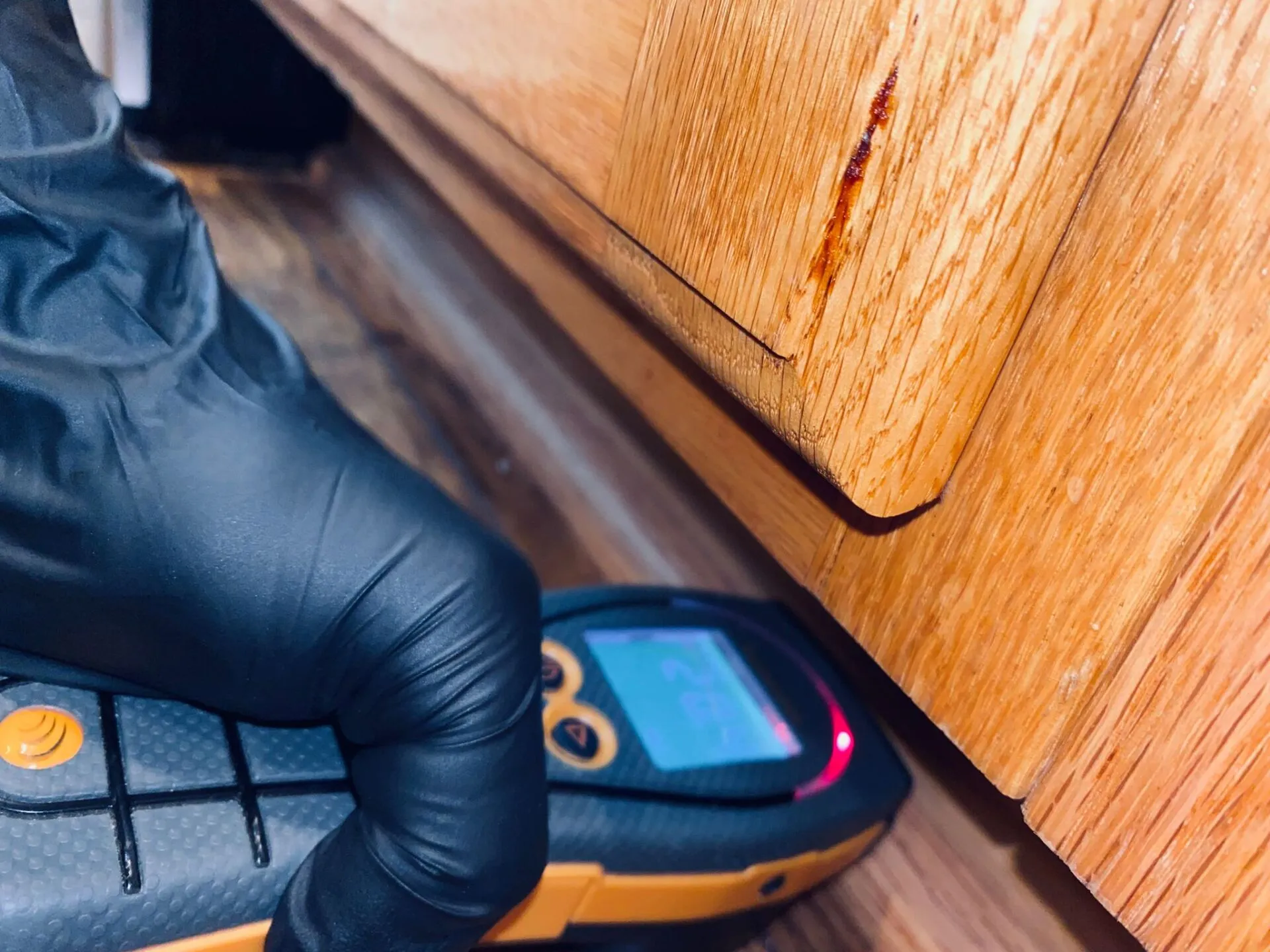
A reading is meaningful only in context. Material type, meter mode or scale, location, depth, nearby reference conditions, temperature, and the assembly all affect interpretation.
Record accessible material conditions before drying changes them, using the appropriate meter mode or scale and noting the exact location.
Compare with similar materials in an unaffected area when available. A reference is more useful than applying a single generic threshold to every material.
Drying goals can use comparable materials, manufacturer guidance, project-specific criteria, and other defensible information appropriate to the assembly.
Return to identified reading points under comparable conditions when possible so the direction and rate of change can be evaluated.
If readings stall or conditions change, technicians reassess airflow, dehumidification, access, equipment operation, the affected boundary, and remaining material limitations.
Before equipment removal or repair handoff, final readings and relevant environmental observations are recorded against the project drying goals.
Room or zone, material, reading location, meter type or scale, initial and reference observations, equipment location, environmental conditions, repeat readings, adjustments, changed conditions, photographs, access limitations, and final moisture-check notes.
Porosity, layers, coatings, adhesives, fasteners, cavities, source condition, material integrity, and access all change how a building assembly can be evaluated and dried.
| Material or assembly | What can complicate drying | How the decision is approached |
|---|---|---|
| Drywall and gypsum | Paper facings, joints, insulation contact, base plates, and concealed cavities | Readings, boundary checks, controlled airflow when appropriate, and access or removal decisions based on source and material condition |
| Wood framing and trim | Moisture can move through grain, joints, fasteners, and connected assemblies | Repeatable material readings, air movement, dehumidification, and comparison with suitable reference materials |
| Cabinets and built-ins | Layered boxes, backs, toe-kicks, wall connections, and composite materials | Accessible readings, cavity and edge evaluation, airflow planning, and material-specific salvage decisions |
| Carpet and padding | Water held below the visible surface and spread toward walls or adjoining areas | Extraction first, then separate evaluation of carpet, padding, subfloor, source condition, and drying progress |
| Wood, laminate, and resilient flooring | Seams, underlayment, adhesives, vapor-retarding layers, and dimensional change | Material-appropriate readings and evaluation of layers; appearance alone does not establish whether the assembly can be dried in place |
| Tile and slab-adjacent finishes | Moisture may remain in grout, setting materials, wall-floor junctions, nearby drywall, base plates, or adhesives | Assembly-specific readings and comparison rather than assuming the finished tile surface represents the whole system |
| Insulation | Stored water, reduced performance, contamination, and limited airflow inside cavities | Evaluate type, source, access, condition, and contact with adjacent materials before deciding whether drying in place is practical |
| Ceilings and wall cavities | Gravity, framing paths, pipes, and penetrations can move water away from the visible source | Safety screening, mapping, readings, and authorized access where necessary to evaluate concealed assemblies |
No table can determine salvageability or drying scope for a specific property. Source conditions, contamination, structural integrity, manufacturer requirements, access, and authorization remain project-specific.
Central Florida's long humid season, air-conditioning demands, slab-on-grade construction, storm exposure, and managed-property access can all influence the drying environment.
Central Florida's outdoor humidity can add moisture to an open or poorly controlled work area. Doors, windows, HVAC operation, and drying-chamber boundaries can change indoor conditions.
Long cooling seasons create cold surfaces and condensate systems. AC leaks, drain failures, and dew-point conditions can affect ceilings, closets, cabinets, and slab-adjacent materials.
Many local buildings combine concrete slabs with tile, laminate, resilient flooring, wood products, underlayment, or adhesives. Each layer can respond differently to a water loss.
Wind-driven rain and roof openings can wet ceilings, insulation, walls, and lower floors. Source control and safe access may need to precede normal drying activity.
Vacation rentals, seasonal homes, multifamily buildings, and commercial sites may require gate, key, owner, tenant, or manager coordination so monitoring access remains consistent.
The same drying principles apply across property types, but access, stakeholders, operations, contents, shared assemblies, power, and monitoring schedules can change the plan.
You deserve an understandable plan, clear progress updates, and honest expectations. Hugo provides those without promising a fixed timeline or universal outcome.
Drying decisions follow accessible material observations, appropriate readings, and documented limitations—not appearance, equipment count, or a fixed online timeline.
The team does not describe visible water removal as proof that drywall, flooring, cabinets, insulation, or framing has reached a drying goal.
Air movement and dehumidification are paired with monitoring so placement and operating decisions can respond when the property or material readings change.
Applicable moisture maps, readings, photographs, equipment information, progress notes, and final observations support clear communication with owners and authorized parties.
Hugo is based in St. Cloud and offers English and Spanish phone support for emergency details, access needs, affected materials, and stakeholder coordination.
Plumbing, roofing, electrical, structural, environmental, and insurance decisions remain with the appropriately qualified or authorized parties.
Dispatch coordination begins within 15 minutes after emergency intake. Arrival time varies with location, weather, access, hazards, demand, and crew availability.

Company leadership
Hugo Garcia leads Hugo Fire & Water Restoration as founder and CEO, guiding the company's restoration operations and customer service.
Meet Hugo GarciaCustomer feedback
See what customers say about working with Hugo for restoration services.
Read Customer ReviewsApplicable project records can help explain where moisture was observed, how the drying environment was managed, what changed, and why equipment or material decisions were made.
Choose help for bulk-water removal, material drying, complete restoration, roof leaks, flood conditions, mold remediation, or insurance documentation.
The broader mitigation and recovery process after an indoor water loss.
Open service guideRemoval of accessible standing and pooled water before material drying.
Open service guideSafety and source screening for flooding and outside-water conditions.
Open service guideWater mitigation and drying after a roof or exterior opening allows intrusion.
Open service guideA separate evaluation and remediation path when mold conditions require it.
Open service guideOrganization of restoration records without coverage promises.
Open service guideHugo accepts structural-drying requests throughout Central Florida. Choose a county or community for local service information, or call with the exact address to confirm availability.
Browse all service areas, or call with the exact service address so the team can confirm availability.
Find restoration standards, moisture-control information, cleanup-safety guidance, and documentation tips. Property-specific decisions still require an on-site evaluation.
These answers explain the service in plain language without replacing a property-specific safety, source, material, or moisture evaluation.
Structural drying is the controlled removal of moisture remaining in building materials after visible water is extracted. The work can include material-specific readings, moisture mapping, planned air movement, dehumidification, repeated monitoring, equipment adjustments, and final moisture checks against project drying goals.
Extraction removes accessible standing or pooled water, but drywall, flooring, cabinets, trim, insulation, framing, and concealed assemblies may still retain moisture. Structural drying addresses that remaining material moisture and records how conditions change.
Drying completion is evaluated with appropriate material readings, comparable unaffected reference materials when available, manufacturer guidance or project-specific criteria, and final observations. There is no single moisture percentage that applies to every material and assembly.
There is no universal drying time. The source, water amount, material type, assembly, humidity, temperature, access, equipment, concealed moisture, and observed progress all affect the schedule. Decisions should follow actual conditions rather than a fixed number of days.
Yes. Moisture can move behind baseboards, into wall and ceiling cavities, below carpet or finished flooring, beneath cabinets and toe-kicks, through insulation, and along connected framing. Some concealed conditions require access or further evaluation.
Depending on the property, the drying plan may use moisture meters, thermal imaging for screening, professional air movers, LGR dehumidifiers, and moisture maps or drying logs. Equipment selection and placement depend on source conditions, affected materials, volume, access, safety, and progress.
No. Thermal imaging shows temperature patterns that can direct closer inspection, but it does not prove moisture by itself. Suspected areas should be checked with appropriate moisture readings and observations.
No. Whether a material can remain depends on the water source, contamination concerns, material integrity, layering, access, drying practicality, and project authorization. Some assemblies require access or removal; others may respond to controlled drying.
Humid outdoor air can slow evaporation or add moisture to an uncontrolled work area. The plan considers indoor humidity, temperature, HVAC operation, openings, drying-chamber boundaries, material response, and dehumidification rather than relying on outdoor conditions alone.
Hugo Fire & Water Restoration can assist with restoration and insurance documentation. Coverage decisions and claim outcomes are determined by the insurance carrier and policy.
Timely source control, extraction, moisture evaluation, drying, and monitoring can reduce moisture-related risk, but no contractor can guarantee mold prevention. Visible growth, contamination, or a separate mold condition may require its own evaluation and scope.
Hugo is based in St. Cloud and serves structural-drying requests throughout Central Florida, including Osceola, Orange, Polk, Brevard, Seminole, Lake, Sumter, and Volusia counties. Call with the exact service address to confirm availability.
24/7 Structural Drying Intake
Call Hugo with the service address, reported source, whether it is active, affected materials, known hazards, and access details. Dispatch coordination begins after intake.
Dispatch coordination begins within 15 minutes after emergency intake. Arrival time varies with location, weather, access, hazards, demand, and crew availability.