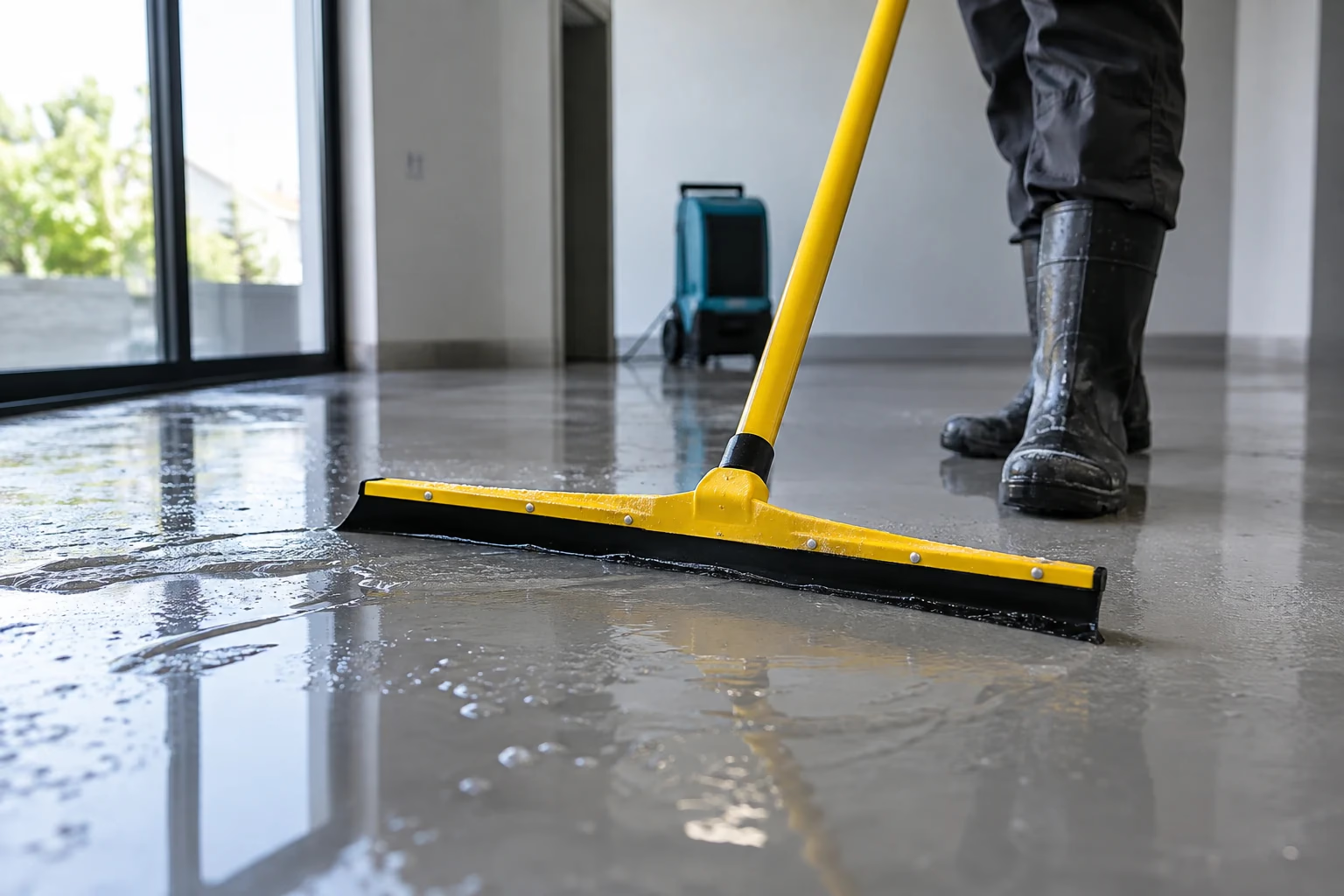
Hugo Fire & Water Restoration provides 24/7 water extraction in Orlando for standing water, spreading leaks, soaked carpet, wet padding, appliance failures, AC drain backups, roof leaks, and storm-related water intrusion.
Service is available for verified residential, rental, hospitality, managed, and commercial properties across Orlando and Orange County.
Call 911 first for active fire, electrical danger, structural collapse, gas odor, medical risk, or another immediate life-safety danger. Do not enter standing water near electrical systems or a room with a sagging ceiling.
General water-extraction visual; no Orlando project location or outcome is represented.
Open 24 Hours
Emergency phone intake is available day and night.
Licensed and Insured
Restoration work stays within authorized capabilities.
IICRC-Certified Technicians
Certification is stated at the technician level.
Verified 15-Minute Dispatch Process
Routing and coordination begin within 15 minutes after necessary intake information is received; this is not a 15-minute arrival promise.
Insurance Documentation Support
Hugo can organize applicable restoration records.
English and Spanish Support
Phone support is available in both languages.
Orlando Water Extraction at a Glance
Start with standing water, safe access, and the source
A clear first call helps identify immediate hazards, the apparent source, rooms or units involved, discovery time, safe access, and the authorized property contact.
Who provides emergency water extraction in Orlando?
Hugo Fire & Water Restoration provides 24/7 standing-water removal, affected-area assessment, drying coordination, cleanup, and damage-documentation support for qualifying residential, rental, hospitality, managed, and commercial properties in Orlando and Orange County.
What should I do when water is standing or spreading?
Address immediate safety hazards first. Avoid water near outlets, appliances, panels, or wiring. Stop the source only when it is safe, photograph visible conditions from a safe position, and call for extraction when water is active, spreading, or affecting building materials.
Call 911 for medical danger, fire, gas odor, structural collapse, or another immediate life-safety hazard. Do not use wet electrical equipment or enter standing water when electrical conditions are uncertain.
Immediate Water-Extraction Actions
What to Do When Water Is Standing or Spreading
Use this sequence only from a safe location. Site conditions, emergency authorities, utilities, access, and the actual water source determine the next safe action.
01Address immediate life-safety hazards.
02Avoid water near outlets, panels, appliances, or wiring.
03Stop the source only when it is safe.
04Stay away from sagging ceilings, unstable materials, and slippery areas.
05Photograph visible water and affected rooms from a safe position.
06Move small valuables only when the area is safe.
07Call Hugo when water is active, spreading, or affecting materials.
08Share the suspected source, timeline, affected rooms, and safe-access details.
Common Extraction Scenarios
Common Causes of Emergency Water Extraction
These examples can help describe a loss during intake, but they do not diagnose concealed damage, source repairs, or the complete restoration scope.
Plumbing or Supply-Line Failure
Pipes, fixtures, connections, and supply lines may release water into flooring, cabinets, walls, ceilings, and nearby rooms.
Washing Machine or Appliance Overflow
Washing machines, dishwashers, refrigerators, water heaters, and other appliances may release water across flooring, carpet, cabinets, and adjoining areas.
AC Drain or Condensate Backup
Air-conditioning drain problems may affect ceilings, walls, utility areas, flooring, and indoor humidity.
Roof Leak
Roof damage or worn components may allow water into attics, ceilings, insulation, walls, flooring, and contents.
Storm-Related Water Entry
Heavy rain and wind may push water through roofs, windows, doors, exterior openings, and drainage-sensitive areas.
Hidden or Slow Leak
Water may move behind baseboards, cabinets, flooring, walls, and other concealed areas before visible pooling appears.
A material reading can help guide further evaluation after accessible water is removed. It does not establish structural safety, insurance coverage, or every concealed condition.
Extraction Versus Drying
Water Extraction Is the First Step—Drying Comes Next
Water extraction removes accessible standing water, but it does not complete the drying process. Carpet, padding, flooring, walls, cabinets, baseboards, ceilings, insulation, and concealed materials may still require moisture assessment and structural drying.
Water Extraction
Removes accessible standing or pooled water when the source, safety, access, and authorized scope allow.
Moisture Assessment
Reviews materials and accessible areas where moisture may remain after visible water is removed.
Structural Drying
Uses appropriate drying and dehumidification equipment to address remaining moisture based on documented conditions.
Not every material can be dried or saved. Property-specific conditions determine the next step.
Choose the clearest starting point for the conditions you can see
One water loss can involve more than one service. Call and describe what is active now if the source or correct service is uncertain.
Emergency Water Extraction
Accessible standing water and excess moisture may be removed when the source, safety, access, and authorized scope allow. Extraction is the immediate first step, not the complete drying process.
Air movement, dehumidification, moisture observations, and monitoring address water that may remain in building materials after visible water is removed.
Supply lines, fixtures, washing machines, dishwashers, water heaters, and other sources may affect flooring, cabinets, walls, and adjoining rooms. The complete scope depends on property conditions.
Roof openings, flashing, air handlers, and condensate systems may affect ceilings, insulation, walls, flooring, and concealed areas. Source repairs may require an appropriate trade.
Lingering moisture, odor, or visible growth may require additional assessment and a separate mold-remediation scope. No mold-prevention result is guaranteed.
The extraction plan should reflect the people, access, contents, schedules, systems, communication, documentation, and authorized contacts involved—not only the building label.
Residential
Houses, condominiums, townhomes, and apartments may involve occupants, belongings, shared assemblies, association access, and adjoining rooms or units.
Hospitality and Rentals
Hotels, vacation rentals, and managed rental properties may require room-level records, guest-path planning, turnover coordination, and authorized local access.
Commercial
Offices, retail spaces, restaurants, warehouses, and other commercial properties may require work-zone separation, schedule coordination, and protection of inventory or equipment.
Managed and Multifamily
Multifamily buildings, HOA properties, condominiums, and managed spaces may involve shared systems, multiple decision-makers, resident communication, parking, and unit-level documentation.
Documented Restoration Work
Water-Extraction Work in Orlando and Orange County
Explore documented water-extraction and restoration work completed by the Hugo team. Additional Orlando project examples will be added as verified project information becomes available.
Damage assessment
Controlled Demolition After Water Damage
This documented Hugo gallery record does not identify an Orlando or Orange County location, customer, source, date, or outcome.
No current public project record verifies a water-extraction project location in Orlando or Orange County. Explore Hugo's gallery for documented restoration work without a local-project claim.
The exact sequence depends on the source, safety, access, affected materials, authorization, and site conditions. No universal arrival, drying, or completion time is promised.
101
Emergency Call and Safety Review
Confirm standing water, the suspected source, affected areas, access, and immediate electrical, structural, or occupant concerns.
202
Source and Access Review
Identify whether the issue may involve plumbing, appliances, AC systems, roofing, storm entry, or another source.
303
Standing-Water Extraction
Remove accessible pooled water where appropriate and document the initial conditions.
Hugo is based in St. Cloud and accepts water-extraction requests across Orlando and listed Orange County communities. Call with the exact property address and current conditions to confirm service availability.
Orange County service-area guide
This stylized illustration identifies communities within the service-area directory. Its icons are not completed projects, property coordinates, dispatch zones, travel-time boundaries, or flood-risk determinations.
Local conditions that may shape the response
Heavy seasonal rain and storm-related roof or window intrusion
AC condensate and drain-line concerns
Hospitality and vacation-rental turnover coordination
Condominium, high-rise, and managed-building access
Commercial operating schedules and work-zone planning
No current review record verifies both a local Orlando or Orange County location and a water-extraction service connection. Read customer feedback through Hugo's maintained Reviews page.
Hugo's restoration crew includes IICRC-certified technicians, and English and Spanish phone support is available. The assigned crew and scope depend on the request and actual project conditions.
Address immediate safety hazards first. Avoid water near electrical systems, stop the source only when safe, photograph visible conditions from a safe position, and call while water is active or spreading.
Extraction should be discussed as soon as the property is safe and the source can be controlled. The appropriate start depends on access, source conditions, authorization, and affected materials; no universal arrival or start time is promised.
No. Extraction removes accessible standing water. Structural drying addresses moisture that may remain in flooring, walls, cabinets, ceilings, insulation, and other materials after visible water is removed.
Affected materials and accessible adjoining areas may be reviewed, moisture readings may be taken, and drying or dehumidification needs may be established from documented conditions.
Yes. Water may move beneath flooring, behind baseboards, into drywall, under cabinets, through ceilings, or into adjoining rooms. On-site assessment may be needed to understand accessible conditions.
Accessible water may be extracted from some carpeted areas, but the source, exposure, material condition, padding, subfloor, and authorized scope determine whether materials can remain. No salvage result is guaranteed.
They can. These sources may release or move water into flooring, cabinets, walls, ceilings, insulation, and nearby rooms. The complete source and restoration scope cannot be diagnosed remotely.
Removing accessible water and addressing remaining moisture can reduce moisture-related risk, but extraction does not guarantee mold prevention. Existing growth or continued moisture may require separate assessment or remediation.
Yes. Applicable records may include photographs, source notes, affected-room details, extraction records, moisture readings, drying information, equipment notes, cleanup records, and authorized communication.
No. Photographs document visible conditions but cannot confirm every concealed material, moisture condition, safety issue, or restoration requirement. A property-specific assessment may be necessary.
No. Standard water extraction does not cover every source or exposure condition. Describe the suspected source during intake so Hugo can screen the request and explain whether specialized controls or another qualified provider may be required.
Hugo begins routing and coordination within 15 minutes after the necessary intake information is received. Dispatch is not arrival; travel timing depends on location, traffic, weather, access, demand, and crew availability.
Hugo accepts requests across Orlando and listed Orange County communities including Winter Park, Maitland, Ocoee, Apopka, Winter Garden, and Lake Buena Vista. Call with the exact property address to confirm current service availability.
Call first when water is active, spreading, or affecting electrical systems or building materials. Use the form for contact, location, source, affected-area, discovery-time, and safe-access details that support follow-up.
Orlando Water-Extraction Request
Request Water-Extraction Help
For active or spreading water, call first. Use the form to share the property location, suspected source, active conditions, affected areas, discovery time, and concerns you can observe safely.
Do not enter an unsafe area or delay an emergency call to complete this form. Do not include gate, lockbox, alarm, policy, or claim numbers.
24/7 Orlando Water-Extraction Help
Need Emergency Water Extraction in Orlando?
Call Hugo's 24/7 emergency line for standing water, spreading leaks, soaked carpet, wet padding, plumbing failures, appliance overflows, AC drain backups, roof leaks, storm-related water entry, extraction, drying coordination, or damage-documentation needs.
Call 911 first for immediate life-safety danger. Dispatch begins coordination after intake and does not guarantee an arrival time, drying duration, claim result, or restoration outcome.