
Who handles storm damage in The Villages?
Hugo reviews the reported storm damage, hazards and access before discussing temporary protection or eligible moisture work.

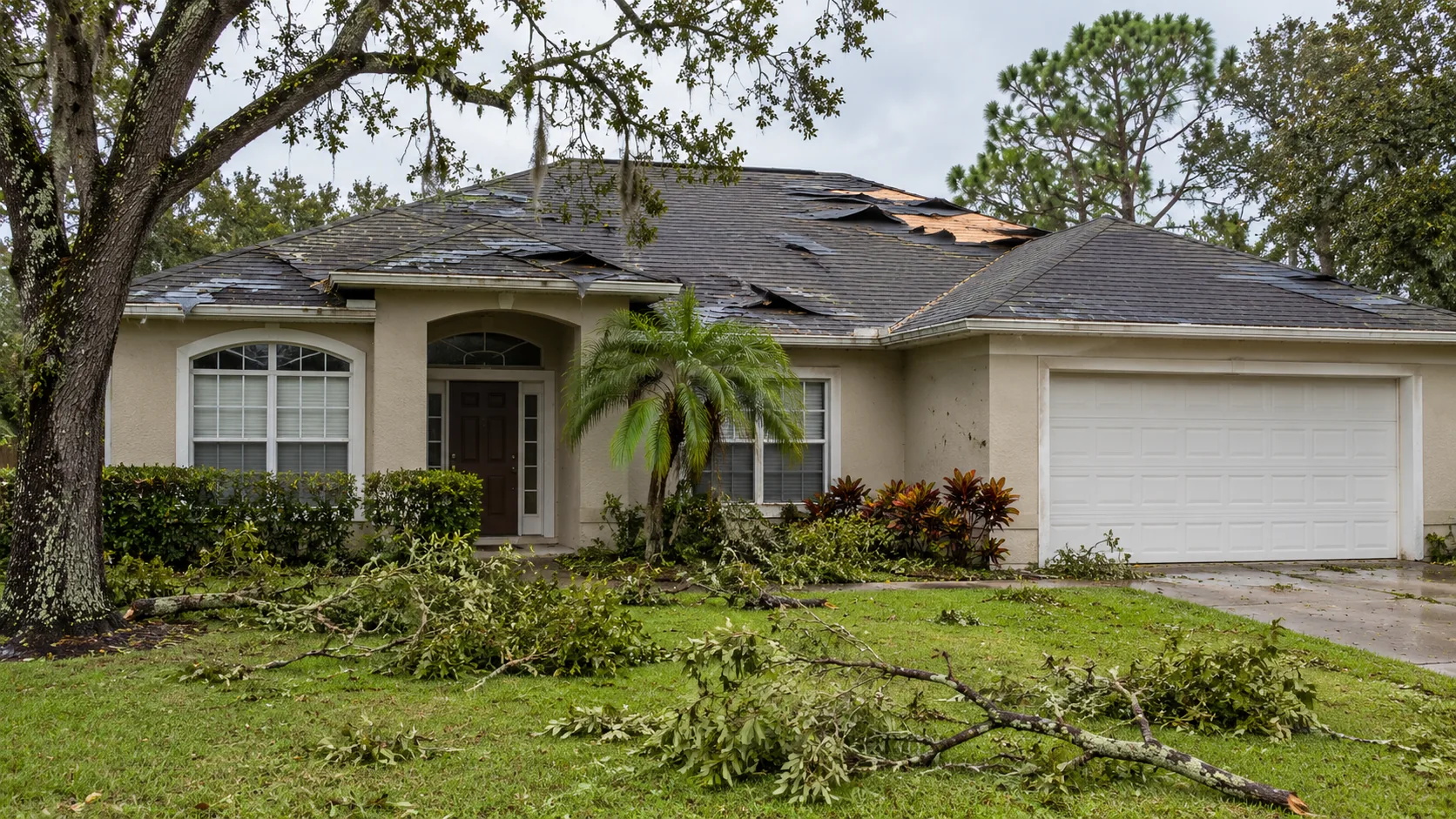

Wind and rain can leave a property in The Villages exposed. From a safe location, call Hugo to discuss the damage and suitable temporary protection.

Hugo reviews the reported storm damage, hazards and access before discussing temporary protection or eligible moisture work.
Openings, debris and interior water each require their own safety review.
Report the visible roof or window damage without going near hazards.
Describe wet ceilings, walls or belongings from a safe location.
Keep clear of electrical and structural dangers and obey emergency instructions.
Explain access restrictions, occupant needs and the authorized contact.
Save safely obtained photos, dates and any temporary-work notes.
Discuss eligible moisture work and a separate permanent-repair handoff.
Official restrictions and site conditions guide safe temporary work.
Discuss damage, rain entry, occupancy and reported hazards.
Official restrictions and site conditions determine when work can be considered.
Boarding or tarping depends on suitability, conditions and authorization.
The source and materials must be reviewed before eligible drying is considered.
Document the agreed scope and changes as conditions become clear.
Check the actual property jurisdiction and any applicable district review with the responsible contractor.
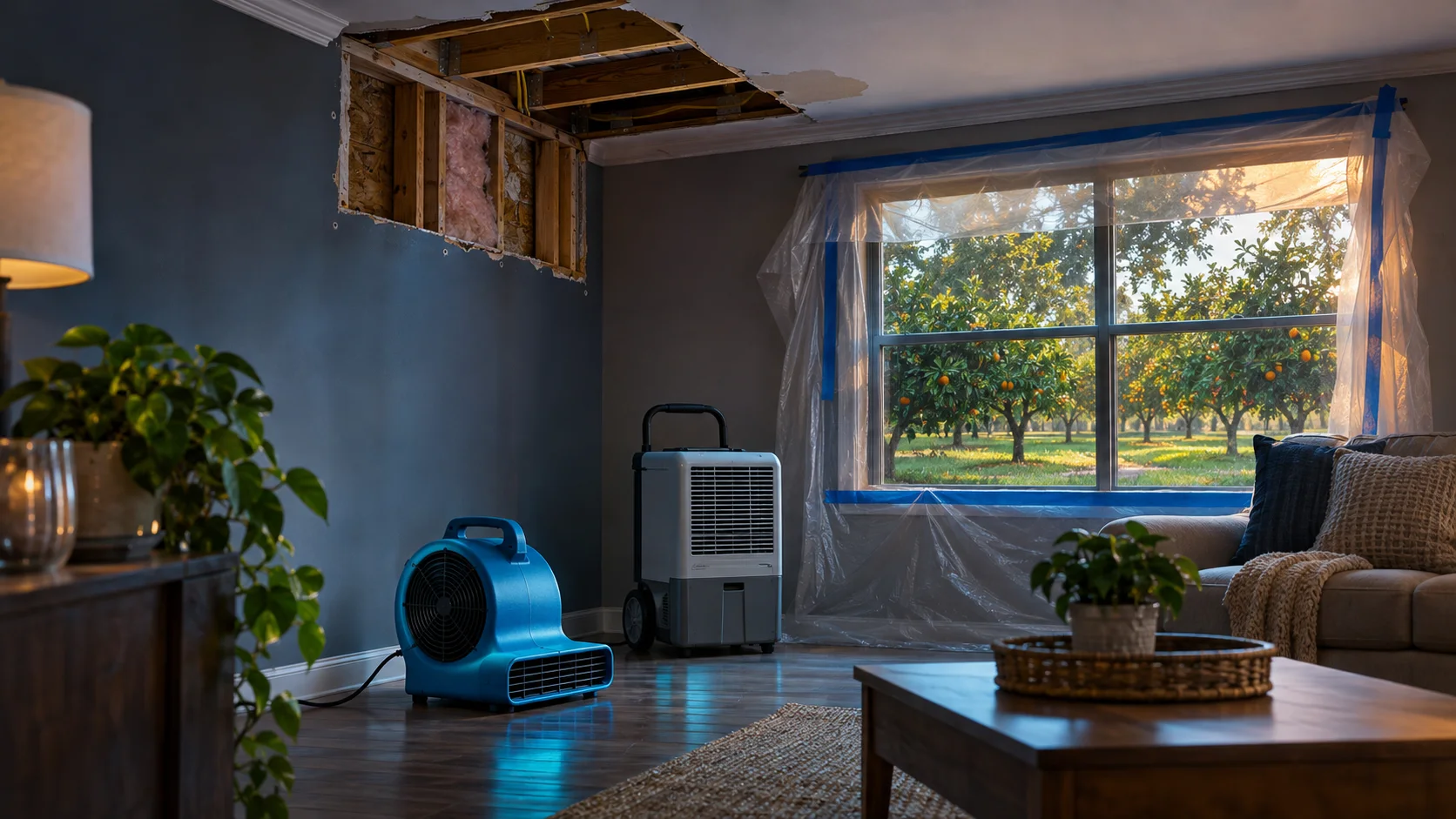
Report indoor water from a safe place and discuss source screening, any suitable cover and the permanent work separately.
From a safe position, describe wind openings, debris, interior rain entry and any restrictions on access.
Provide the address, parking and authorized contact. Give gate and alarm codes directly to staff, not in the website form.
For exterior repair, confirm the city or county permit authority for the full property address and whether separate district architectural review is needed.
Save safe photos and protection details; coverage is determined by the carrier.
Avoid damaged structures and fallen lines. Call 911 when danger is immediate.
Report openings and rain entry from safety without climbing or entering restricted space.
Name rooms and exterior features you already know about.
Retain photographs and the discovery date where safely obtainable.
Provide parking and contact details; share entry codes directly with staff.
Hugo is available by phone 24/7 to review the reported damage.
Share what you can safely see and ask how the team handles each affected area.
Describe rain-wet areas and their source for eligibility screening.
View pageReport any independent fire or smoke impacts to the team.
View pageShare the moisture history and any assessment when growth is suspected.
View pageAsk about removal of pooled water after its source is screened.
View pageDiscuss water conditions before requesting cleanup work.
View pageDescribe an exposed doorway or broken glazing needing protection.
View pageReport visible roof damage without going onto the structure.
View pageReview temporary protection, water screening and repair coordination.
Yes. Call 24/7 to describe known damage and discuss suitable next steps.
Stay away and follow utility and emergency officials’ instructions; call 911 for immediate danger.
No. These are temporary measures when suitable and safe.
Share the address, known openings, rain entry, access restrictions and authorized contact.
Describe the source and conditions so eligible work can be screened. Sewage, wastewater, black water, biohazards and known or suspected contaminated water are excluded and require a qualified specialist.
Safety, access and the authorized scope affect timing; ask about your property.
The responsible contractor should verify the address-specific city or county and any applicable district requirements.
The official FAQ identifies The Villages’ counties as Lake, Sumter and Marion.
Read resourceFor storm restoration outside The Villages, choose the damaged property's nearby-area page.
Call from safety with known damage and access restrictions.