
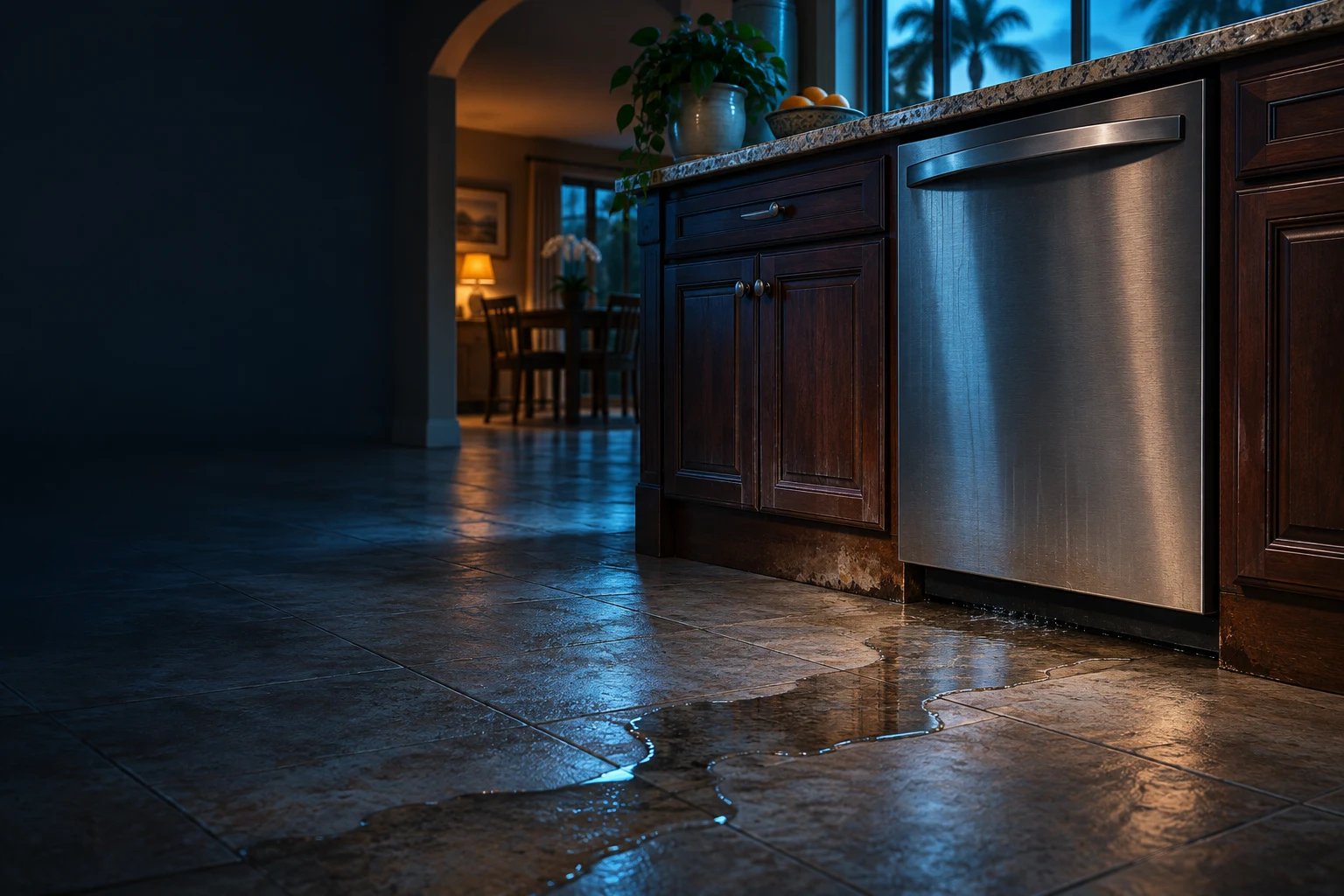
Appliance Leak Water Damage Cleanup in Central Florida


Water from a leaking appliance may spread into flooring, cabinets, and nearby walls. Hugo helps review the affected property and the cleanup and drying it needs.
Based in St. Cloud, Hugo helps Central Florida property owners review the damage left by appliance leaks. Share your address, the appliance involved and whether water is still entering.
Which appliance leaked?
Tell us where the water came from and whether the source has been stopped.
Washing machine
A hose failure or overflow may affect the laundry area and connected rooms.
Dishwasher
Water may reach cabinet bases, nearby flooring, and spaces beneath the appliance.

Refrigerator
A supply-line leak may continue out of view behind or beneath the refrigerator.
Water heater
Leaked water may affect surrounding flooring, baseboards, and adjacent rooms.
Different appliances leave different damage patterns.
Tell us which appliance or supply connection is involved, whether water is still entering, and which nearby materials are affected. The source and the condition of the water help determine the next step.
Washing machines and supply hoses
A supply leak may spread across a laundry room and into adjacent walls or flooring. Describe whether the problem occurred during a cycle, at a hose or connection, or from an uncertain source. Do not move a wet appliance or approach electrical connections to investigate.
Dishwashers and under-cabinet leaks
Water may travel below cabinets, behind toe kicks, and beneath flooring before it becomes obvious. Report visible pooling, swelling, lifting, staining, or a known leak history without removing materials yourself. Source repair and property drying are separate decisions.
Refrigerators and ice-maker lines
A small line leak can affect concealed flooring and the wall behind a refrigerator. Share when it was discovered and whether the area has been wet before. Accessible surface water does not show the full condition of the floor layers or adjoining materials.
Water heaters and nearby rooms
A water-heater leak may affect a utility area, garage, closets, or neighboring living spaces. Keep clear of electrical or gas concerns and hot water. The qualified service provider handles the appliance and source repair; Hugo discusses the resulting property damage.
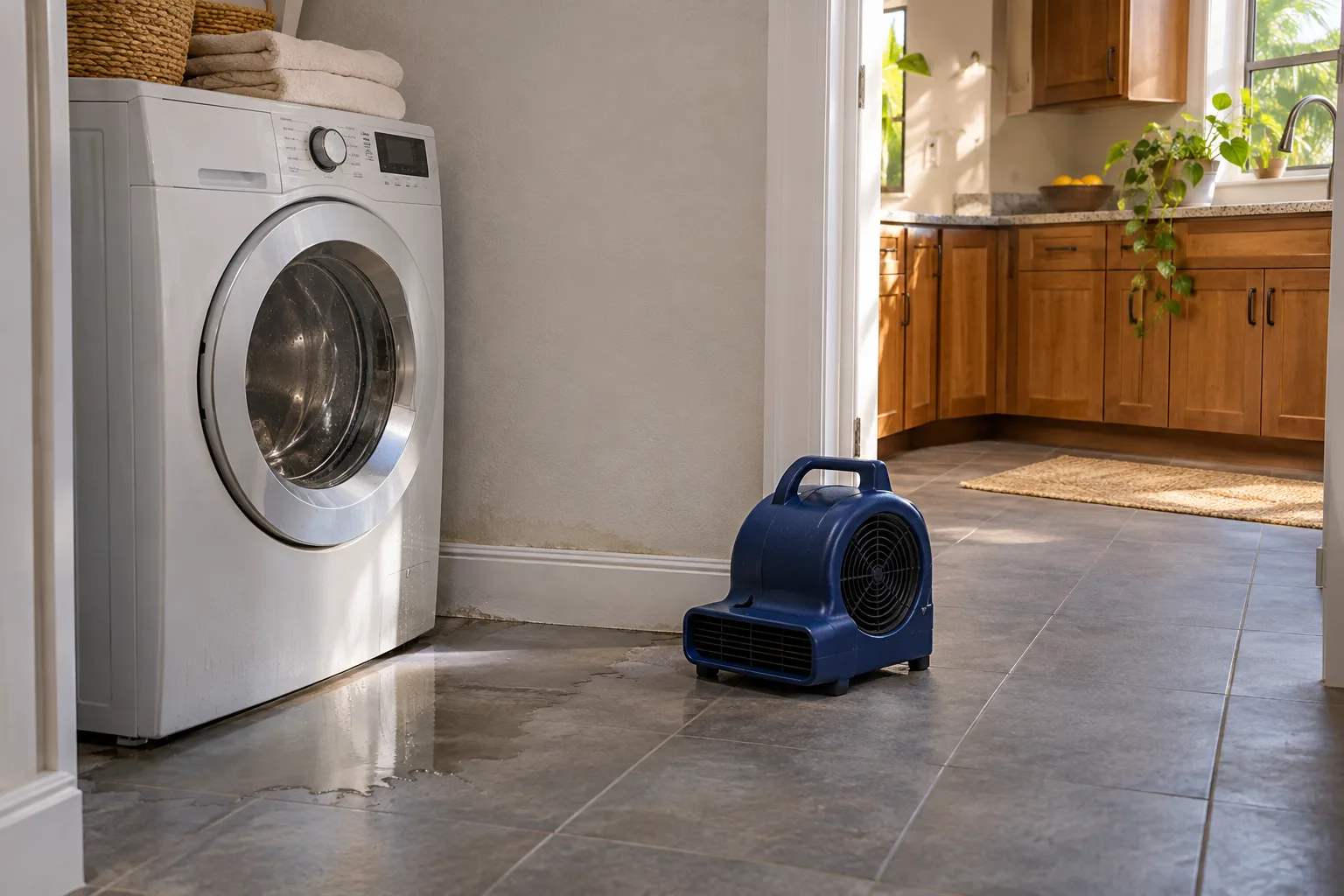
The visible puddle may be only part of the loss.
Water can move beneath finishes and into adjoining materials. Moisture checks help determine which areas need attention; the extent varies from property to property.
Explore water damage restorationCabinet bases, floor layers and adjoining walls
Stopping a leak prevents additional water from the same source, but it does not establish that affected materials are dry.
Floors and underlayment
Water can reach beneath flooring, into padding or underlayment, and along transitions between rooms. Material type, condition, access, and moisture observations guide drying or removal decisions. Not every floor can be retained, and not every loss needs the same removal.
Cabinets, trim, and walls
Cabinet bases, drywall, baseboards, wall cavities, and adjoining rooms may need review. Explain any swelling, discoloration, softness, or musty odor you have safely noticed. Concealed areas may require agreed access before their condition can be evaluated.
Water-source screening
Clean supply water, appliance discharge, and an uncertain or contaminated source require different screening. Describe what you know without guessing. Hugo does not provide wastewater cleanup or disposal, blackwater cleanup or removal, sewage cleanup, or biohazard cleanup or disposal.
Find the affected area. Plan the drying.
Review the damage
Check accessible affected materials and discuss when the leak was noticed and whether and how it was stopped.
Remove water and address materials
Plan extraction and any necessary removal according to the condition and type of materials.
Monitor the drying
Review moisture conditions and document progress before the next stage of repair.
The right provider for each step.
Source repair
An appliance technician or plumber addresses the failed appliance, connection, or water supply.
Property restoration
Hugo reviews affected building materials, water removal, drying, and restoration records.
Your decisions
You review the proposed work. Your insurer separately determines policy coverage and claim decisions.
Coordinate repair, drying, and documentation.
The most useful handoff explains what caused the leak, what has been repaired, and what remains affected.
What to have ready
Provide the address, appliance type, discovery time, known source, active-leak status, affected rooms, and safe access details. Save source-repair information, photographs, receipts, and communication records. You do not need to diagnose the damage before calling.
During mitigation
The proposed work may include water extraction, moisture observations, equipment, monitoring, material review, contents handling, and documentation. Ask how progress will be explained and which conditions could change the scope. Timing follows the property and measured progress.
Before repairs are closed
Review drying information and any remaining source or material concerns with the responsible repair provider. Keep mitigation records and estimates together for your own file and any authorized insurance communication. Documentation does not guarantee coverage.
Questions about appliance leak water damage
Does a small leak need a moisture review?
It may. The visible water does not always show how far moisture traveled. The duration, materials, and nearby spaces affect what should be checked.
Is appliance repair included?
Appliance repair or replacement is handled by the appropriate qualified provider. This service focuses on the resulting property damage.
Is water from an appliance always clean?
No. Tell us which appliance leaked and what occurred so the condition can be reviewed. Hugo does not offer sewage, blackwater, wastewater, or biohazard cleanup.
How long will drying take?
Timing depends on materials, the affected area, access, and measured conditions. Progress needs to be reviewed rather than promised as a fixed number of days.
Should I call if the appliance leak has stopped?
Yes, if building materials remain wet or damage is suspected. Repairing the appliance stops the source; it does not establish that cabinets, floors and walls are dry.
Can wet cabinets or flooring dry in place?
That depends on the material, condition, water source and access for effective drying. Moisture evaluation helps determine whether drying in place is appropriate or whether selective removal needs discussion.
Tell us where the water went.
For active water damage, call now. For a written request, include the appliance, affected rooms, and source-control status.