One water loss, several connected rooms
The damage extended through a bathroom, laundry room, hallway, and bedroom upstairs, with affected areas in the kitchen, pantry, under-stairs closet, and garage as well. That spread made a room-by-room inspection important: the work had to follow the moisture beyond the first place it was noticed.
The team checked affected materials and the surrounding areas as part of the water damage restoration work. Looking across both levels helped connect the visible damage with the spaces that needed closer attention.
Looking beneath the surface
Inspection included a thermal camera, alongside moisture checks in the affected rooms. Thermal imaging helps identify temperature differences worth investigating; moisture measurements help assess the materials themselves.
In the hallway, carpet was lifted along the wall edge. The project photos show that opened edge and drying equipment in use, giving a closer view of work that would be easy to miss from a doorway.
Following moisture through the materials
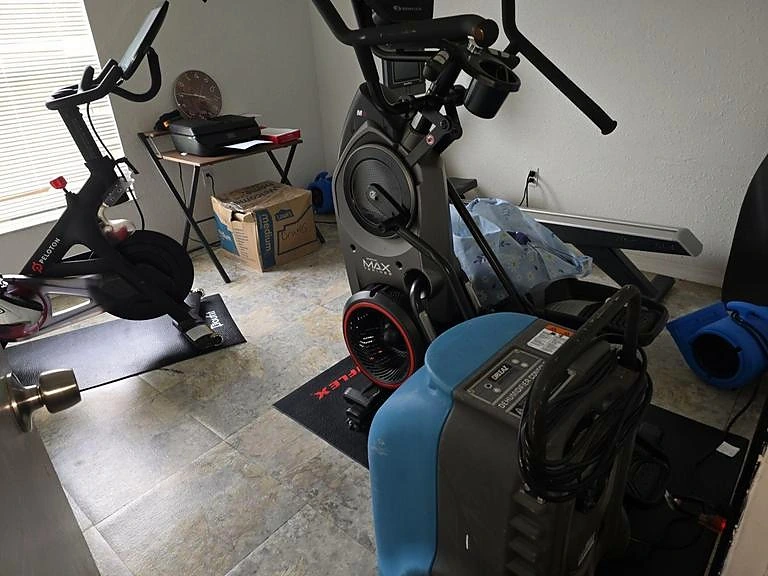
Air movers and dehumidifiers were used across the affected spaces. Air movement helps moisture leave wet surfaces, while dehumidification removes moisture from the air as drying continues.
The team followed conditions through moisture checks and brought the room information together in water-mitigation and moisture reports. Those checks matter because a surface can look better before the materials beneath it have reached their drying goals.
Water mitigation completed across both floors
Hugo completed the water mitigation work across the affected areas and assembled the project reports for the homeowner. The finished scope brought together inspection, drying, cleanup, and room-by-room follow-through across a connected water loss.
Questions about this project
Why did this St. Cloud project involve both floors?
Water affected upstairs rooms as well as the kitchen, pantry, under-stairs closet, and garage below. Hugo inspected and worked through those connected areas to address the spread across both levels.
How was hidden moisture checked?
The inspection included thermal imaging and moisture checks. A thermal camera helps identify areas for closer investigation, while moisture measurements help assess the condition of the affected materials.
What work did Hugo complete?
The completed water mitigation work included inspection, drying equipment, moisture monitoring, and cleanup across the affected spaces, supported by water-mitigation and moisture reports.
Complete
Work on this project is complete.
A closer look at the project
What water restoration can involve
Water restoration starts with inspecting the property, checking for hazards, and tracing where moisture has traveled. Depending on the conditions, the work can include removing standing water, cleaning affected areas, and using air movement and dehumidification to dry materials that can be saved.
Moisture checks help track progress and guide adjustments to the drying setup. The equipment, work areas, and drying goals depend on the property and the materials involved.
ANSI/IICRC S500More restoration projects
Lake Wales · Polk County
Water and Mold Cleanup After a Roof Leak in Lake Wales
A roof leak damaged ceilings in several rooms. See how Hugo completed the drying and mold cleanup, followed by an independent assessment.
Explore this project