
Slab-Leak Water Damage Cleanup in Central Florida


A slab leak can leave moisture in flooring, walls, and nearby materials after the plumbing is repaired. Hugo helps review the resulting property damage and plan cleanup and drying. Hugo does not provide wastewater cleanup or disposal, black-water cleanup or removal, sewage cleanup, or biohazard cleanup or disposal.
Call with your Central Florida property address, any plumbing findings and the rooms still affected. An unconfirmed source is useful information too.
Review the materials around the leak.
The affected area depends on where water traveled and the materials in its path.

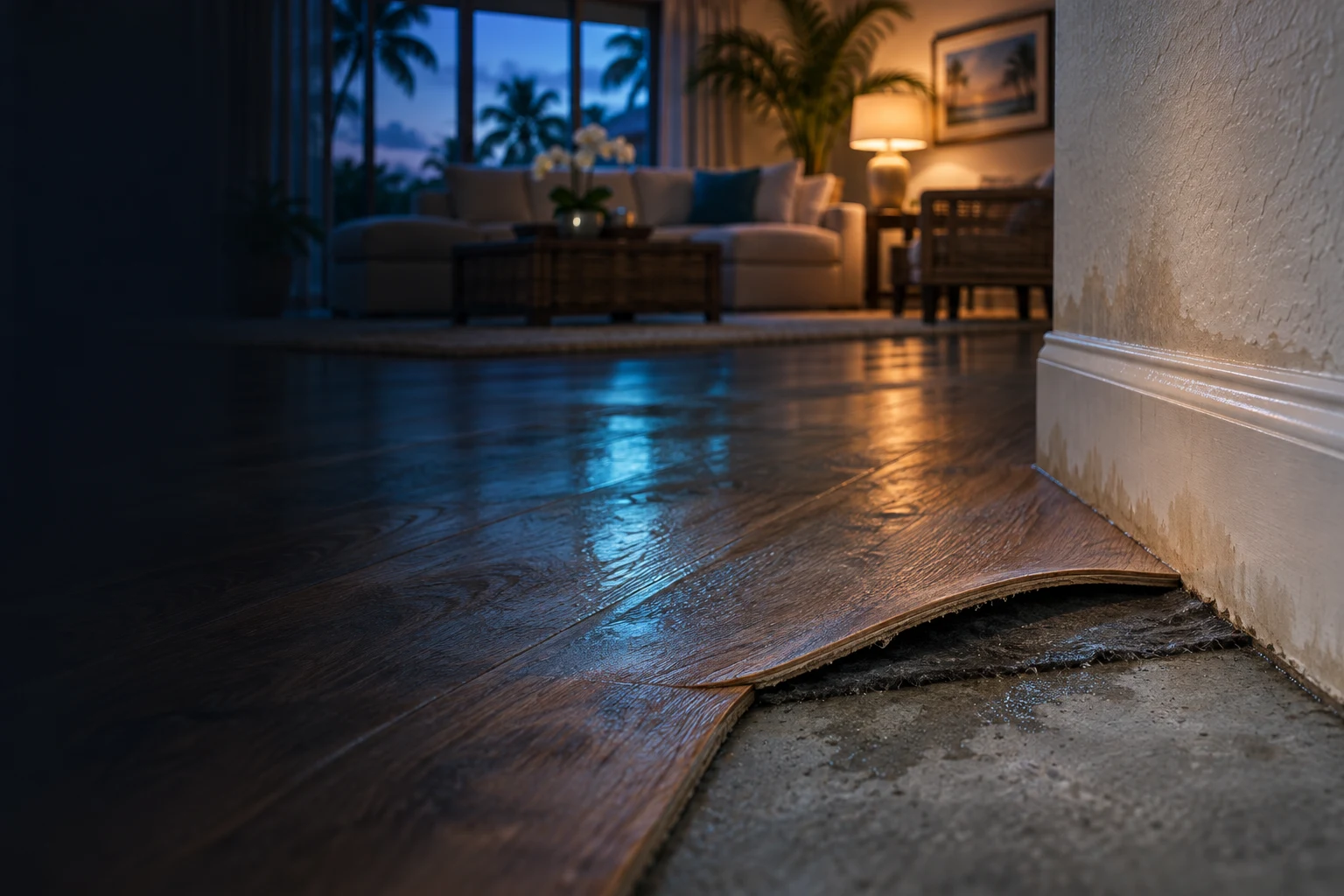
Flooring & underlayers
Moisture may remain beneath a visible finish and need further investigation.

Walls & baseboards
Check affected wall materials and adjoining spaces where moisture is found.

Cabinets & nearby contents
Discuss access, moving items, and materials that may be affected at floor level.
Source-repair records
Keep the plumber’s findings and repair information for the restoration review.
Source repair and property restoration are separate steps.
Water associated with a leak beneath a slab can affect materials above and around the source. A qualified plumber investigates and repairs the plumbing; restoration work addresses the resulting property damage.
When the source is not confirmed
Describe the water, damp materials, odors, or other changes you can safely observe. Those observations do not diagnose a slab leak. Ask the appropriate source-repair professional to investigate rather than assuming that every damp floor has the same cause.
After a plumber has repaired the leak
Keep the source-repair report, discovery and repair dates, access-opening details, and any relevant photographs. Water already held in flooring, cabinets, walls, or adjoining rooms may still need evaluation after the plumbing problem is resolved.
Access and responsibility
Confirm who opens or repairs the slab, who handles plumbing, who evaluates affected finishes, and who rebuilds afterward. Concrete cutting, engineering, plumbing repairs, and flooring installation require their own responsible providers and agreed scope.
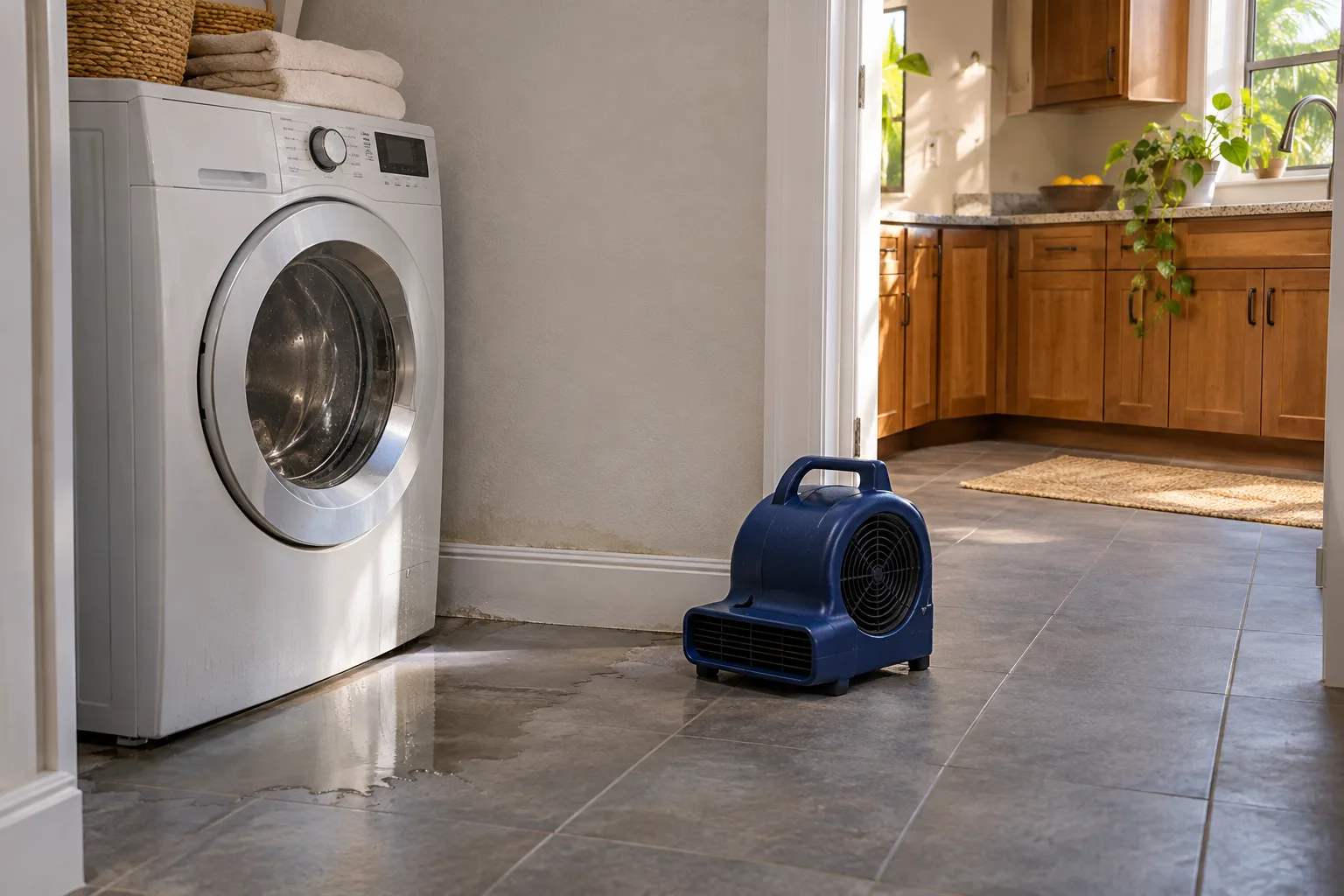
Plumbing repair does not remove moisture from finishes.
Stopping the source prevents more water from entering, but affected materials may still require attention. The restoration plan follows the observed conditions, not the size of a visible stain.
Review structural dryingFrom source control to moisture review.
Confirm source-control status
Tell us whether a plumber has identified the leak and completed the repair. “Not sure” is a useful starting answer.

Review affected materials
Document accessible moisture conditions and discuss any needed access or material removal.

Dry and review the next step
Monitor the affected area and share relevant records with those planning subsequent repairs.
Follow the moisture through the affected materials.
Visible water at one point may not identify every affected layer or adjoining space. The restoration plan should explain what can be observed and where access is limited.
Flooring and assemblies
Floor coverings, underlayment, adhesives, trim, and adjacent wall materials can respond differently to moisture. Condition and access affect whether materials can be dried in place or need removal. No single equipment setup can guarantee drying inside every inaccessible assembly.
Walls and cabinets
Moisture may reach baseboards, lower drywall, cabinet bases, closets, and rooms beyond the first visible area. Ask how observations will be recorded, how concealed conditions will be handled, and which proposed openings require authorization.
Mold or uncertain conditions
Report musty odors, visible suspected growth, prolonged dampness, or uncertainty about the water source. Avoid disturbing affected materials or directing household fans across suspected growth. The work may need a different review or qualified specialist.
Keep the work and responsibilities clear.
Plumbing
Source diagnosis and pipe repair belong with the qualified plumbing provider. Keep their findings and repair record.
Mitigation
Review affected materials, access, water extraction, drying, and documentation of the restoration work.
Rebuilding
Discuss flooring, wall finishes, concrete, or other repair needs with the responsible qualified providers.
Understand the next decisions.
A clear handoff connects the source-repair findings with the restoration work and any rebuilding still required.
Scope and estimate
Affected area, material layers, access, extraction needs, equipment, monitoring, removal, and contents all influence the estimate. Ask what is included and how changes will be approved if additional moisture or damage is found.
Timing and progress
Drying depends on the materials, conditions, access, and measured response. Review progress with the restoration team rather than relying on a fixed number of days. Repair scheduling may also depend on qualified trades, finishes, and inspections. Explore what affects restoration timing.
Records and coverage
Keep the plumber’s findings, photographs, moisture observations, drying records, estimates, authorizations, and invoices together. Hugo can organize restoration records; the insurer and policy determine coverage, reimbursement, and claim decisions.
Questions about slab-leak water damage
Do I need a review after the plumber finishes?
A moisture review may still be appropriate if building materials were affected. Source repair and drying address different parts of the loss.
Must all the flooring be removed?
Not automatically. Material type, moisture location, condition, and practical access affect what can remain and what may need removal.
Can a stain confirm a slab leak?
No. The source should be evaluated by an appropriate qualified professional. A visible symptom alone does not establish the cause.
What records should I keep?
Keep the source-repair report, photographs, restoration observations, estimates, authorizations, and drying records. Your insurer decides how your policy applies.
Can I request help before a plumber confirms the leak?
Yes. Describe the visible damage and what is still unknown. Plumbing diagnosis and repair require the responsible plumbing provider; restoration planning can address the affected materials and coordinate around those findings.
What affects the cost of drying after a slab leak?
Floor and wall layers, the area affected, access, water removal, monitoring and contents handling shape the proposed work. Ask which findings support each item and how further damage or scope changes will be authorized.
Tell us what has been confirmed.
Include the affected rooms and whether the source has been diagnosed and repaired. Call for active water damage.