Call 911 first for active fire, medical danger, suspected gas, structural collapse, or another immediate life-safety hazard.
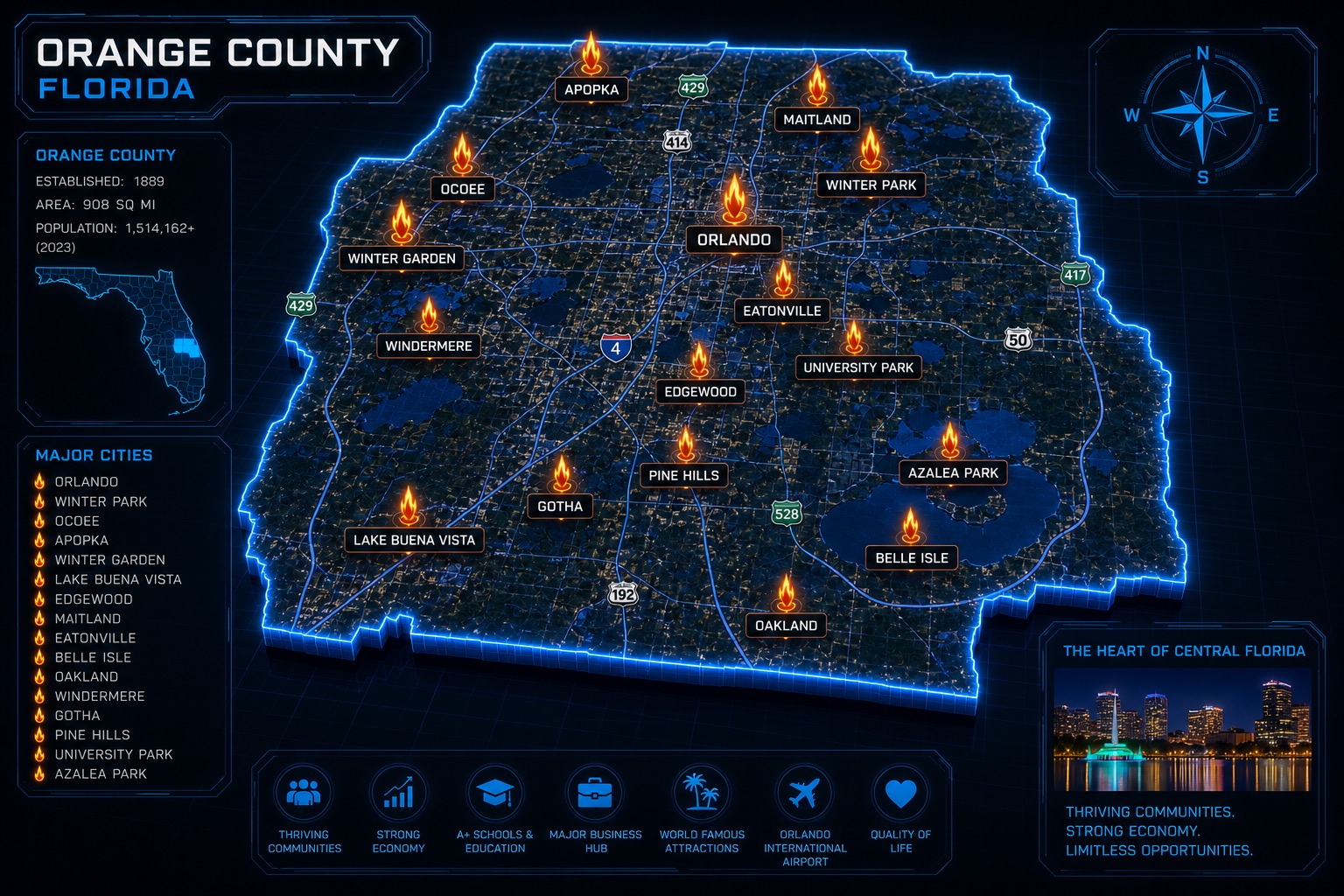
Orange County Context
Broad service-area reference—not an exact dispatch boundary
Call with the exact property address. Current routing depends on safety, weather, traffic, access, demand, and crew availability.
24/7 emergency line
Verified 15-minute dispatch process
St. Cloud-based team
Licensed and insured
Florida Mold Remediator MRSR5171
IICRC-certified technicians
English and Spanish phone support
Residential and commercial
Dispatch refers to initiating and assigning the response process. Arrival time varies by location, weather, road conditions, access, and crew availability.
At a Glance
Who Provides Emergency Restoration in Orange County?
Hugo Fire & Water Restoration provides 24/7 residential and commercial restoration throughout Orlando and Orange County. The St. Cloud-based team handles water extraction and drying; fire, smoke, and soot cleanup; Florida-licensed mold remediation; storm cleanup; board-up; roof tarping; contents; and documentation support. English and Spanish phone support is available. Insurance decisions remain with the carrier.
Provider
Hugo Fire & Water Restoration
Coverage
Serving Orlando and Orange County from St. Cloud
Availability
24/7 emergency phone intake
Phone
(888) HUGONOW / (888) 484-6669
Dispatch
Verified 15-minute dispatch initiation process—not a 15-minute arrival promise
Base
4551 Hunting Lodge Dr, Saint Cloud, FL 34772
Mold license
Florida Mold Remediator MRSR5171
Technicians
IICRC-certified technicians
Languages
English and Spanish phone support
Properties
Residential and commercial restoration
Insurance
Documentation support; carrier decisions remain with the applicable insurer
One Clear Emergency Path
Call First for Active Damage
Share what you can observe safely, then use the form for property, access, language, and documentation details.
Start With the 24/7 Phone Line
Call when water is spreading, the building is exposed, smoke or soot is present, or another supported condition needs prompt attention. The first conversation screens safety, location, damage, occupancy, and access.
Water, fire or smoke, mold, storm, openings, or contents.
Property location
Address, community, access details, and on-site contact.
Active conditions
Moving water, smoke, exposure, power, or unsafe access.
Areas affected
Rooms, units, floors, roof, attic, contents, or work zones.
Access and occupancy
Owner, tenant, manager, guest, utility, or after-hours details.
Contact and records
Callback, language preference, and optional nonsensitive claim notes.
Orange County Damage Profile
Different Buildings Create Different Restoration Problems
Orange County combines urban, hospitality, residential, lake, multifamily, and commercial settings. Source, materials, access, occupancy, and address guide the response.
Tropical rainfall and wind-driven openings
Orange County is inland: tropical systems bring rain, wind, opening damage, and freshwater intrusion—not coastal storm surge. Water may move through ceilings, cavities, and floors.
Severe thunderstorms and lightning
Warm-season storms can bring intense rain, gusts, limbs, and lightning. Fire, electrical, wind, and water concerns require safety screening before cleanup.
Roof, window, and door intrusion
Roof or opening leaks may travel along decking, framing, or insulation. The visible stain may not identify the source or full moisture path.
Plumbing, slab, appliance, and supply failures
Pressurized lines can release water quickly; concealed leaks may remain hidden; appliance connections can spread water across finished floors. Each source needs a specific response.
HVAC condensate, humidity, and delayed discovery
Clogged drains, pan failures, and condensate leaks can wet nearby materials. Humidity and delayed discovery in rentals, hotel rooms, or offices can extend the damage.
Stormwater, lakes, wetlands, and floodplains
Lakes, wetlands, canals, and floodplains affect drainage, but exact risk varies by address. Lake-adjacent and mapped-area assumptions require official address-level review.
New development and established building stock
New buildings can have supply, appliance, or roof failures. Established properties may need added care around older assemblies or custom finishes; age alone proves nothing.
High occupancy and managed operations
Hotels, apartments, HOAs, restaurants, offices, and mixed-use buildings may need occupant communication, controlled access, shared-system review, work zones, and room- or unit-level records.
Exact risk depends on location, construction, drainage, maintenance, building systems, occupancy, and incident conditions. County context cannot replace an address-level map review or on-site assessment.
Choose the Damage Type
Orange County Restoration Services
Choose the closest damage type. Detailed child pages explain each scope; call first for an active loss.
Local property patterns help explain access, occupancy, building-system, and communication differences.
Orlando urban core
Downtown Orlando, College Park, Baldwin Park, and mixed-use corridors
Apartments, offices, and mixed-use buildings may need management approval, tenant coordination, controlled access, and shared-system review.
Tourism and hospitality corridor
International Drive, Lake Buena Vista, and nearby tourism districts
Hotels, rentals, restaurants, and retail may need room records, discreet work zones, guest pathways, and operational coordination.
West Orange growth areas
Winter Garden, Horizon West, Ocoee, Windermere, Oakland, and Gotha
Subdivisions, townhomes, HOAs, multifamily buildings, and commercial growth face plumbing, appliance, roof, and storm incidents regardless of building age.
Established communities
Winter Park, Maitland, Eatonville, Edgewood, Belle Isle, Conway, and older Orlando neighborhoods
Mature trees, older assemblies, custom finishes, multifamily buildings, and mixed occupancy require decisions based on the property—not neighborhood age.
Southeast Orange County and Lake Nona
Lake Nona, medical offices, multifamily development, and modern commercial buildings
Managed and technology-dependent properties may require controlled access, equipment protection, stakeholder communication, and careful work sequencing.
Northwest Orange County and regional access
Apopka, large parcels, Florida's Turnpike, I-4, SR 408, SR 417, and SR 429
Broad geography, traffic, weather, safety, demand, and access affect routing after dispatch begins.
References to districts, facilities, roads, and public agencies describe geography and operations only; they do not imply affiliation or endorsement.
Noncommercial Public Information
Orange County, Orlando, and Federal Resources
Official sources for alerts, flooding, maps, weather, tropical forecasts, and mold guidance.
Orange County Emergency Information
County alerts, preparedness, response, and recovery.
These links are public references, not partners or endorsements. They do not replace 911, official emergency instructions, policy guidance from an insurer, or a professional property assessment.
Company Credentials
Credentials, Reviews, and Company Details
Review Hugo’s company details, credentials, restoration photos, team profiles, and customer review sources before you authorize restoration work.
Hugo's published business address is 4551 Hunting Lodge Dr, Saint Cloud, FL 34772.
English and Spanish Support
English and Spanish phone support is available.
Organized Restoration Records
Insurance Documentation Support
Hugo can organize applicable records created during authorized restoration work so owners, managers, and authorized insurance contacts can understand what was observed and performed. Hugo does not act as an insurer, public adjuster, attorney, or coverage decision-maker.
Documentation support does not guarantee coverage, reimbursement, or claim approval. Insurance decisions remain with the carrier under the applicable policy.
Clear answers about dispatch, water, mold, fire, storms, temporary protection, managed buildings, documentation, languages, and service coverage.
Last reviewed July 15, 2026.
Emergency Response
Hugo Fire & Water Restoration provides 24/7 emergency restoration throughout Orlando and Orange County. The St. Cloud-based team supports water, fire and smoke, mold, storm, board-up, roof-tarping, contents, and documentation needs for residential and commercial properties.
The verified 15-minute dispatch process means Hugo begins routing and coordination within 15 minutes after the necessary intake information is received. It does not promise that a crew will arrive within 15 minutes.
Protect people first, call 911 for immediate danger, stop a water source only if it is safe, avoid damaged electrical areas, and photograph visible conditions from a safe location. Do not enter unstable, fire-damaged, or contaminated areas.
Provide the property address, damage type, when it started, whether the source is active, areas affected, safety concerns, occupants, access instructions, language preference, and the best callback number.
Water Damage and Mold
Water removal and drying should begin as soon as conditions are safe and the scope is authorized. Prompt action helps limit migration, material damage, and moisture that can support mold growth.
Yes. Water can move into wall cavities, insulation, cabinets, subfloors, flooring systems, and adjoining rooms even when the visible surface looks dry. Inspection and readings help define accessible moisture conditions.
Yes. A roof leak can leave insulation, drywall, wood, or concealed cavities damp, and delayed drying can create mold-supporting conditions. The leak source and affected materials must both be addressed.
No. Flood risk and mapped floodplain status vary by address, and properties outside mapped high-risk areas can still experience flooding. Use official county or FEMA maps for property-level information.
Fire, Storm, and Temporary Protection
Yes. Water used during suppression can affect floors, walls, ceilings, contents, and lower levels in addition to the fire and smoke damage. The restoration plan should account for both conditions.
Yes. Hugo provides supported smoke and soot cleanup using methods selected for the residue, surface, contents, odor source, and affected air pathways found at the property.
Board-up may be appropriate when broken windows, doors, storefronts, or wall openings leave a property exposed after fire, storm, impact, or authorized emergency access. Structural and electrical hazards must be cleared first.
Roof tarping may be appropriate when a safe, accessible roof opening is allowing rain into the building. It is temporary protection, not a permanent roof repair, and unsafe roofs should not be entered.
Commercial and Managed Properties
Yes, when site conditions and the authorized parties allow it. Planning can address work-zone separation, access, utilities, egress, employees, tenants, customers, equipment, and phased operations without promising universal occupancy.
Yes. Coordination may include room or unit records, manager authorization, guest or tenant pathways, after-hours access, shared systems, noise, contents, elevators, and the areas that can remain operational.
Yes. Hugo can coordinate with authorized HOA and property-management contacts on units, common areas, access, resident communication, documentation, vendor handoffs, and restoration updates.
Documentation and Service Details
When safe, document the source area, visible conditions, affected rooms or units, materials, contents, temporary protection, and relevant serial or location details before the scene changes. Do not delay urgent safety or mitigation work just to take photos.
Applicable records can include photos, affected-area notes, moisture readings, drying logs, equipment records, contents inventories, temporary-protection notes, estimates, invoices, and authorized communication.
No. Hugo can organize restoration records but cannot guarantee coverage, reimbursement, or claim approval. The applicable insurer makes claim decisions under the policy.
24/7 Orange County Help
Active Property Damage? Start With One Call.
Call for water, fire and smoke, mold, storm, structural drying, board-up, roof-tarping, contents, or documentation needs. English and Spanish phone support is available, and the verified 15-minute dispatch process begins coordination after intake.
Call 911 first for immediate life-safety hazards. The 15-minute process is not an arrival-time guarantee.
Customer guide to property restoration in Orange County
When your property needs property restoration in Orange County, keep people away from hazards. Note when property restoration in Orange County began and whether conditions are changing.
Reviewed by Hugo Fire & Water Restoration content team on 2026-07-31.
What is the safest first step for property restoration in Orange County?
Before property restoration in Orange County, leave unsafe areas. Describe only property restoration in Orange County conditions that you can see safely.
Safety before property restoration in Orange County
For property restoration in Orange County, avoid wet electrical areas. Report whether water is still moving during property restoration in Orange County.
Confirm which areas are safe to enter before property restoration in Orange County
Report changing conditions connected to property restoration in Orange County
Details to share about property restoration in Orange County
For property restoration in Orange County, share the address, source, affected rooms, and timeline. Also explain access and the authorized contact for property restoration in Orange County.
List each space affected by property restoration in Orange County
Explain when property restoration in Orange County was first noticed
Records to keep for property restoration in Orange County
Keep safe photos, dates, and room names for property restoration in Orange County. Save contacts and completed-work notes about property restoration in Orange County.
Photograph property restoration in Orange County only from a safe location
Keep receipts and messages about property restoration in Orange County together
Questions to ask before work begins: Property restoration in Orange County
Can I call before I understand the full extent of property restoration in Orange County?
Yes. Tell Hugo what you can safely see for property restoration in Orange County. Explain when property restoration in Orange County began and whether the source is still active.
Can Hugo document work related to property restoration in Orange County?
Hugo can organize factual records for property restoration in Orange County; your insurance policy and carrier determine coverage.