Property Management Restoration in Central Florida
Based in St. Cloud, Hugo Fire & Water Restoration helps Central Florida property managers coordinate emergency mitigation, cleanup, temporary protection, documentation, access, and communication for occupied units, common areas, rental properties, and other managed spaces.
If there is active fire, electrical danger, structural collapse, gas odor, medical risk, or another immediate life-safety danger, call 911 first.
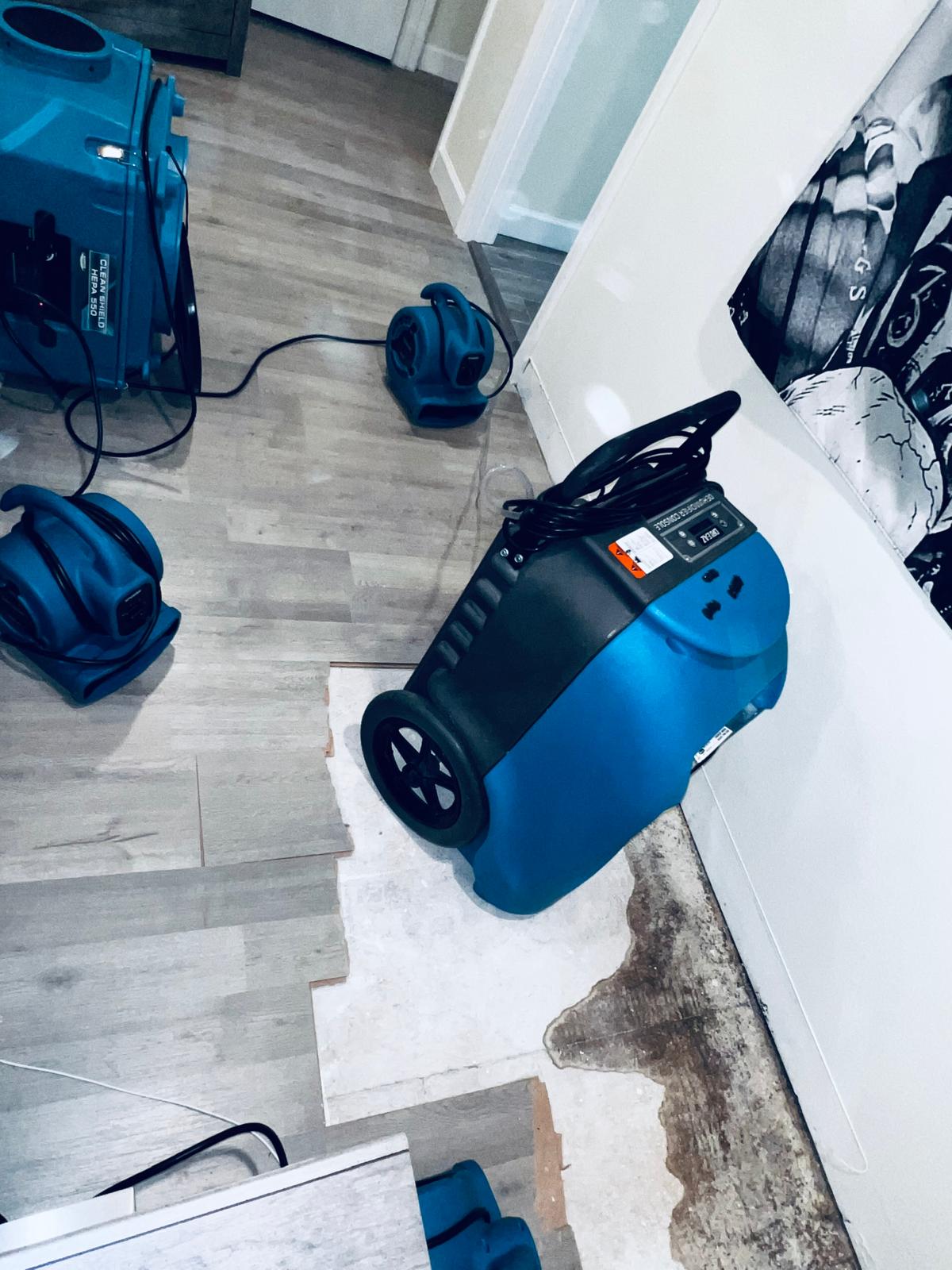
Managed-property drying visual
Drying equipment shown inside a managed interior. Scope and placement depend on affected materials, access, and conditions.
Open 24 hours
Licensed and insured
FL Licensed Mold Remediator MRSR5171
IICRC-certified technicians
St. Cloud based
English and Spanish-speaking team
Property Manager Restoration at a Glance
Start with safety, authority, access, and active conditions
A clear first call helps route active damage while keeping occupants, authorized contacts, affected spaces, and access restrictions in view.
How should property managers handle a restoration emergency?
Protect occupants first, identify the source only when safe, confirm authority and access, document affected units or common areas from a safe position, notify the appropriate contacts, and call for active mitigation needs.
What information should a property manager provide on the first call?
Share the property location, affected areas, whether damage is active, occupancy status, known safety concerns, the authorized contact, safe-access details, and who should receive project updates.
If there is active fire, electrical danger, structural collapse, gas odor, medical risk, or another life-safety danger, call 911 first. Do not enter an unsafe area to inspect damage or complete a form.
Immediate Management Actions
What property managers should do first
Use this sequence as practical intake guidance. Site conditions, authority, safety, and the affected property will determine the actual response.
01Address life-safety hazards and protect occupants. Call 911 first for immediate danger.
02Confirm whether the damage is active, spreading, or exposing the property.
03Identify the source only when it is safe and accessible to do so.
04Confirm the authorized manager, owner, board contact, or decision-maker.
05Identify affected units, common areas, offices, exterior areas, or connected spaces.
06Organize safe access through approved keys, entry contacts, operating hours, and restricted areas.
07Notify the appropriate owner, occupants, board, asset contact, or approved vendor.
08Call Hugo when damage is active or emergency mitigation is needed.
09Photograph visible conditions only from a safe position without disturbing materials.
10Preserve authorization, service, access, and communication records.
Managed-Property Services
Restoration help organized around the damage
One managed-property loss can involve several services. Choose the clearest starting point, or call and describe what is active now.
Water Mitigation and Structural Drying
Water from plumbing, appliances, roofs, storms, HVAC systems, or neighboring spaces can affect occupied units, vacant units, walls, floors, ceilings, and common areas. Hugo can help with extraction, moisture assessment, drying, cleanup, and applicable documentation.
Fire damage can involve smoke, soot, odor, debris, damaged contents, and water used during firefighting. Work begins after safe access and appropriate authorization are confirmed.
Moisture or property damage can create mold, odor, or surface-cleaning concerns across units and shared spaces. Hugo can discuss containment, material decisions, remediation, supported sanitization, and documentation based on the conditions found.
Storm-related roof damage, broken openings, wind-driven rain, or debris may require water mitigation, board-up, roof tarping, cleanup, and temporary protection while permanent repairs are planned.
Occupied spaces, furnishings, records, equipment, and stored contents can affect access and work sequencing. Hugo can help organize authorized contents work and area-by-area restoration information.
Applicable records can include photographs, affected-area notes, mitigation records, moisture or drying information, temporary-protection notes, and authorized project communications without promising insurance outcomes.
Identify unit and common-area responsibilities, shared assemblies, board or association contacts, resident access, and approval authority.
Long-Term Rental Properties
Organize owner, tenant, manager, safe-entry, affected-area, contents, and communication details around the authorized scope.
Vacation and Short-Term Rentals
Coordinate remote owners, managers, guest or occupant status, furnishings, scheduled access, and property updates without promising booking outcomes.
Managed Commercial Properties
Account for authorized owners or facility contacts, occupied zones, operating hours, restricted areas, vendors, and affected operations.
Occupied Units
Plan access and communication around occupants, belongings, work-zone restrictions, equipment, and the conditions present.
Vacant and Seasonal Properties
Confirm authority and safe entry, then organize affected-area documentation, mitigation, temporary protection, cleanup, and property updates.
Common Areas and Management Spaces
Identify hallways, shared-access areas, offices, utility spaces, exterior openings, or other managed areas affected by the loss.
Stakeholder and Access Coordination
Coordinating occupants, owners, boards, vendors, and access
Managed-property restoration often requires several authorized people to receive accurate information. Start by defining who can approve work, which spaces are affected, how crews can enter, and who should receive updates.
Authorized decision-maker and escalation contact
Occupied, vacant, and restricted spaces
Owner, board, occupant, and manager communication
Approved vendor and insurance contacts
Operating hours, parking, gates, keys, and entry contacts
Unit-by-unit or area-by-area documentation
Coordination Overview
Keep restoration information connected through one authorized contact path
The property manager identifies the approved contacts and information flow. Hugo provides factual project information to authorized recipients without acting as legal counsel, a public adjuster, or the insurance carrier.
Authorized Property Manager
Confirms authority, access, affected spaces, restrictions, and update recipients.
Occupants or tenants
Provide condition reports and follow property-specific access, notice, and work-zone instructions from authorized management.
Owner or board
Receives authorized property updates, approvals, and documentation according to the management structure.
Hugo restoration team
Documents observed conditions and authorized work while communicating safety, access, progress, and next-step information.
Approved vendors or insurance contacts
Receive factual project information when authorized; insurance coverage and claim decisions remain with the carrier.
Documented Restoration Work
Managed-property restoration work across Central Florida
Explore documented restoration work completed by the Hugo team. Managed-property project examples will be added as verified project information becomes available.
Review Hugo's documented restoration gallery
The gallery includes verified company project media. It does not label work as multifamily, HOA, rental, or managed-property restoration unless the source record supports that context.
A clear sequence for safety, access, mitigation, and communication
The exact sequence depends on the property, conditions, authorization, and affected spaces. These steps keep the main coordination needs visible.
101
Emergency Contact and Authority Confirmation
Confirm the authorized manager or decision-maker, property location, active damage, affected spaces, occupancy, access restrictions, and immediate safety issues.
202
Occupant, Access, and Property Review
Identify occupied and vacant areas, unit and common-area access, approved entry contacts, secure spaces, operating hours, and required restrictions.
303
Mitigation and Temporary Protection
Begin authorized extraction, drying, board-up, roof tarping, cleanup, containment, or stabilization based on documented conditions.
404
Unit and Common-Area Documentation
Record affected spaces, visible conditions, mitigation activity, applicable moisture or drying information, access notes, and project progress.
505
Stakeholder Communication Support
Organize factual project information for authorized managers, owners, boards, occupants, vendors, or insurance contacts without guaranteeing claim decisions.
606
Follow-Up Restoration Planning
Review completed mitigation, remaining concerns, access needs, affected materials, and appropriate next restoration steps.
Documentation and Communication
Managed-property documentation and communication support
Documentation may include project photographs, affected-unit and common-area notes, access records, mitigation activity, moisture or drying information, cleanup notes, temporary-protection records, stakeholder updates, and authorized insurance communication support.
Insurance coverage, reimbursement, approval, and policy interpretation are determined by the applicable insurance carrier and are not guaranteed. Availability and arrival timing may depend on location, conditions, access, weather, current demand, and crew availability.
Property management restoration across Central Florida
Hugo is based in St. Cloud and serves managed properties across eight Central Florida counties. Call to confirm service for the exact property address.
St. Cloud Base
24/7 managed-property restoration intake for Central Florida.
Current feedback appears when it is available from Hugo's connected public profile.
Property Manager FAQ
Property manager restoration questions
Practical answers about first calls, affected units, access, authorization, documentation, stakeholder updates, insurance boundaries, and service coverage.
Address life safety first, determine whether water is still active, identify the source only when safe, confirm affected spaces and occupancy, and call Hugo for active extraction or mitigation needs.
Share the property location, affected units or areas, whether damage is active, occupancy, known hazards, authority, safe-access details, and the contacts who need updates.
Explain the approved entry contact, operating hours, parking or delivery limits, restricted areas, occupied spaces, and who can authorize entry. Do not submit gate or alarm codes through analytics or public channels.
Yes. Water, smoke, soot, odor, moisture, or shared building systems can affect more than one unit or common area. An on-site assessment may be needed to understand the affected boundary.
Keep factual photographs, affected-area notes, occupant or manager reports, access notes, mitigation records, and communication records organized by the relevant space when safe and authorized.
Yes. Start by identifying the authorized decision-maker, site contact, approval path, affected spaces, access rules, and who should receive project information.
Yes. Intake can account for occupied, vacant, seasonal, and partially occupied properties. The work plan depends on safety, access, authorization, and actual site conditions.
Identify every known affected or adjoining space, shared assembly, occupant, and access contact. Moisture or damage may extend beyond the source unit and require further assessment.
Access and work sequencing can account for occupied areas, notices, restricted zones, operating hours, and approved entry contacts when conditions and authorization allow.
Yes. One event may involve extraction, drying, fire or smoke cleanup, mold remediation, board-up, roof tarping, contents work, temporary protection, and damage documentation.
Temporary protection may be appropriate when safe, accessible, and authorized openings or roof damage expose the property to weather or unauthorized entry while permanent repairs are planned.
Hugo can organize factual restoration information for authorized HOA or board contacts. The property manager should identify the approved contacts and decision path.
Applicable records can include photographs, affected-area notes, access notes, mitigation and cleanup records, moisture or drying information, temporary-protection notes, and authorized project communications.
No. Photographs can help with intake, but concealed moisture, shared assemblies, soot, odor, material conditions, utilities, and access limits may require an on-site assessment.
Hugo serves Osceola, Polk, Brevard, Orange, Lake, Sumter, Volusia, and Seminole counties from its St. Cloud base. Call to confirm service for the exact property address.
Call first when damage is active, spreading, or exposing the property. Use the managed-property request form for contact, access, affected-area, and follow-up details.
No. Hugo provides insurance documentation support, but coverage, reimbursement, approval, policy interpretation, and claim decisions are determined by the insurance carrier.
No. Hugo provides restoration services and factual project information, not legal advice, lease interpretation, code rulings, habitability determinations, or tenant-law guidance.
The authorized property contact should identify the manager, owner, board, facility contact, approved vendor, or insurance contact who should receive factual project updates.
When safe, document visible conditions, affected spaces, source information, occupant reports, access restrictions, and authority before irreversible work. Do not delay urgent safety or mitigation actions solely to take photographs.
Managed-Property Request
Request managed-property restoration help
For active property damage, call first. Use the form for contact, property location, occupancy, affected spaces, authorization, safe-access, and follow-up details.
Do not enter an unsafe area or delay an emergency call to complete this form. Do not include gate codes, alarm codes, tenant names, policy numbers, or claim numbers.
24/7 Managed-Property Help
Need property manager restoration help now?
Call for active mitigation, cleanup, drying, temporary protection, or damage-documentation needs. Use the form for property, access, contact, and stakeholder details.
Call 911 first for immediate life-safety danger. Arrival timing depends on location, conditions, access, weather, demand, and crew availability.
Coordinate restoration across tenants, owners, vendors, and access rules
Property managers often need one factual record that works across several stakeholders. Start with safety, the affected units or common areas, authorized contacts, and site access.
Reviewed by Hugo Fire & Water Restoration content team on 2026-07-31.
What should a property manager include in the first restoration call?
Share the address, affected units or zones, known source, incident time, occupancy, and hazards. Include access instructions, the owner contact, and the person authorized to approve decisions.
Define affected spaces
Use consistent unit, floor, room, or building names so occupants, ownership, vendors, and Hugo are discussing the same areas.
Separate affected and unaffected zones
Report active leaks or changing conditions
Clarify access and authority
Explain keys, gates, tenant notice, operating hours, pets, alarms, parking, and who can authorize work or receive updates.
Name one primary site contact
Document after-hours entry instructions
Maintain a shared factual record
Keep safe photos, dates, unit notes, communications, receipts, and work records without making promises about coverage or liability.
Use timestamps for changing conditions
Keep carrier decisions separate from contractor facts
Coordinate restoration across tenants, owners, vendors, and access rules: customer questions
Can several units or stakeholders be discussed on one call?
Yes. Organize the affected areas and contacts first so the conversation remains clear.
Who decides what insurance covers?
The applicable policies and carriers determine coverage; Hugo can document factual conditions and completed work.