Based in St. Cloud, Hugo Fire & Water Restoration helps Central Florida property owners respond to hurricane and tropical-storm damage with emergency roof protection, board-up, water mitigation, structural drying, cleanup, mold-remediation support, and damage documentation.
Call 911 first for active fire, electrical danger, structural collapse, gas odor, medical risk, or another immediate life-safety danger. Report downed lines to 911 or the utility provider, and do not enter an unsafe area.
Open 24 hours
Licensed and insured
Florida Licensed Mold Remediator — MRSR5171
IICRC-certified technicians
St. Cloud based
English and Spanish phone support
Hurricane Restoration at a Glance
Start with safety, active exposure, and visible conditions
A clear first call helps identify immediate hazards, active water entry, damaged openings, affected areas, safe access, and the authorized property contact.
What should you do after hurricane damage in Central Florida?
Address immediate safety hazards first, avoid downed lines and unstable areas, document visible conditions from a safe location, and call for emergency roof protection, board-up, water mitigation, drying, cleanup, and damage-documentation support.
What should I check after the storm passes?
From a safe location, look for roof openings, broken windows, exterior damage, ceiling stains, active leaks, standing water, wet flooring, electrical concerns, unstable trees, and blocked access. Do not enter areas that appear structurally or electrically unsafe.
If there is active fire, electrical danger, structural collapse, gas odor, medical risk, or another life-safety danger, call 911 first. Do not enter standing water near electrical systems or climb onto a damaged roof.
Immediate Post-Storm Safety
What to Do After Hurricane Damage
Use this sequence only from a safe location. Site conditions, emergency authorities, utilities, access, and the affected property determine the next safe action.
01Address immediate life-safety hazards. Call 911 for immediate danger.
02Stay away from downed electrical lines and damaged utility equipment; report them to 911 or the utility provider.
03Do not enter areas with structural collapse, unstable roofs, or falling debris.
04Avoid standing water when electrical hazards or potentially contaminated materials may be present.
05Confirm that everyone is safely accounted for.
06Check the property only from a safe location, and do not climb onto a damaged roof.
07Photograph visible exterior and interior conditions only when it is safe to do so.
08Call Hugo for active water intrusion, roof openings, broken windows, or spreading damage.
09Avoid permanent repairs before important conditions are documented when insurance communication may be involved.
10Keep receipts and records for authorized emergency work.
Damage Pathways
Common Types of Hurricane Property Damage
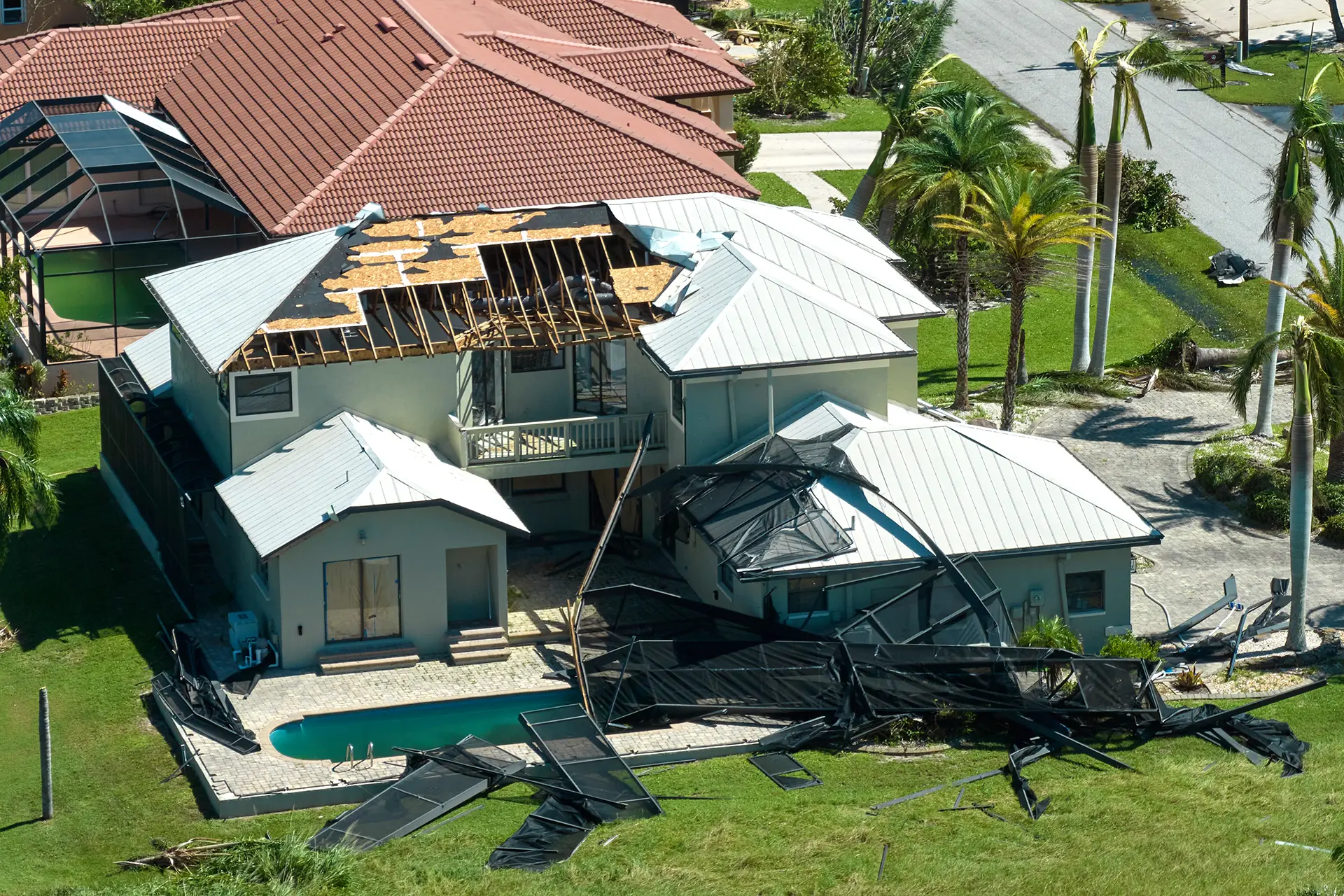
Hurricane damage can create more than one route for water, debris, or weather exposure. These examples are starting points, not a remote determination of the full scope.
Roof Openings or Missing Shingles
Storm damage may expose attics, ceilings, insulation, walls, and interior finishes to wind-driven rain. Temporary roof protection and interior water mitigation may be needed.
Broken Windows or Doors
Damaged openings may allow water, debris, and unauthorized access into the property. Emergency board-up and interior protection may be appropriate.
Wind-Driven Rain
Rain can enter around roofs, windows, doors, soffits, walls, vents, and exterior penetrations, affecting materials beyond the visibly wet area.
Interior Water Intrusion
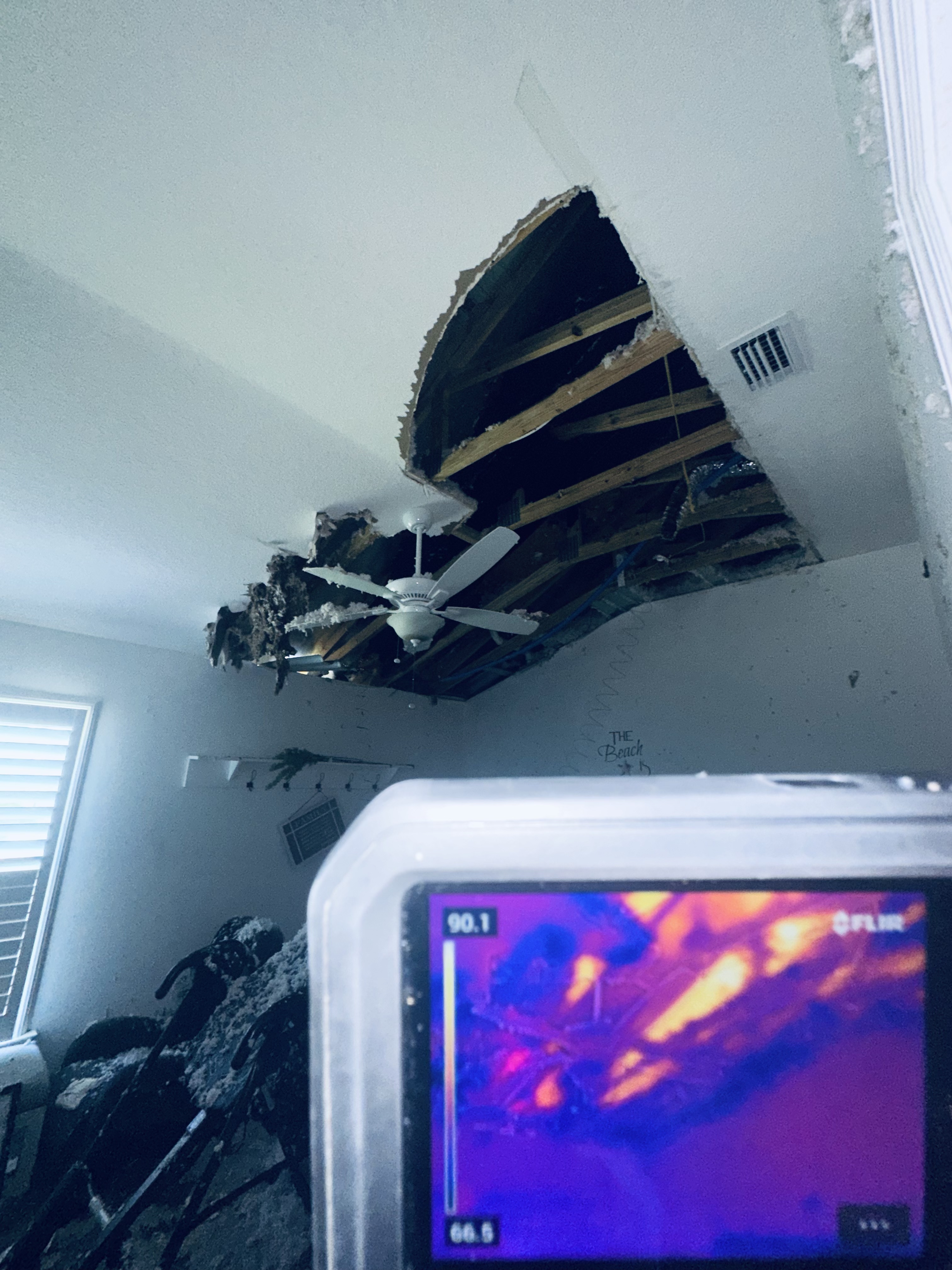
Water may spread through ceilings, walls, flooring, cabinets, insulation, and contents after roof or window damage. An on-site assessment may be needed to understand the affected boundary.
Fallen Limbs or Exterior Impact
Tree limbs and debris may damage roofs, walls, windows, access points, or exterior systems and create additional safety concerns.
Prolonged Power Loss and Humidity
High indoor humidity and limited air movement may slow drying and contribute to odor, condensation, and mold concerns.
Hurricane Response Services
Restoration help organized around the property conditions
A storm loss may involve more than one service. Choose the clearest starting point, or call and describe the damage that is active now.
Emergency Roof Tarping
A damaged roof can allow additional rain into attics, ceilings, walls, insulation, flooring, and occupied areas. Temporary roof tarping may help limit new exposure while conditions are documented and repair steps are evaluated.
Broken windows, doors, or exterior openings can expose interiors to weather, debris, and unauthorized entry. Board-up may help secure accessible openings when site conditions and authorization allow.
Standing or spreading water may affect several rooms and material layers. Hugo can discuss extraction and immediate mitigation priorities based on documented conditions and safe access.
Moisture assessment, drying equipment, monitoring, and drying records may be appropriate after roof, window, or wall exposure. Material conditions determine what can be dried or saved.
Wet materials, debris, odor, or visible growth may require cleanup, moisture control, or a separate mold-remediation assessment. Do not disturb suspected mold or unsafe materials.
Applicable records can include photographs, affected-area notes, mitigation activity, drying information, temporary-protection records, and authorized communication support without promising coverage or approval.
Emergency stabilization focuses on reducing additional exposure after the initial damage. The exact measures depend on safe access, authorization, conditions, and the openings or affected areas found.
Temporary roof tarping where conditions allow
Board-up and protection for damaged openings
Weather protection for exposed areas
Restricted access around unsafe conditions
Water mitigation to limit ongoing interior exposure
Protection of accessible interiors and contents where practical
Photographs and records of temporary measures
Temporary protection is not a permanent repair and cannot guarantee that all additional damage will be prevented.
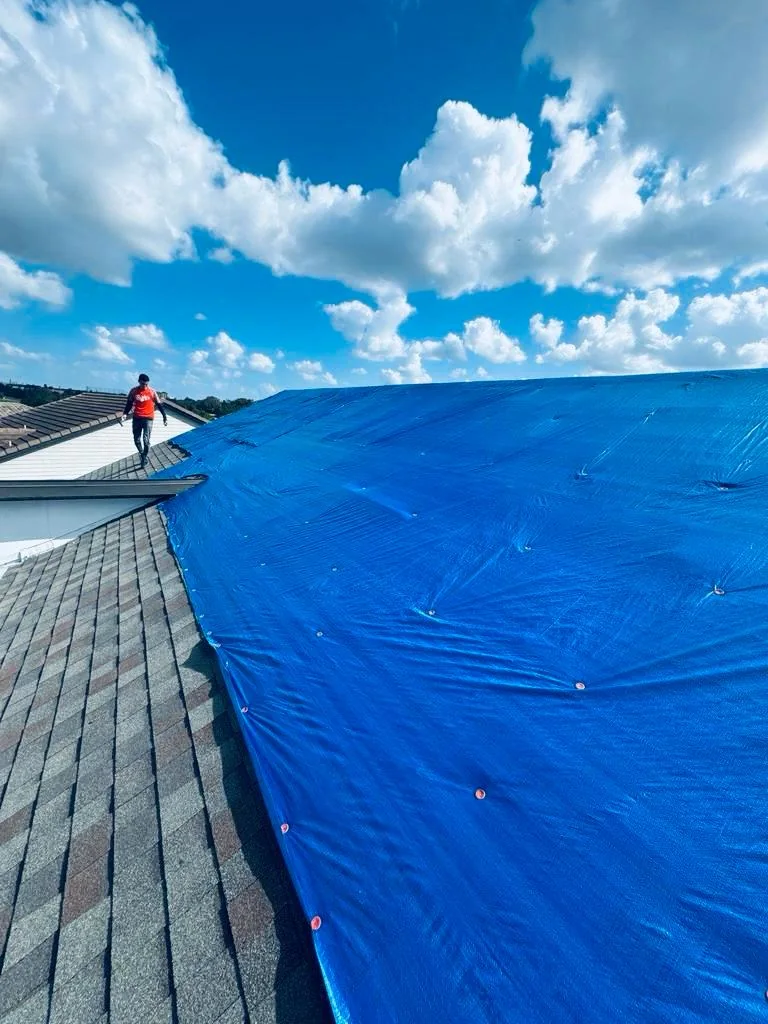
Documented Hugo emergency roof-tarp installation. The gallery record does not identify a hurricane, location, or date, so none is claimed here.
Water Mitigation and Drying
Water Intrusion and Structural Drying After Hurricane Damage
Visible water is not always the full extent of hurricane-related moisture. Wind-driven rain and roof leaks may move into layered or concealed materials, but an assessment is needed before the affected boundary is known.
Areas that may be affected
Attics and insulation
Ceilings and walls
Flooring and subfloors
Cabinets and built-ins
Contents and furnishings
Commercial and managed-property areas
Documented drying actions
Water extraction when appropriate
Material-specific moisture assessment
Drying equipment based on documented needs
Moisture and equipment monitoring
Drying records when part of the scope
Follow-up evaluation for remaining concerns
Hugo can assess documented conditions and discuss extraction, drying, cleanup, and monitoring based on what is found. Not every concealed area is damaged, and not every material can be dried or saved.
Moisture Follow-Up
Moisture and Mold Concerns After Storm Damage
Moisture that remains in drywall, insulation, flooring, cabinets, contents, or concealed spaces may contribute to mold concerns. The appropriate response depends on the conditions found, material involvement, moisture source, and required assessment.
Do not disturb suspected mold. Drying and mold remediation are separate but related services, and this page does not promise mold prevention.
Storm damage can leave materials wet after visible water is removed.
Central Florida humidity may slow drying in affected spaces.
Moisture may remain in concealed or layered materials.
Odor or visible growth may require further assessment.
Access to an affected area may need to remain restricted.
Drying and mold remediation are separate but related services.
Restoration Priorities
A clear sequence from safety to restoration planning
Safety → Stop or limit new exposure → Protect roof and building openings → Remove standing water when appropriate → Dry affected materials → Document conditions and work → Plan next restoration steps.
01Safety
02Stop or limit new exposure
03Protect roof and building openings
04Remove standing water when appropriate
05Dry affected materials
06Document conditions and work
07Plan next restoration steps
Every property and restoration scope is different. Actual conditions may change the order, and temporary stabilization does not include or promise permanent repairs.
Documented Restoration Work
Hurricane and Storm Restoration Work Across Central Florida
Explore documented temporary-protection work completed by the Hugo team. Additional hurricane and storm project examples will be added as project information becomes available.
Emergency stabilization
Emergency Roof Tarp Installed
This documented Hugo gallery record shows roof tarping work. It does not identify a hurricane, location, date, customer, or outcome, so none is represented.
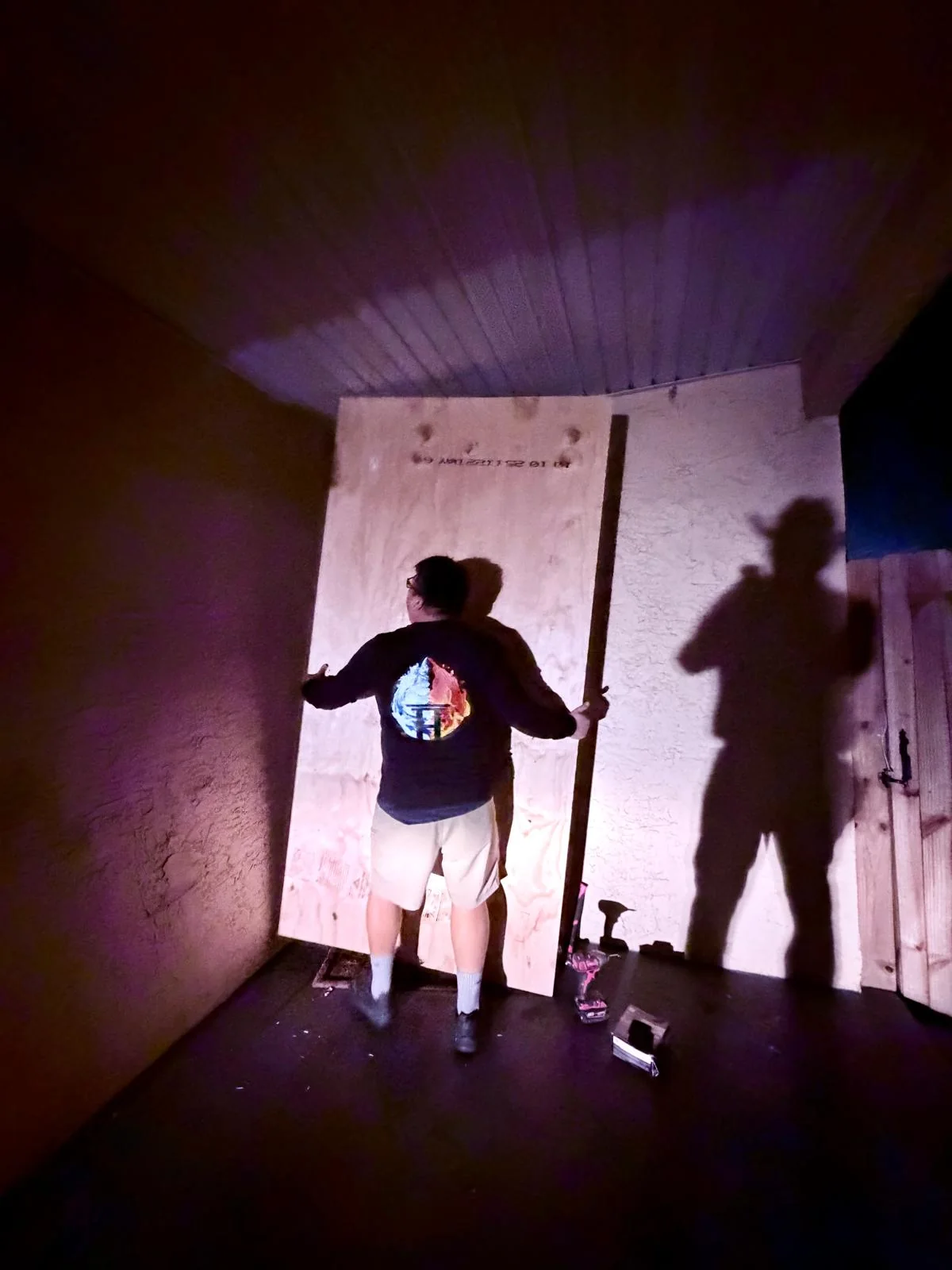
This documented Hugo gallery record shows board-up work. It does not identify a hurricane, location, date, customer, or outcome, so none is represented.
No project record currently verifies a hurricane name, storm date, Central Florida location, or matched before/during/after image series. A comparison section is therefore not shown.
Safety, stabilization, water mitigation, drying, and documentation
A clear process helps property owners understand the main priorities after hurricane or tropical-storm damage. The exact sequence depends on the property and does not guarantee a timeline or result.
101
Safety and Property Access Review
Confirm active hazards, property access, roof or exterior damage, electrical concerns, standing water, affected areas, and the authorized contact.
202
Temporary Roof Protection and Board-Up
Install appropriate temporary protection for documented roof, window, door, or exterior openings when conditions and authorization allow.
303
Water Mitigation and Extraction
Address standing or spreading water, affected rooms, visible water intrusion, and immediate mitigation priorities based on documented conditions.
404
Moisture Assessment and Structural Drying
Evaluate applicable moisture conditions, establish drying needs, place appropriate equipment, and monitor progress when part of the documented scope.
505
Cleanup, Moisture, and Mold Follow-Up
Address applicable cleanup needs and review lingering moisture, odor, damaged materials, or mold concerns that may require additional service.
606
Documentation and Restoration Planning
Organize project records, photographs, mitigation details, drying information, temporary-protection records, and the next restoration steps.
Documentation and Insurance Communication
Hurricane Damage Documentation and Insurance Communication
Hurricane restoration documentation may include project photographs, roof and opening conditions, affected-area notes, mitigation records, drying information, cleanup notes, temporary-protection records, receipts, and authorized insurance communication support.
Insurance coverage and claim decisions are determined by the applicable carrier. Hugo does not guarantee coverage, reimbursement, approval, payment, or claim outcomes and does not interpret policy benefits.
Hugo is based in St. Cloud and serves hurricane and storm-restoration requests across eight Central Florida counties. Call to confirm service for the exact property location and current conditions.
Eight counties and eight priority cities
The links below are a text-based service-area guide. This is not a boundary, travel-time, dispatch, or storm-impact map.
No review is associated with a hurricane project unless the source record supports that connection.
Hurricane Restoration FAQ
Hurricane Restoration Questions
Practical answers about safety, temporary protection, water intrusion, drying, moisture, documentation, insurance boundaries, and Central Florida coverage.
Protect people first. Call 911 for immediate danger, avoid downed lines, unstable areas, damaged roofs, and standing water near electrical systems, then call for help with active property damage.
Call 911 for immediate life-safety danger, fire, suspected gas hazards, structural collapse, or downed lines creating an emergency. Report utility damage through the utility provider when it is safe to do so.
Temporary roof tarping may be appropriate when storm damage has opened a roof area to additional weather and the property can be accessed safely. It is temporary protection, not permanent roof repair.
Board-up may be appropriate for broken windows, doors, or accessible exterior openings that expose the property to weather, debris, or unauthorized entry.
Yes. Rain can move through roofs, soffits, walls, windows, doors, vents, and penetrations into layered or concealed materials. An on-site moisture assessment may be needed to understand the affected boundary.
Moisture that remains in drywall, insulation, flooring, cabinets, contents, or concealed spaces may contribute to mold concerns. The response depends on the source, materials, conditions found, and any required assessment.
Yes. One property may need temporary protection, water extraction, structural drying, cleanup, moisture follow-up, and documentation. Not every property needs every service.
Do not enter standing water when electrical hazards, unstable materials, or potentially contaminated conditions may be present. Call first and describe what you can observe safely.
Hugo can document applicable roof and opening conditions, interior affected areas, mitigation activity, drying information, cleanup, and temporary-protection work within the authorized scope.
Not always. Photographs can help with initial intake, but concealed moisture, layered materials, safety conditions, and the affected boundary may require an on-site assessment.
Do not operate damaged electrical equipment or use unsafe temporary power. Follow utility and emergency guidance, avoid wet electrical areas, and tell Hugo whether power is available when you call.
Keep away from the tree, roof, falling debris, and affected utilities. Tree removal and structural or roofing work may require qualified parties before restoration crews can safely address exposed openings and interior water.
No. Tarping may help limit new exposure, but wind, rain, access, roof condition, attachment points, and later weather can affect temporary protection. It is not a guarantee or permanent repair.
No. This page does not represent every potentially contaminated water condition as part of Hugo's hurricane response. Avoid contact and call to describe what is visible so the team can explain the verified service boundary or an appropriate referral.
Avoid contact, keep people and pets away, do not run air movers through the area, and do not disturb materials. Wait for an appropriate assessment before cleanup begins.
Hugo serves requests across Osceola, Polk, Brevard, Orange, Lake, Sumter, Volusia, and Seminole counties. Call to confirm service for the exact property location and current conditions.
Call first for active water entry, roof openings, broken windows, standing water, electrical concerns, or spreading damage. Use the form for a non-immediate request or to organize safe intake details.
No. Hugo can provide factual restoration documentation and authorized communication support. Coverage, reimbursement, approval, and claim decisions belong to the applicable carrier.
This page describes temporary emergency roof protection. Permanent roofing or structural repair is a separate scope that depends on licensing, authorization, property conditions, and the qualified contractor involved.
The cost depends on safe access, water source and category, affected materials, area size, standing water, moisture conditions, demolition or cleaning needs, equipment, and the scope required after inspection. Hugo can document conditions and explain the proposed mitigation work, but does not promise a price, insurance coverage, reimbursement, or claim outcome before the property is evaluated.
No. The response depends on safety, access, openings, water movement, materials, moisture, cleanup needs, authorization, and documented conditions at the property.
Hurricane Restoration Request
Request Hurricane Restoration Help
For active hurricane or storm damage, call first. Use the form to share only the property and damage details you can gather safely.
Do not enter an unsafe area or delay an emergency call to complete this form. Do not include access codes, policy numbers, claim numbers, or unnecessary personal information.
24/7 Hurricane Restoration Help
Need Hurricane Restoration Help Now?
Call Hugo's 24/7 emergency line for active hurricane or tropical-storm damage involving roof openings, broken windows, water intrusion, standing water, temporary protection, structural drying, cleanup, or documentation needs.
Call 911 first for immediate life-safety danger and report downed lines to 911 or the utility provider. Arrival timing depends on location, access, property conditions, weather, current demand, and crew availability.
Prepare for hurricane damage before conditions change again
After severe weather, one property may need temporary protection, water removal, drying, debris-related cleanup, and careful documentation. Safety and weather conditions determine what can happen first.
Reviewed by Hugo Fire & Water Restoration content team on 2026-07-31.
What should I report after hurricane damage in Central Florida?
From a safe location, report roof or opening damage, standing or moving water, and affected rooms. Include utility concerns, blocked access, and whether emergency officials have limited entry.
Wait for safe access
Stay away from downed lines, floodwater, damaged roofs, unstable ceilings, broken glass, and any area restricted by officials.
Call 911 for immediate danger
Do not climb onto a damaged roof
Describe how weather entered
Note visible openings, the direction water moved, when the damage was first seen, and which materials or rooms are affected.
Report whether rain is still entering
Mention access blocked by debris or flooding
Preserve storm records
Keep safe photos, dates, emergency notices, receipts, claim contacts, and completed-work notes without predicting coverage.
Photograph conditions only when safe
Keep temporary-protection receipts
Prepare for hurricane damage before conditions change again: customer questions
Should I wait for an insurance decision before calling?
For active damage, you can call to discuss safety and mitigation needs; the policy and carrier determine coverage.
Can Hugo help with both openings and interior water?
Describe every visible condition so Hugo can discuss the relevant temporary-protection, extraction, drying, or cleanup services.