Residential Property Restoration in Central Florida
Based in St. Cloud, Hugo Fire & Water Restoration helps homeowners across Central Florida respond to water, fire, mold, storm, and other property damage with mitigation, cleanup, drying, temporary protection, and documentation support.
If there is active fire, electrical danger, structural collapse, gas odor, medical risk, or another immediate life-safety danger, call 911 first.
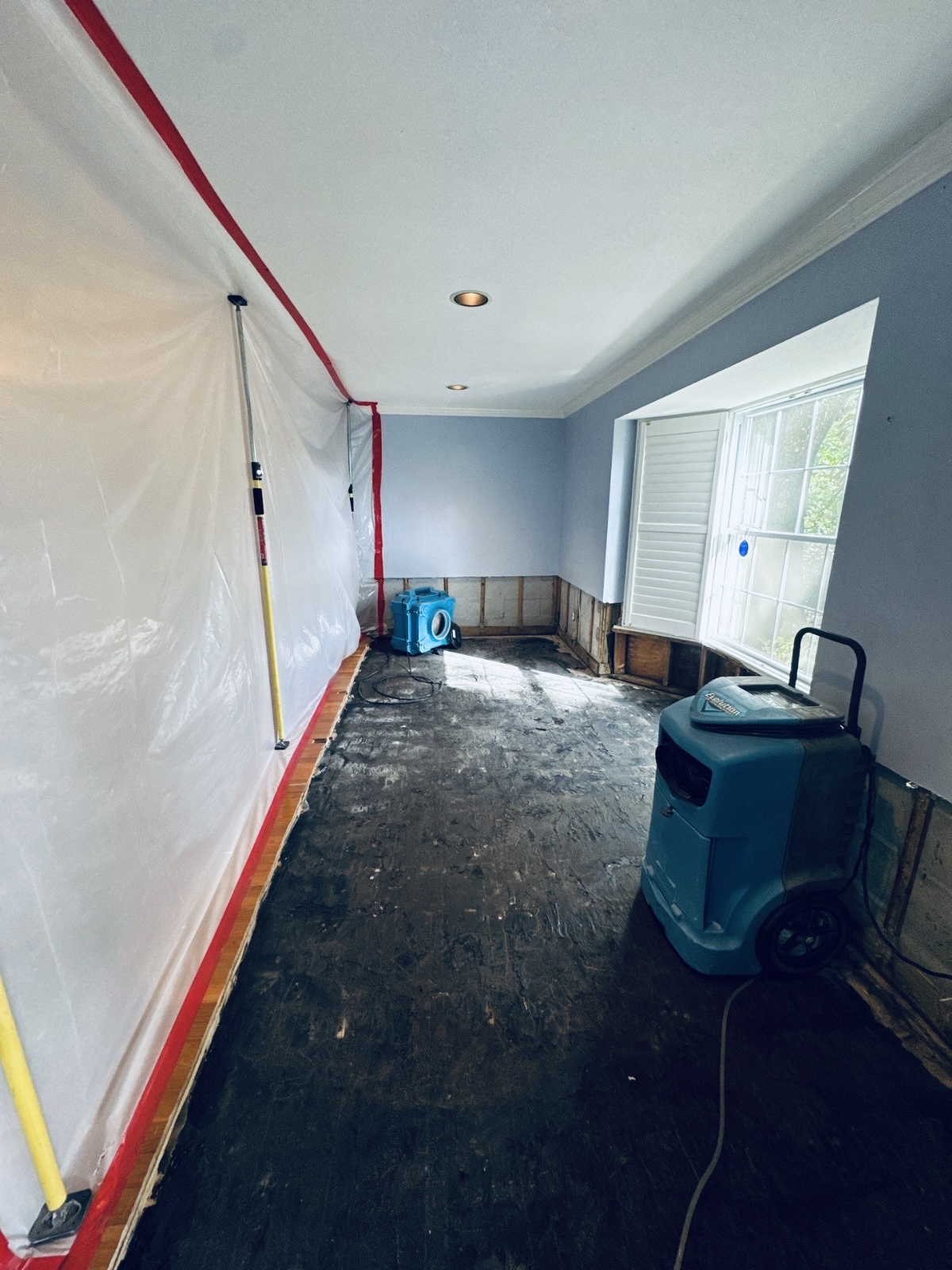
Residential drying visual
Air movers shown in a residential interior. Equipment selection and placement depend on site conditions.
Open 24 hours
Licensed and insured
Florida Licensed Mold Remediator — MRSR5171
IICRC-certified technicians
St. Cloud based
English and Spanish phone support
Residential Restoration at a Glance
Clear first steps for homeowners
Start with life safety, active conditions, the rooms affected, and the people or pets inside. You do not need to know the right restoration terms before calling.
Who should homeowners call after water, fire, mold, or storm damage?
Hugo Fire & Water Restoration provides 24/7 residential mitigation, cleanup, drying, temporary protection, and damage-documentation support from its St. Cloud base across Central Florida.
What should I do after damage occurs in my home?
Address immediate life-safety concerns first. Then call Hugo and explain what happened, which rooms are affected, whether the damage is spreading, and whether anyone remains inside the home.
If there is active fire, electrical danger, structural collapse, gas odor, medical risk, or another life-safety danger, call 911 first. Do not use this page to diagnose an unsafe condition.
Residential Services
Restoration help organized around the damage
One home loss can involve several services. Choose the clearest starting point, or call and describe what is active now.
Home Water Damage Restoration
Water from plumbing failures, appliance leaks, roof problems, storms, or HVAC issues can affect floors, walls, cabinets, ceilings, and hidden spaces. Hugo can help with extraction, moisture assessment, structural drying, cleanup, and documentation based on the conditions found.
A residential fire can leave soot, odor, debris, damaged contents, and water from firefighting activity. Hugo can help organize authorized stabilization, cleanup, drying, contents coordination, and damage documentation.
Lingering moisture can contribute to mold concerns in walls, cabinets, flooring, insulation, and other materials. Hugo can discuss containment, material decisions, cleaning, remediation work, and applicable documentation after conditions are assessed.
Wind, rain, roof damage, broken openings, or debris can expose a home to additional damage. Hugo can help with temporary protection, water mitigation, cleanup, drying, and next-step restoration planning where conditions allow.
Temporary board-up and roof-tarping work can help protect safe, accessible, and authorized openings while permanent repair decisions are made. The appropriate protection depends on the opening, roof, weather, access, and site conditions.
Drying work may include moisture mapping, equipment placement, monitoring, and final readings when applicable. Project photographs, affected-area notes, drying records, and progress documentation can support clear homeowner and insurance communication.
These examples help route the call. They are not a remote diagnosis, and an on-site assessment may be needed to understand affected materials.
Pathway 01
Burst or leaking pipe
Water may affect walls, flooring, cabinets, ceilings, and concealed building materials. The affected area could require extraction, moisture assessment, and structural drying.
Water may enter ceilings, attic areas, insulation, walls, and flooring. Assessment can help determine whether drying, storm restoration, or temporary roof protection is appropriate.
A fire may leave soot, odor, debris, damaged contents, and water from firefighting activity. Several restoration services could be needed after safe access is authorized.
Wind, rain, roof damage, broken windows, or exterior openings may expose the home to further damage. Temporary protection and water mitigation may be considered after a safety review.
Moisture that remains in building materials can contribute to mold concerns. Do not disturb visible growth; ask about assessment, drying, and licensed remediation when applicable.
Areas of the home commonly affected by property damage
Damage can move beyond the first visible spot. Share the rooms and materials you can identify safely, without entering restricted or hazardous areas.
Kitchens and cabinets
Plumbing, appliance, or roof leaks can affect cabinet bases, drywall, flooring, and concealed areas beneath or behind built-in materials.
Bathrooms and plumbing areas
Supply lines, drains, fixtures, and nearby wall or floor assemblies can spread moisture beyond the first visible area.
Bedrooms and living spaces
Water, smoke, soot, odor, or storm exposure can affect flooring, drywall, furniture, contents, and frequently occupied rooms.
Laundry and utility rooms
Appliance connections, drain lines, HVAC equipment, and water heaters can affect adjacent floors, walls, storage, or nearby rooms.
Attics and ceilings
Roof or HVAC moisture may affect insulation, ceiling materials, framing, and areas below the visible entry point.
Garages
Fire, water, storm openings, stored contents, utilities, and attached walls can create several separate restoration considerations.
Flooring and subfloors
Moisture can move through seams, under finished flooring, and into subfloor materials. Material-specific readings may be needed.
Walls and insulation
Water, smoke, odor, or mold concerns can extend into wall cavities and insulation even when the surface appears limited.
Verified Residential Projects
Residential restoration work across Central Florida
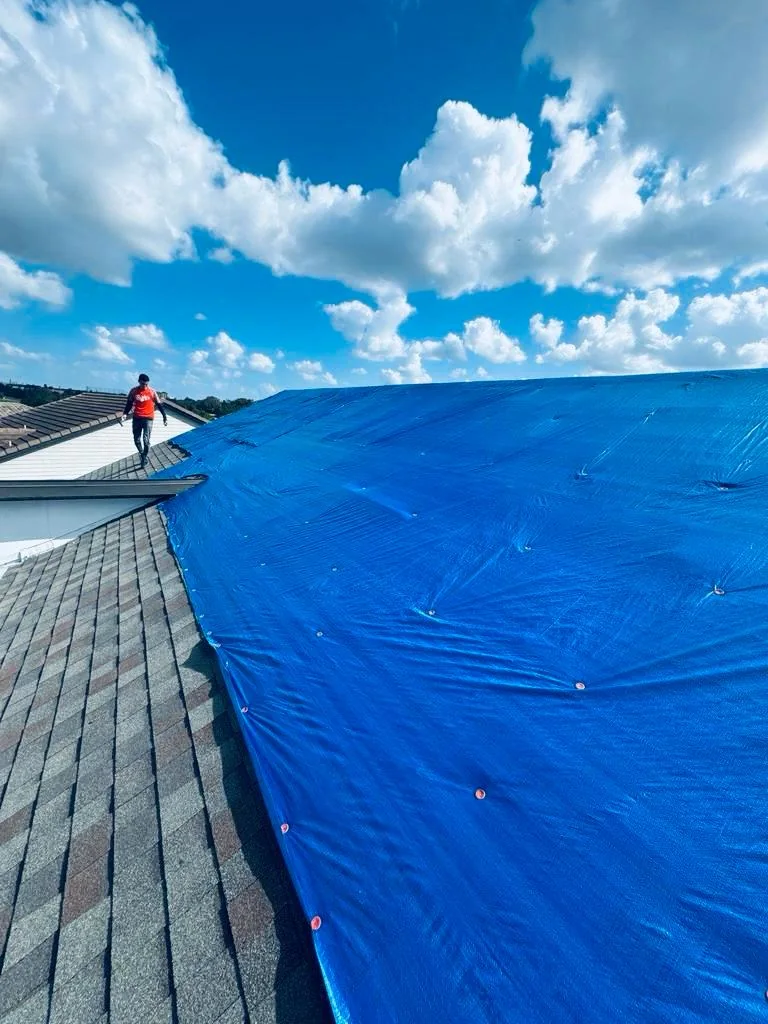
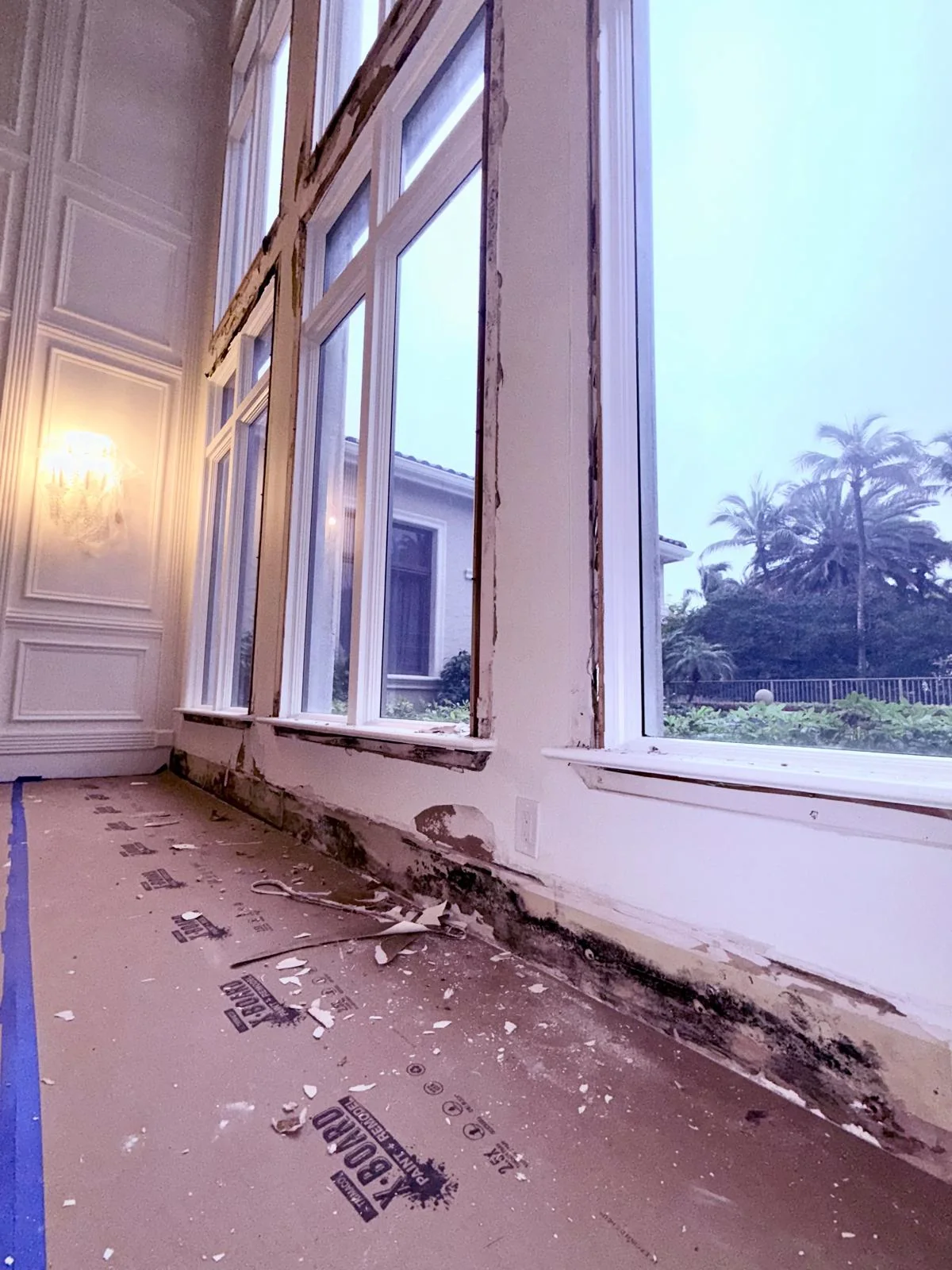
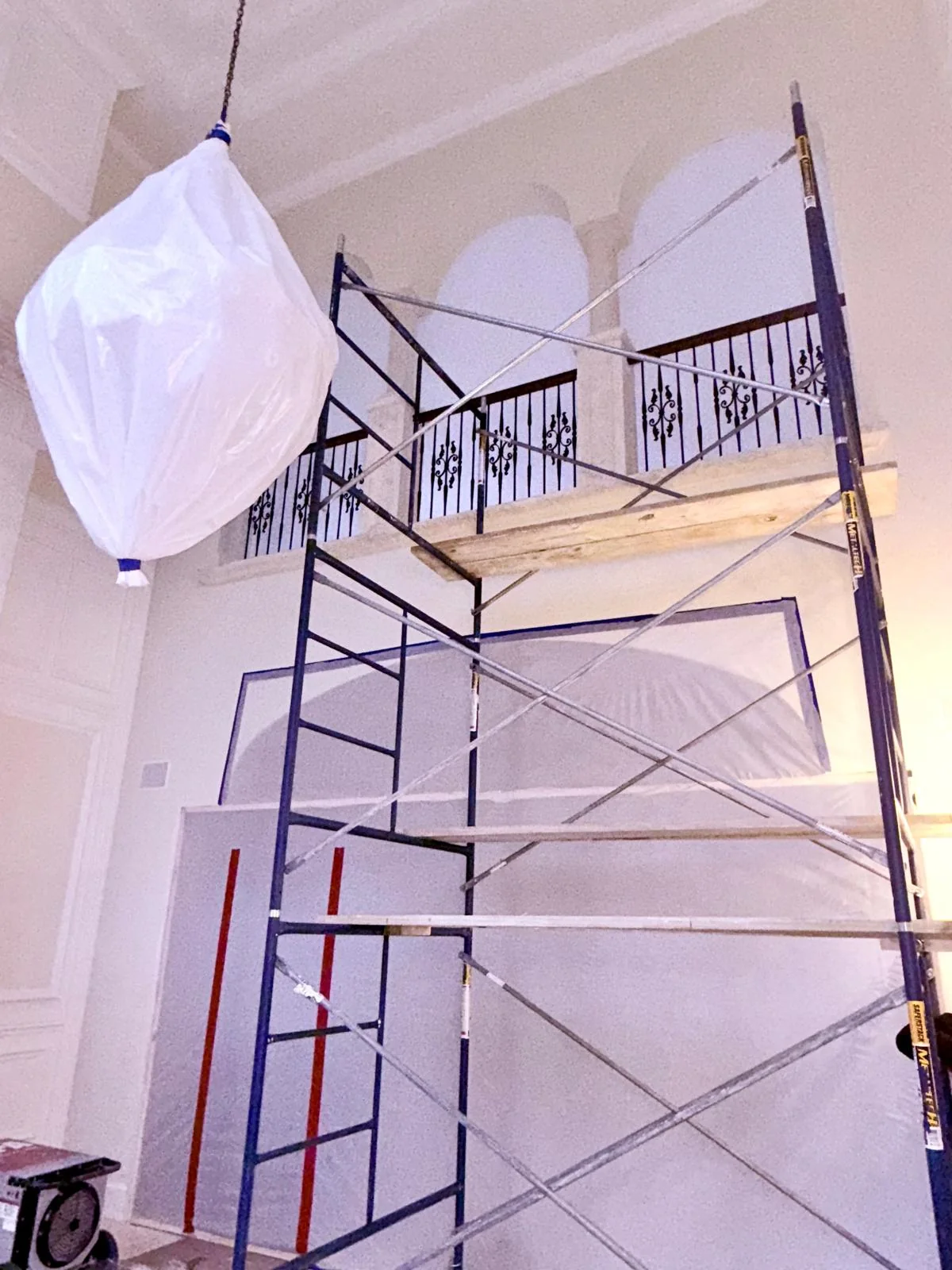
These documented project images show residential roof protection, moisture-damage assessment, and contained remediation access. Customer details and project locations are not displayed.
Residential•Emergency stabilization
Emergency Roof Tarp Installed
Emergency roof tarping helps protect damaged areas while the property owner plans the next steps.
Protect people first, avoid unsafe inspection, and share what you can observe without disturbing materials or entering a hazardous area.
1Address life-safety hazards first and call 911 for immediate danger.
2Stop the source only when it is safe and accessible to do so.
3Avoid unstable, fire-damaged, electrically hazardous, or otherwise unsafe areas.
4Call Hugo when damage is active, spreading, or exposing the home.
5Explain which rooms, surfaces, contents, and materials appear affected.
6Share whether children, pets, older adults, or anyone with mobility needs is inside.
7Photograph visible conditions only from a safe position.
8Avoid permanent repairs before the damage is documented when insurance communication may be involved.
What Happens Next
Residential restoration process
A clear process helps homeowners understand immediate priorities, mitigation work, documentation, monitoring, and next restoration steps. The exact sequence depends on the conditions and authorized scope.
101
Emergency Call and Safety Review
Confirm what happened, whether the damage is active, which rooms are affected, utility concerns, access conditions, and immediate safety issues.
202
Damage and Moisture Assessment
Review visible conditions and determine where moisture, smoke, soot, odor, mold concerns, storm exposure, or material damage may require further evaluation.
303
Mitigation and Temporary Protection
Begin authorized extraction, drying, board-up, roof tarping, cleanup, containment, or other property-protection work based on documented conditions.
404
Monitoring and Progress Documentation
Track applicable moisture, drying, odor, cleanup, or containment conditions and document project progress.
505
Homeowner Communication and Documentation
Organize photographs, affected-area notes, service records, mitigation documentation, and authorized insurance communication support.
606
Restoration Planning and Next Steps
Review remaining conditions, completed mitigation work, and appropriate repair or restoration steps.
Residential damage documentation and insurance communication
Residential restoration documentation may include photographs, affected-area notes, moisture readings, mitigation records, drying logs, cleanup notes, project updates, and authorized communication support. Insurance coverage, reimbursement, approval, and policy interpretation are determined by the applicable insurance carrier and are not guaranteed.
Hugo is based in St. Cloud and serves homeowners across eight Central Florida counties. Choose a county or city below, or call to confirm service for the exact property address.
St. Cloud base
24/7 residential restoration intake for Central Florida homeowners.
Share what happened, the property address, which rooms are affected, whether damage is active or spreading, known safety concerns, whether anyone is inside, and the safest way to access the home.
Only when the shutoff is safely accessible and you know how to use it. Do not enter standing water, approach wet electrical equipment, or enter an unsafe area to stop the source.
Yes. Water can move into concealed cavities, under flooring, behind cabinets, and through connected materials. Moisture readings and an on-site assessment may be needed to understand the affected boundary.
Yes. Water used during firefighting can affect floors, walls, ceilings, contents, and concealed materials in addition to smoke, soot, odor, and fire damage.
Mold concerns can develop when moisture remains in drywall, flooring, cabinets, insulation, contents, or other materials. Do not disturb visible growth; ask for an on-site assessment.
The team reviews safety and access, visible conditions, affected areas, moisture or damage indicators, needed temporary protection, and the documentation required for the authorized work.
Yes. One home may need a combination of extraction, drying, fire or smoke cleanup, mold remediation, board-up, roof tarping, contents work, and damage documentation.
Yes. Insurance documentation support may include photographs, affected-area notes, moisture or drying records when applicable, mitigation records, cleanup notes, and authorized communication support.
No. Photos can help with initial intake, but concealed moisture, material conditions, access limitations, odors, soot, and other concerns may require an on-site assessment.
That depends on the conditions present. Fire damage, electrical or structural hazards, contamination, strong odors, active water intrusion, restricted work areas, or restoration equipment may require additional safety guidance or temporary relocation decisions.
Hugo provides residential mitigation, cleanup, structural-drying support, temporary protection, documentation, and next-step restoration planning based on the conditions, authorization, and applicable service scope.
Hugo serves Osceola, Polk, Brevard, Orange, Lake, Sumter, Volusia, and Seminole counties from its St. Cloud base. Call to confirm service for the exact property address.
Call first when damage is active, spreading, or exposing the home. Use the residential request form for property details and follow-up information.
Call 911 first for active fire, electrical danger, structural collapse, gas odor, medical risk, or another immediate life-safety danger.
No. Hugo provides insurance documentation support, but coverage, reimbursement, approval, policy interpretation, and claim decisions are determined by the insurance carrier.
No. The appropriate scope depends on the damage source, affected materials, safety, access, occupancy, contamination concerns, authorization, and conditions found during assessment.
Residential Request
Request residential restoration help
For active property damage, call first. Use the form for contact details, service location, damage type, affected rooms, safe-access context, and follow-up information.
Do not enter an unsafe area or delay an emergency call to complete this form. Call 911 first for immediate life-safety danger.
24/7 Residential Help
Need residential restoration help now?
Call Hugo’s 24/7 emergency line for active residential water, fire, mold, storm, board-up, roof-tarping, drying, or cleanup needs. Use the request form to share property details and follow-up information.
Emergency availability and arrival timing may depend on location, conditions, weather, access, and current demand. Insurance decisions are made by the applicable carrier.
Plan restoration around household safety and daily use
Damage in an occupied home affects more than building materials. Tell Hugo about current hazards, the source, affected rooms, household access, and any area residents must avoid.
Reviewed by Hugo Fire & Water Restoration content team on 2026-07-31.
What should a homeowner report first after property damage?
From a safe location, report the address, what happened, when it began, and whether the source is active. Include affected rooms and any electrical, fire, structural, contamination, or access concern.
Protect household members
Keep children, pets, and other occupants away from wet electrical areas, unstable materials, fire residue, contaminated water, or suspect growth.
Call 911 first for immediate danger
Follow any restriction from emergency officials
Describe how the home is affected
List each room, visible material change, odor, standing water, opening, or access problem without guessing about hidden conditions.
Report whether damage is still spreading
Mention essential rooms that cannot be used
Keep a homeowner record
Save safe photos, dates, receipts, claim contacts, and completed-work notes so later conversations use the same facts.
Photograph from a safe position
Let the carrier determine policy coverage
Plan restoration around household safety and daily use: customer questions
Can I call before I know whether insurance will cover the loss?
Yes. You can discuss active damage and factual documentation; the policy and carrier determine coverage.
Should I enter a damaged room to take pictures?
No. Do not enter an area with electrical, structural, fire, contamination, or other safety hazards.