Hugo Fire & Water Restoration helps Osceola County property owners with controlled mold remediation, containment, affected-material removal and cleaning, moisture-related restoration coordination, and clear project documentation. The work plan depends on the property, materials, moisture source, access, and authorized scope.
Avoid disturbing suspected mold or directing fans across affected materials. Keep people and pets away where practical, and contact a qualified healthcare professional for symptoms or medical concerns.
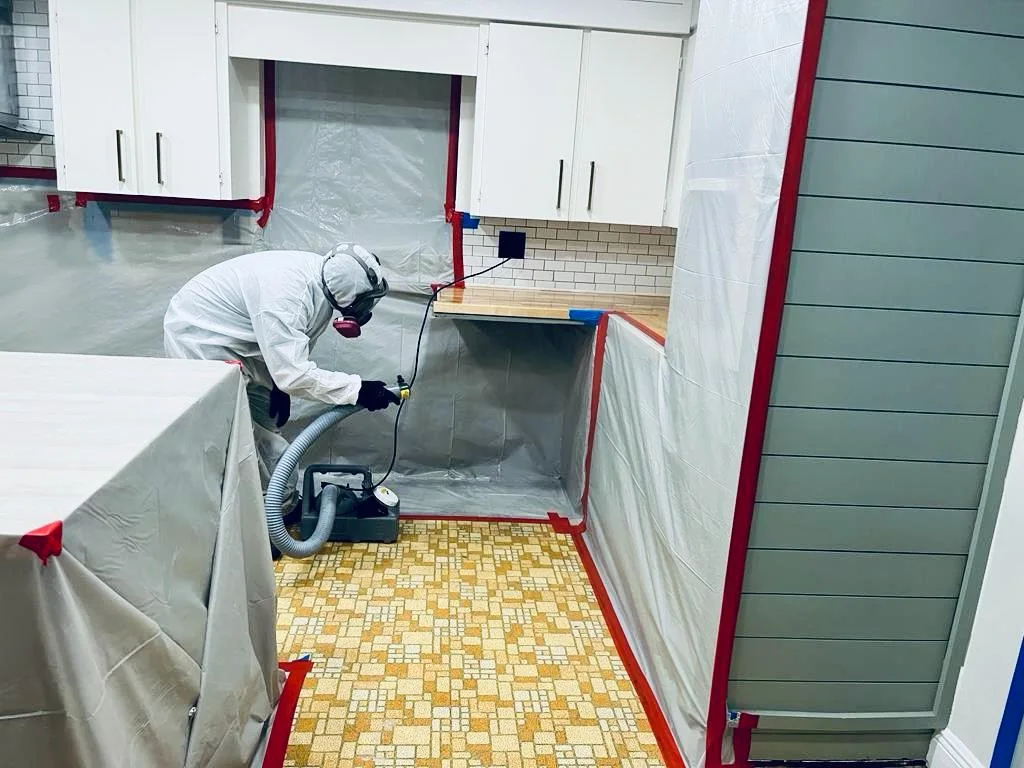
Detailed surface cleaning inside a protected mold-remediation work area.
LOCAL MOLD REMEDIATION
Who Provides Mold Remediation in Osceola County?
Hugo Fire & Water Restoration provides mold-remediation intake for homes, apartments, vacation rentals, managed properties, hospitality buildings, and businesses throughout Osceola County. Depending on the authorized scope and site conditions, remediation can include work-area containment, particle filtration, controlled material removal, detailed cleaning, moisture-related coordination, and project documentation. Independent assessment, sampling, protocol development, or verification may require a properly licensed mold assessor.
Hugo's verified 15-minute dispatch process begins coordination after intake. It is not an arrival-time guarantee; safety, location, access, weather, demand, and crew availability affect timing.
FIRST STEPS
What Should You Do When You Find Mold?
Protect the area from unnecessary disturbance, record what you can see safely, and focus on the moisture history before cleanup begins.
1
Avoid disturbing the area
Do not scrub, sand, cut, scrape, or pull apart affected materials before the conditions and work area are reviewed.
2
Keep air from spreading debris
Do not point household fans at suspected mold or run affected HVAC equipment when it may move particles beyond the area.
3
Limit access
Keep children, pets, guests, tenants, and unprotected workers away from visibly affected materials where practical.
4
Address active water safely
Stop a leak only when it is safe and within your ability. Use the correct trade for plumbing, roofing, HVAC, electrical, or structural repairs.
5
Record what you can see
Photograph visible conditions from a safe position and note odors, recent leaks, condensation, storm intrusion, or delayed drying.
6
Call for next-step guidance
Share the property address, affected rooms, moisture history, occupancy needs, access limits, and any assessor documents already available.
TWO DISTINCT ROLES
Mold Assessment and Mold Remediation Are Not the Same Service
The person who evaluates conditions or verifies the completed area may need to remain independent from the company performing the physical remediation.
Mold Assessment
A properly licensed mold assessor evaluates suspected conditions and may define affected areas, collect samples when appropriate, and prepare a remediation protocol. Assessment and verification may need to remain independent from the company performing the remediation.
Mold Remediation
A mold remediator performs the authorized work. That can involve containment, filtration, controlled removal, detailed cleaning, moisture-related coordination, and documentation based on the approved scope and property conditions.
MOISTURE MATTERS
Why Does Mold Sometimes Return?
Remediation addresses affected materials and work-area conditions, but it cannot provide a permanent recurrence guarantee when moisture returns or remains unresolved.
The roof, plumbing, appliance, AC, or building-envelope moisture source remains active.
Wet drywall, insulation, cabinets, flooring, or concealed materials did not dry fully.
Indoor humidity or condensation continues to add moisture to affected surfaces.
Visible material was wiped or painted while contaminated or damp material remained nearby.
A new water event affected the same area after the original cleanup.
COMMON SOURCES
Moisture Sources That Can Support Mold Growth
Osceola County properties can be affected by routine leaks, storm intrusion, AC condensation, humidity, and water that remains in layered or concealed materials.
Roof or storm intrusion
Missing roof protection, flashing failures, damaged openings, and wind-driven rain can wet ceilings, walls, insulation, and attics.
Warm, humid Central Florida conditions can contribute to condensation where surface temperatures, ventilation, or airflow create persistent dampness.
Concealed water movement
Moisture can travel beneath flooring or into wall, ceiling, cabinet, and insulation assemblies even when the surface looks dry.
WHERE MOISTURE HIDES
Areas Commonly Affected by Mold and Moisture
The visible spot may be only one part of the moisture path. Material layers, cabinets, insulation, flooring, and wall or ceiling cavities can require separate decisions.
Bathrooms and laundry rooms
Kitchens and sink cabinets
AC closets and ceiling areas
Attics and roof-adjacent rooms
Drywall and wall cavities
Flooring and lower wall assemblies
Closets and stored contents
Multi-unit and shared-wall areas
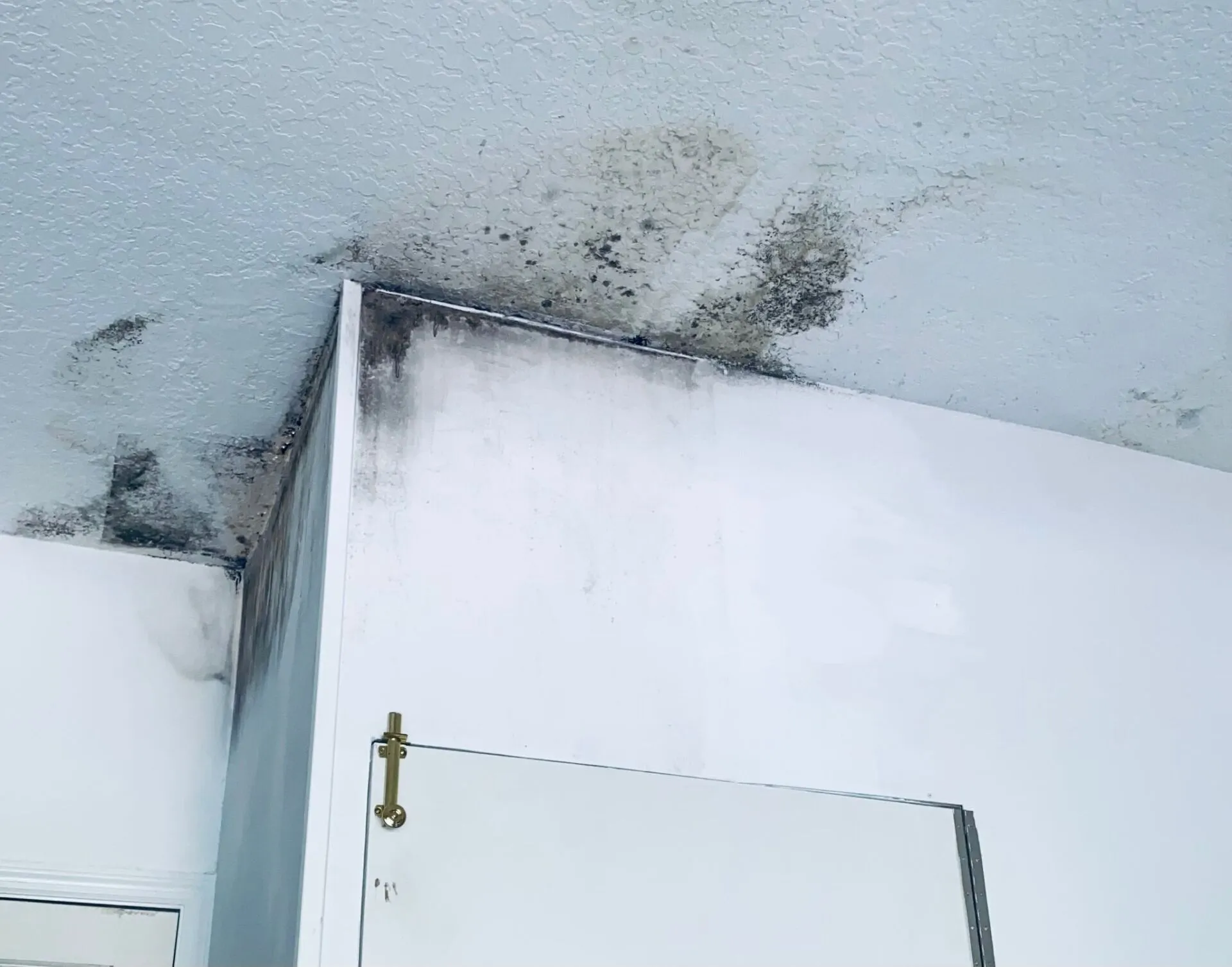
Color and appearance alone do not identify mold type, establish health risk, or define the full project area.
MORE THAN A SURFACE SPOT
Why Wiping Visible Mold May Not Solve the Problem
A complete plan looks beyond the surface to the moisture source, material type, work-area controls, and conditions in adjoining or concealed assemblies.
The moisture source can remain
Cleaning a visible spot does not repair a roof, plumbing line, condensate system, appliance, or humidity condition.
Porous materials can be affected below the surface
Drywall paper, insulation, wood, cabinets, flooring, and contents may need different cleaning, removal, or drying decisions.
Airflow can spread particles
Scrubbing, sanding, demolition, and household fans can move debris into adjoining areas when work-area controls are absent.
Color does not identify mold type
Visual appearance alone does not establish species, health risk, project boundaries, or whether sampling is appropriate.
REMEDIATION SERVICES
Mold Remediation Services
The actual work depends on the approved scope, affected materials, moisture source, occupants, property conditions, and access. Not every project uses every service or method.
Remediation Planning
Review of the authorized scope, materials, access, occupancy, work-area controls, and project sequence before physical work begins.
Containment Setup
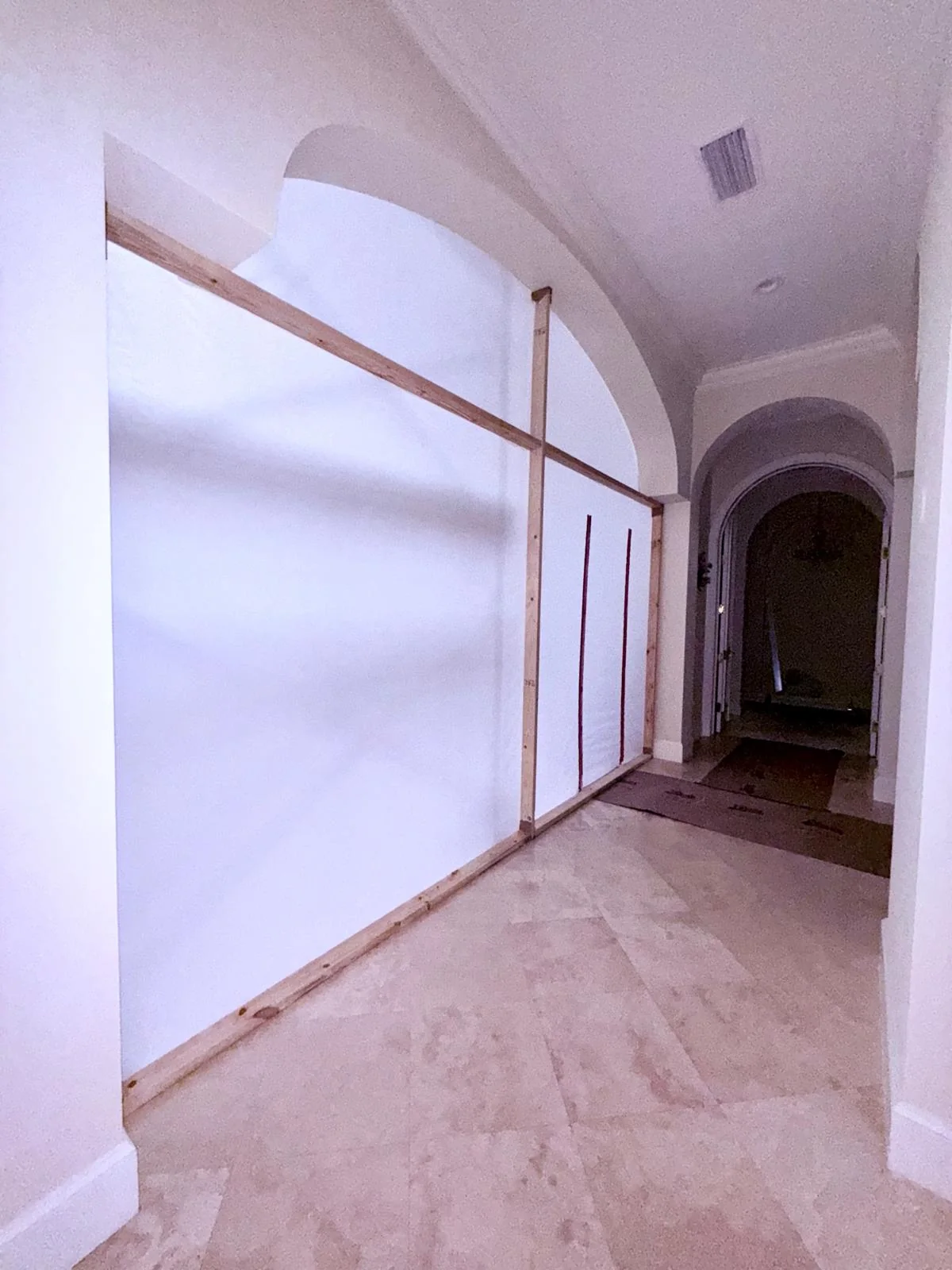
Physical barriers and controlled access may be used to separate the active work area from nearby spaces.
Particle Filtration and Airflow Control
HEPA-filtered devices and pressure controls may be used when appropriate for the work area and approved plan.
Affected-Material Removal
Materials that cannot be adequately cleaned or retained may be removed in a controlled manner within the authorized scope.
Detailed Cleaning
HEPA vacuuming and surface-cleaning methods may be selected according to the material, condition, and approved work plan.
Moisture-Condition Coordination
Observed leaks, humidity, condensation, or wet materials are documented for correction, drying, or qualified-trade referral.
Remediation Documentation
Project records may include photographs, containment information, equipment notes, removal details, cleaning steps, and progress records.
CONTROLLED WORK
How Professional Mold Remediation Is Performed
Technical methods are selected for the approved scope, materials, moisture source, property conditions, occupants, and access—not applied as a fixed package.
HEPA means high-efficiency particulate air. Negative pressure means the work area is kept at a lower air pressure so airflow can be directed toward the controlled zone. These controls do not replace moisture correction or appropriate material decisions.
1
Containment
Barriers and controlled entry can help separate the remediation area from adjacent occupied or unaffected spaces.
2
HEPA filtration
HEPA-filtered devices may capture small airborne particles within or near a controlled work area.
3
Negative pressure
Where appropriate, a pressure difference can help direct airflow toward the controlled area instead of into adjoining rooms.
4
Controlled removal
Unsuitable affected material can be removed with debris controls selected for the material and project conditions.
5
HEPA vacuuming and detailed cleaning
Cleaning methods are matched to the surfaces retained within the approved work area.
WHAT TO EXPECT
The Mold Remediation Process
The exact sequence varies by property. Moisture source, materials, approved scope, occupant needs, access, and any independent assessor documents shape the work plan.
1
Call and Property Intake
The team records the address, occupants, affected rooms, visible conditions, odor concerns, recent water history, access limits, and available assessor documents.
2
Scope Review
The available information is reviewed to determine whether remediation can proceed within an authorized scope or whether an independent assessor is needed.
3
Work-Area Controls
Containment, access procedures, protective controls, and filtration are selected for the property and the approved work plan.
4
Removal and Cleaning
Affected materials are removed or cleaned according to their condition, the defined area, and the authorized scope.
5
Moisture Coordination
Unresolved leaks, humidity, condensation, and wet materials are documented for correction, drying, or referral to the appropriate trade.
6
Records and Handoff
Photographs, work notes, equipment details, removed-material records, and supplied independent documents are organized for the owner and applicable project parties.
Independent assessment or verification may be coordinated when applicable. This page does not present Hugo as the independent assessor, laboratory, air-sampling provider, or clearance provider for its own remediation work.
Containment helps control the work area; moisture correction addresses the condition that allowed dampness to persist.
REDUCE RECURRENCE RISK
Moisture Correction Is Part of the Plan
Remediation and moisture correction solve different parts of the problem. A qualified trade may need to repair the source, while restoration work addresses wet or affected materials and documents remaining conditions.
Repair active roof, plumbing, appliance, or AC sources through the appropriate trade
Dry or remove wet materials according to their condition and the authorized scope
Monitor humidity, condensation, and concealed moisture concerns
Keep records of source repairs, drying, removal, and supplied assessor documents
Hugo does not claim to perform plumbing, roofing, HVAC, electrical, or structural repairs unless that separate work is confirmed and properly authorized.
OSCEOLA COUNTY COVERAGE
Mold Remediation Across Osceola County
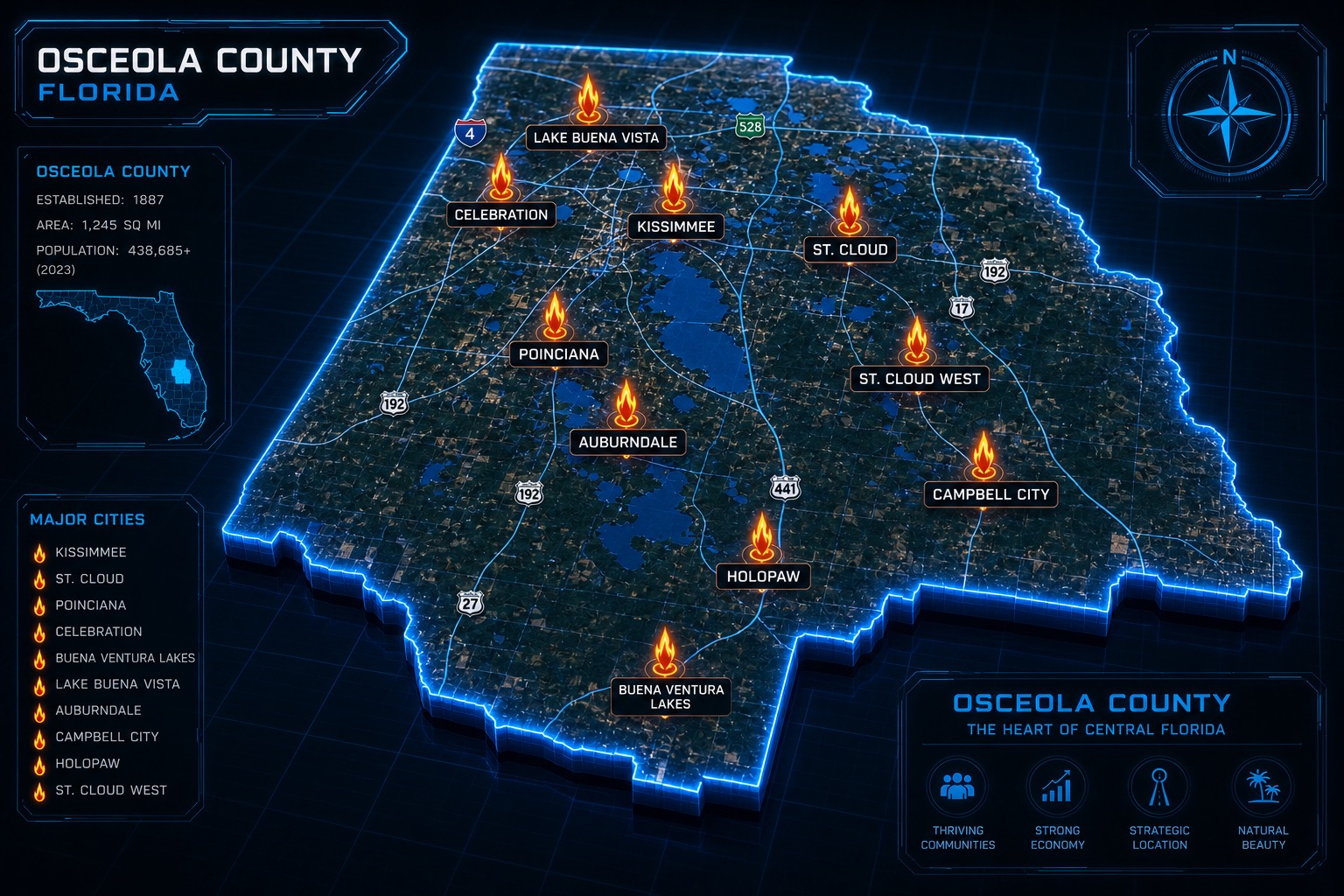
Hugo is based in St. Cloud and serves listed Osceola County communities. The exact address, safe access, property conditions, weather, roads, demand, and crew availability affect scheduling.
Recurring local concerns include humidity, thunderstorms, roof and plumbing leaks, AC condensation, freshwater intrusion, and delayed drying.
Residential growth and varied building ages
Newer subdivisions, established homes, apartments, condos, and acreage properties can have different assemblies, access points, and moisture histories.
Tourism, rentals, and managed properties
Vacation rentals, hotels, multifamily properties, and managed communities can add guests, tenants, remote owners, associations, and scheduled access to the plan.
Wet-season and everyday moisture sources overlap
Storm openings, roof leaks, plumbing failures, AC condensate, appliance leaks, indoor humidity, and incomplete drying can affect the same ceilings, walls, cabinets, flooring, insulation, and contents.
PROPERTY TYPES
Mold Remediation for Homes, Rentals, and Businesses
The plan should reflect materials, occupants, operating needs, access, moisture conditions, decision-makers, and the authorized scope.
Homes and Condominiums
Planning considers occupants, pets, belongings, shared walls, attics, cabinets, flooring, and access to the affected area.
Hugo keeps the intake path direct, distinguishes remediation from independent assessment, and documents the authorized restoration work without promising medical, insurance, or permanent-prevention outcomes.
24/7 Emergency Line
Hugo's public phone line accepts active property-damage requests day and night.
Customers can ask for current company licensing and insurance documents before authorizing work.
IICRC-Certified Technicians
Hugo has technicians with IICRC certification. This is technician-level wording, not a business-level IICRC designation.
St. Cloud-Based Team
Hugo is based in St. Cloud and serves listed communities throughout Osceola County.
English and Spanish Assistance
English and Spanish phone support is available for intake and restoration communication.
PROJECT RECORDS
Insurance Documentation Support
Hugo can organize factual remediation records for the property owner and applicable project parties. Documentation does not decide insurance coverage or payment.
Initial visible-condition photographs
Affected-room and material notes
Moisture observations
Supplied assessor documents when applicable
Containment and access-control records
Equipment placement notes
Materials removed within the approved scope
Cleaning and work-progress records
Customer authorization and communication records
Independent verification records when supplied
MOLD REMEDIATION FAQ
Osceola County Mold Remediation Questions
Clear guidance about first steps, professional roles, moisture, cleaning limits, access, documentation, and local coverage.
Hugo Fire & Water Restoration provides mold-remediation intake for homes, rentals, managed properties, hospitality buildings, and businesses throughout Osceola County. The authorized work can include containment, filtration, controlled material removal, detailed cleaning, moisture-related coordination, and documentation. Independent assessment or verification may require a properly licensed mold assessor.
Avoid disturbing the area, keep people and pets away where practical, and do not point fans at affected materials. Stop active water only when it is safe, photograph visible conditions from a distance, note recent moisture events, and call for guidance. Contact a qualified healthcare professional for symptoms or medical concerns.
Assessment evaluates suspected conditions and may define the affected area, collect samples, or prepare a protocol. Remediation performs the authorized containment, filtration, removal, cleaning, moisture coordination, and documentation. Florida project requirements may call for an assessor who is independent from the company performing the remediation.
This page does not present Hugo as the independent mold assessor, laboratory, air-sampling provider, or clearance provider. When assessment, sampling, protocol development, or post-remediation verification is needed, the project may require a properly licensed independent mold assessor. Hugo can review documents supplied for the authorized remediation work.
Mold-related conditions can return when a roof, plumbing, appliance, AC, condensation, humidity, or storm-water source remains unresolved. Damp material hidden behind walls, under floors, or inside cabinets can also remain. Remediation must be paired with appropriate moisture correction, drying, removal, repair, or qualified-trade coordination.
Surface wiping is not a substitute for correcting moisture, controlling the work area, and deciding whether affected porous material can be retained. Avoid broad spraying, scrubbing, sanding, or demolition without a project-specific plan. Products do not replace removal and detailed cleaning when those steps are required.
Do not direct household fans across suspected mold because airflow can spread particles beyond the visible area. Professional filtration or pressure control is selected for the property, affected materials, occupants, access, and authorized scope. Keep affected HVAC equipment off when it may move debris until a qualified party gives guidance.
Bathrooms, kitchens, AC closets, attics, ceilings, drywall, wall cavities, cabinets, flooring, insulation, closets, and stored belongings may be affected when moisture persists. The visible area may not show the full moisture path, so project decisions should follow the conditions, accessible observations, and applicable independent assessment.
Occupancy decisions depend on the affected area, work methods, containment, access route, property use, occupant needs, and any assessor guidance. People should remain away from the active work zone and follow the access plan discussed before work begins. Hugo does not make medical diagnoses or health-risk determinations.
Hugo can organize applicable photographs, affected-area notes, moisture observations, supplied assessor documents, containment information, equipment placement, material-removal details, cleaning records, and project communications. The carrier and policy determine coverage, reimbursement, payment, and claim approval, and no outcome is guaranteed.
Hugo serves listed communities throughout Osceola County, including Kissimmee, St. Cloud, Poinciana, Celebration, Buenaventura Lakes, and Narcoossee. Service timing depends on the exact address, safe access, property conditions, weather, road conditions, current demand, and crew availability.
RELATED HELP
Related Restoration Services
Use these pages when mold concerns began with a leak, wet materials, roof or AC moisture, affected belongings, or a need for organized restoration records.
These public sources explain general moisture control, cleanup safety, health questions, and Florida mold-related service roles. They do not identify mold by appearance, define a property-specific scope, or verify completed work.
Call Hugo Fire & Water Restoration for mold-remediation intake, controlled cleanup, moisture-related restoration guidance, and project documentation throughout Osceola County.
Independent assessment, sampling, protocol development, or verification may require a properly licensed mold assessor. Contact a qualified healthcare professional for symptoms or medical concerns.
Customer guide to mold remediation in Osceola County
When your property needs mold remediation in Osceola County, keep people away from hazards. Note when mold remediation in Osceola County began and whether conditions are changing.
Reviewed by Hugo Fire & Water Restoration content team on 2026-07-31.
What is the safest first step for mold remediation in Osceola County?
Before mold remediation in Osceola County, leave unsafe areas. Describe only mold remediation in Osceola County conditions that you can see safely.
Safety before mold remediation in Osceola County
For mold remediation in Osceola County, avoid disturbing growth. Describe moisture history and affected materials for mold remediation in Osceola County.
Confirm which areas are safe to enter before mold remediation in Osceola County
Report changing conditions connected to mold remediation in Osceola County
Details to share about mold remediation in Osceola County
For mold remediation in Osceola County, share the address, source, affected rooms, and timeline. Also explain access and the authorized contact for mold remediation in Osceola County.
List each space affected by mold remediation in Osceola County
Explain when mold remediation in Osceola County was first noticed
Records to keep for mold remediation in Osceola County
Keep safe photos, dates, and room names for mold remediation in Osceola County. Save contacts and completed-work notes about mold remediation in Osceola County.
Photograph mold remediation in Osceola County only from a safe location
Keep receipts and messages about mold remediation in Osceola County together
Questions to ask before work begins: Mold remediation in Osceola County
Can I call before I understand the full extent of mold remediation in Osceola County?
Yes. Tell Hugo what you can safely see for mold remediation in Osceola County. Explain when mold remediation in Osceola County began and whether the source is still active.
Can Hugo document work related to mold remediation in Osceola County?
Hugo can organize factual records for mold remediation in Osceola County; your insurance policy and carrier determine coverage.