
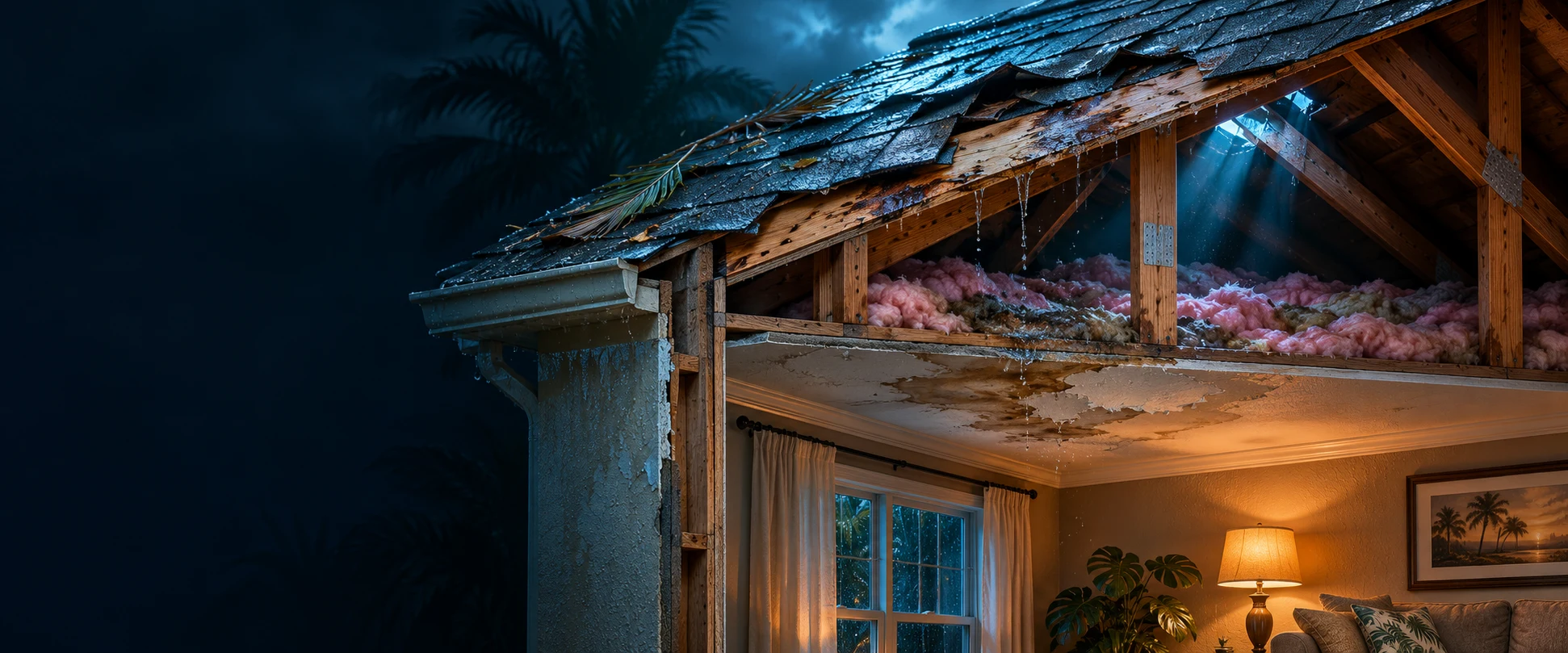
Roof Leak Water Damage in St. Cloud and Central Florida


A roof leak can leave an interior recovery job long after the rain stops. Hugo helps with water-damaged ceilings, insulation, walls, flooring, cabinets, and contents through moisture review, extraction, drying, and restoration documentation in St. Cloud and Central Florida.
Keep clear of sagging ceilings and wet electrical areas. Do not climb onto a damaged roof; call first when water is still entering.
Rain enters above. The damage can continue below.
Water may travel through an attic or ceiling assembly before it appears inside a room. The first visible stain is a clue to the leak, not a complete map of the wet materials. A roof opening, soaked insulation, damaged drywall, and moisture at the floor can require separate decisions within the same recovery plan.

Stay away from overhead hazards
Do not stand beneath a sagging ceiling, touch wet light fixtures, or enter an unstable attic. Keep clear of downed lines and storm debris. Call 911 for electrical danger, collapse risk, gas odor, active fire, medical danger, or another immediate threat to life.

Leave roof access to professionals
Do not climb onto a damaged roof to find the opening, photograph missing shingles, or place a tarp. Report what can be seen from the ground or another safe location. Weather, structural condition, and access affect what protection work can proceed.

Report water that is still entering
Tell Hugo whether dripping continues, rain is ongoing, or additional rooms have become wet. Mention broken doors or windows, exposed interior areas, and security concerns as well as the suspected roof leak.
What the interior signs can tell the team
Describe ceiling stains, active dripping, bubbling paint, soft-looking finishes, visible wet insulation, attic moisture already reported by a professional, and musty odors after the leak. Include water near lights, outlets, appliances, or other electrical equipment without approaching it. None of these observations requires you to open a cavity or decide whether a material can be saved.
Ceilings and insulation
Water can be retained above a ceiling even when the drip slows. Report the affected room and any sagging or material changes; avoid pressing, puncturing, or removing damaged finishes yourself.
Walls, closets, and cabinets
Moisture can follow construction into adjoining spaces. Note wall staining, wet closet contents, or damp cabinet areas, including places away from the first ceiling mark.
Floors and belongings
Water falling from above can wet flooring layers, furniture, and stored items. Identify what was reached and which access routes remain safe so the restoration review includes the rooms below.
Protection, drying, and repair each have a purpose
Temporary roof protection
When appropriate and safe, emergency tarping can help reduce additional rain entry while permanent roof repair is arranged. It does not establish that the ceiling, insulation, or rooms beneath it are dry.

Interior water restoration
When the source and conditions are eligible, Hugo can evaluate affected materials, remove accessible water, plan structural drying, track moisture, and document the work. Findings may require controlled access or material removal within the authorized scope.

Permanent roofing work
A qualified roofing professional evaluates and repairs the roof source. Coordinate that work with interior mitigation and later finish replacement so responsibilities and outstanding conditions stay clear.
How drying helps manage moisture risk
Source control, appropriate drying, and material evaluation can reduce moisture-related risk. They cannot guarantee that mold will not develop. If mold concerns are already present, describe them so remediation requirements can be considered separately from drying alone.
Inspection, mitigation, cleanup or treatment, wet-insulation and drywall review, moisture mapping, tarping coordination, documentation, and restoration planning depend on the actual conditions and agreed work. Report uncertain water sources before arranging service; Hugo excludes wastewater cleanup or disposal, black-water cleanup or removal, sewage cleanup, biohazard cleanup or disposal, and cleanup of known or suspected contaminated water.
The ceiling stain may be downstream from the leak
Roof-leak recovery follows water from the exterior opening to the interior materials it reached. Temporary roof protection, permanent source repair and drying the rooms below are different parts of the job. The restoration plan should connect them while accounting for ceilings, insulation, walls and flooring that may still hold moisture.

Control the source and review access
Stay out of standing water near electricity. Have the roof source evaluated by the appropriate roofing professional. Describe the ceiling and room damage to Hugo so temporary protection, interior access, and later roof repair can be coordinated.

Record the extent of moisture
An interior stain may sit away from the opening that let rain in. Observations of accessible ceiling edges, wall surfaces and adjoining rooms help establish where further review is needed. The resulting scope can include water removal, controlled access, drying or material removal, with roof investigation handled by the appropriate professional.

Dry, check and plan the next stage
Interior drying needs to be coordinated with the roof work and any continuing exposure to weather. Review the material observations as the work progresses, including areas where insulation or finishes restrict access. Before replacement ceilings or wall finishes are installed, clarify the source-repair status, drying findings and remaining construction requirements.
Hugo does not provide wastewater cleanup or disposal, black-water cleanup or removal, sewage cleanup, or biohazard cleanup or disposal. Hugo also excludes cleanup of water with known or suspected contamination. Describe unknown water conditions before arranging work.
Planning cleanup after a roof leak
Does stopping rain entry complete the interior restoration?
Stopping rain entry addresses the roof opening, not all of the moisture already inside the building. Ceiling assemblies, insulation and the rooms below can still need assessment. The interior restoration scope explains whether drying is feasible, access is needed or damaged materials must be removed.
What should be checked before a wet ceiling is closed again?
Ask the team to explain the observations from the affected interior materials and how those findings compare with the drying goals. A stain fading or a tarp being installed does not establish that concealed layers are ready to close. Source repair, drying progress and the repair contractor’s requirements should be considered together.
Why are roof protection and interior restoration estimated separately?
A roof-leak estimate changes with the route of the water, affected ceiling and wall materials, access, elapsed time and any continuing exposure. The water source and material condition can also affect what work is accepted. Separate temporary protection, roofing repairs, interior drying and finish replacement so each scope and change-approval step is clear.
Coordinate the exterior opening with the rooms beneath it
The sequence depends on safety, continuing weather exposure, and the materials involved. Temporary protection may be considered early; interior evaluation and drying still require their own plan.
Review hazards and access
Discuss ceiling stability, electricity, roof condition, storm restrictions, and occupancy before approaching the affected areas. Emergency authorities and safe access govern what happens next.
Connect roof observations to interior symptoms
Combine the reported opening or roof concern with the rooms showing stains, dripping, or damp materials. A professional roof investigation and interior moisture observations address different parts of that path.
Evaluate standing water and wet finishes
Where conditions permit, the restoration team removes accessible water and reviews affected ceilings, insulation, drywall, flooring, cabinets, and contents. Discuss access and removal decisions before disturbing building materials.
Map moisture and plan drying
Material observations and readings inform the team’s interior drying approach. Air movement and dehumidification must fit the conditions; concealed layers or restricted access can change the plan.
Coordinate temporary protection and source repair
Arrange suitable tarping when needed and feasible, while keeping permanent roofing work with the appropriate professional. Continuing exposure can affect drying progress and the timing of interior repairs.
Keep records through the repair handoff
Document conditions, protection work, readings, drying progress, and remaining material decisions. Review what must be resolved before replacement ceilings, wall finishes, or flooring close the affected assemblies.
When a roof leak reaches rooms below
A roof leak can affect ceilings and the spaces below. Depending on the findings, the next steps may include moisture checks, drying and review of affected materials.
Explore the Lake Wales roof-leak project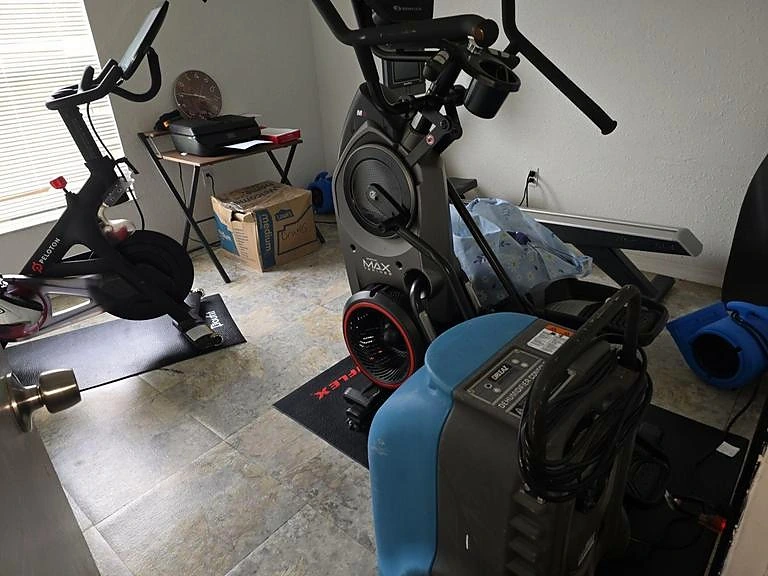
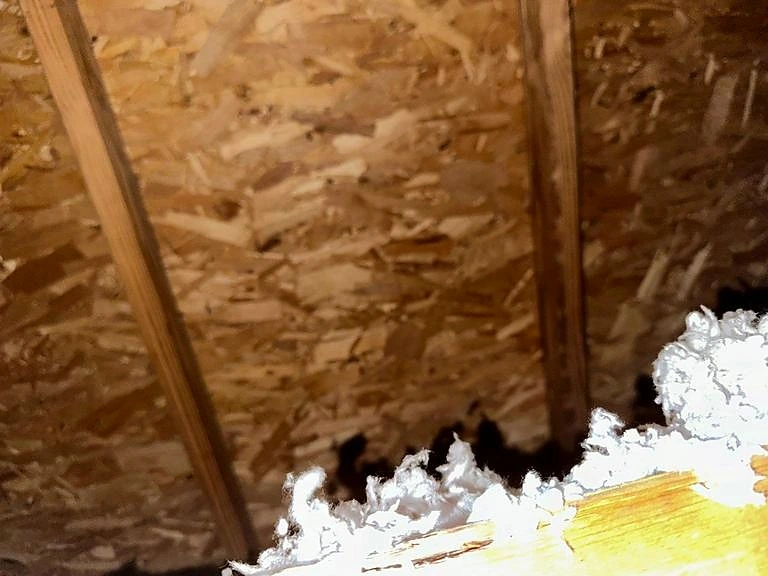
Describe the leak from a safe place
Start with the address, city, nearest major cross street, property type, and a callback number. Identify who can authorize work, who is on site, and any restrictions on entry. For a managed property, include the manager or other responsible contact.
Explain when the leak appeared, how it relates to the weather, and whether water is still entering. Describe reported roof damage, openings, fallen limbs, missing shingles, and any temporary protection already attempted. A ground-level photograph can help when it can be taken without approaching hazards.
List affected ceilings, walls, floors, cabinets, closets, and contents. Include exposed rooms, exterior debris, damaged doors or windows, unstable materials, electrical concerns, unusual odor, or suspected contamination. If another source such as a slab, plumbing, or AC leak may be involved, mention it rather than assuming every wet area came from the roof.
Keep roof observations and interior findings together
Useful records show what was reported outside, what was observed inside, and when protection or restoration work occurred. Maintain the storm timeline alongside room names, photographs taken safely, professional findings, receipts, messages, and completed-work notes.
Record the weather and opening history
Keep the first-leak date and storm timing. Save ground-level roof or opening photos when available, along with notes about tarping, board-up, or other temporary measures.
Track changes inside each room
Label ceiling, wall, and floor observations by room and date. Retain extraction notes, moisture readings, drying records, and affected-material decisions so progress is more specific than whether a stain still looks visible.
Clarify who handles the next scope
Keep permanent roofing, temporary protection, interior mitigation, and reconstruction responsibilities identifiable. Ask how newly discovered damage and changes in authorization will be communicated.
Can I request help without knowing the roof defect?
Yes. Tell Hugo what you can safely observe indoors, when it started, whether rainwater continues entering, and what a roofing professional has already reported. Roof access is not a prerequisite for making the call.
How can Hugo support the documentation?
Hugo can organize photographs, mitigation notes, affected-room details, restoration records, and communication support for the work involved. Insurance coverage and claim decisions belong to the carrier under the policy; documentation support does not promise reimbursement or approval.
Review connected restoration work
Find services for the water, storm, contents, or mold concerns associated with the leak.
Find your local coverage
Check the community directory before discussing the property’s precise location and access.
Share an update about the leak
Use the contact options for information from the roofer, changes indoors, or follow-up coordination.
Ready.gov: Severe Weather
Review severe-weather guidance while considering the next safe steps for the property.
Record weather, openings and interior damage
Connect storm timing and roof-protection notes with interior photographs, moisture findings, mitigation records, and adjuster communications. Insurance information is general and does not guarantee coverage, reimbursement, or claim approval.
What should I do if water is leaking through my ceiling after a storm?
Stay away from sagging ceilings and electrical fixtures, do not climb onto a damaged roof, document visible damage from a safe position, and call for roof leak water damage help, roof tarping, water mitigation, and drying support.
When may roof tarping be needed?
Roof tarping may be needed when storm, wind, fallen-limb, missing-shingle, or roof-opening damage allows rainwater to keep entering before permanent repair can be evaluated.
Can a roof leak cause mold?
Yes. Moisture from roof leaks can stay in ceilings, insulation, drywall, cabinets, flooring, and hidden cavities, creating mold concerns when drying is delayed.
A St. Cloud team for interior restoration

Restoration credentials
Hugo Fire & Water Restoration operates from St. Cloud. Request current licensing, insurance and technician credentials relevant to the proposed work; its BBB, Google Business and Trustpilot profiles provide additional information.

Coverage across Central Florida
Hugo serves Osceola, Polk, Brevard, Orange, Lake, Sumter, Volusia, and Seminole counties. The community links below connect that county coverage to local restoration information for the property you are calling about.

Calls during active intrusion
Restoration requests are available 24/7. The 15-minute dispatch process concerns coordination after intake, rather than a guaranteed arrival time. Call first for changing damage and remain reachable for questions.
Hugo’s wider work covers water, fire, mold, storm, board-up, roof tarping, contents, drying, cleanup, and documentation support. Mention smoke residue, fire-suppression water, security openings, or overlapping leaks so the requested restoration work can be distinguished from other repairs. When comparing providers, ask about emergency access, local coverage, scope explanations, and how damage records will be shared.
Request help with roof-leak damage
Call about water entering the ceiling or damage already visible in the rooms below. Hugo can discuss interior mitigation, drying, temporary-protection coordination, and the records needed for the next stage.
Connected Restoration Services
County Service Areas
Roof Leak Water Damage Service Areas
Find the community where the roof leak occurred, then discuss interior damage and access at the exact address.
Helpful Restoration Articles
Find support for the rooms beneath your roof leak
Select the property’s county and share the address, entry restrictions, and areas showing water damage.
Official references when a storm affects access
Roof-leak restoration can take place during a wider weather emergency. Follow current instructions from authorities; the references below address broader flood and disaster conditions rather than certify that a roof or room is safe.
National Weather Service: Flood Safety
Read about flood hazards if stormwater also affects nearby roads, entrances, or the surrounding property.
National Weather Service: After a Flood
Review floodwater hazards and re-entry guidance if rain intrusion coincides with a broader flood event.
CDC: Returning After a Disaster
Review precautions relevant to approaching damaged property after a natural disaster.