Emergency Water Damage Restoration in Osceola County, FL
Call Hugo for emergency water extraction, moisture mapping, structural drying, dehumidification, affected-material evaluation, and restoration documentation for homes, managed properties, hospitality buildings, and businesses across Osceola County.
Call 911 first for electrical danger, structural collapse, gas odor, medical risk, active fire, or another immediate life-safety hazard.
Osceola County Water Response
Extraction, readings, drying, and documented next steps
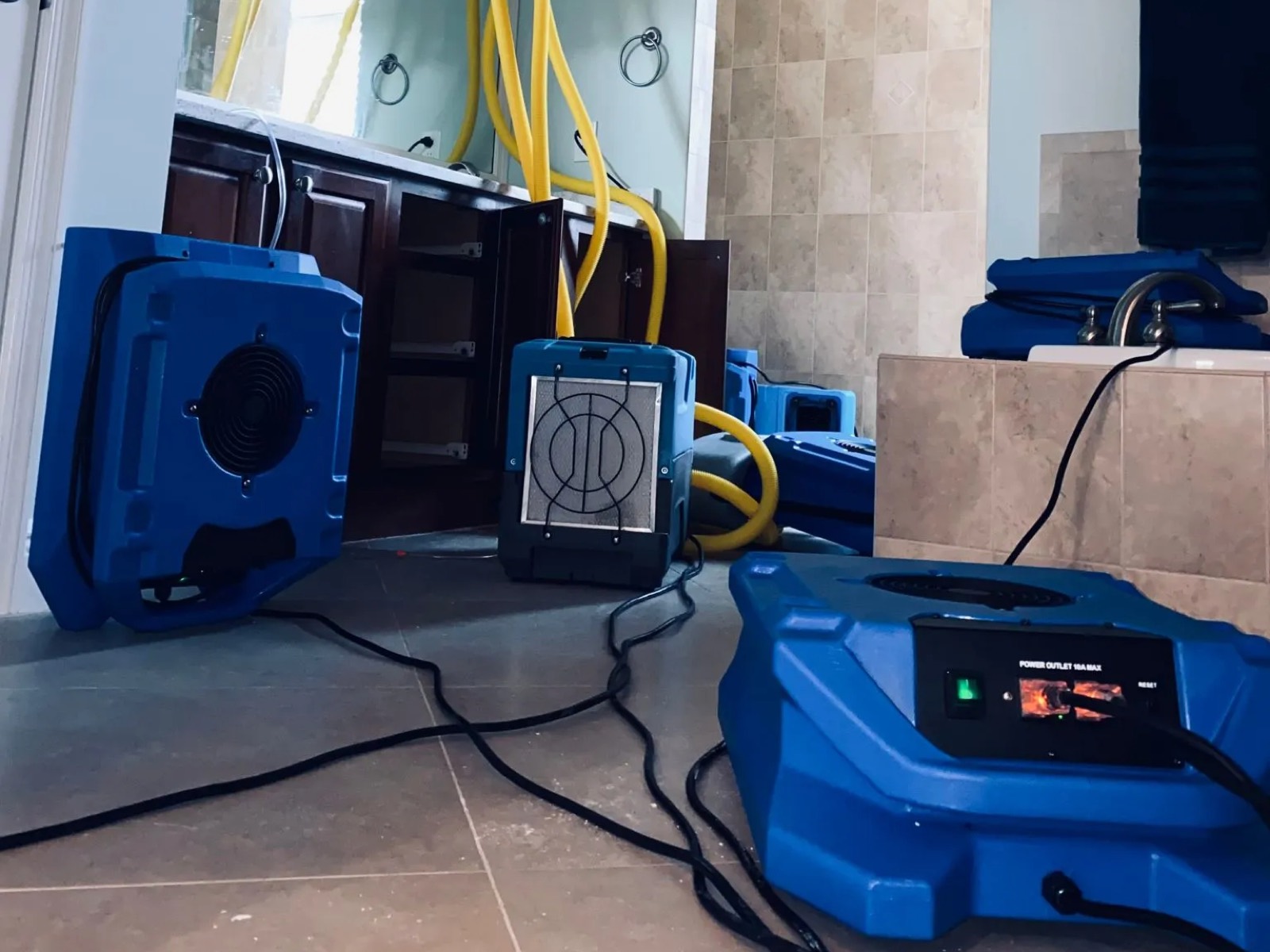
Professional air movers and drying equipment operating during a Hugo restoration project.
24/7 emergency phone line
St. Cloud-based company
Licensed and insured
IICRC-certified technicians
Residential and commercial
English and Spanish phone support
Dispatch refers to initiating and assigning the response process. Arrival time varies by location, weather, road conditions, access, and crew availability.
Immediate Answer
Who Handles Emergency Water Damage in Osceola County?
Hugo Fire & Water Restoration provides 24/7 water damage help across Osceola County, including emergency extraction, moisture mapping, structural drying, dehumidification, affected-material evaluation, and restoration documentation. Call while water is active so the team can screen immediate hazards, understand the source and affected areas, and begin response coordination.
Use these steps to protect people and preserve useful information while professional help is being arranged. Safety and source conditions always come first.
1
Protect people first
Keep children, pets, guests, residents, and employees away from standing water, sagging ceilings, unstable materials, and rooms with electrical concerns. Call 911 for medical danger, fire, gas odor, structural collapse, or another immediate life-safety hazard.
2
Stop the source only when safe
Shut off a fixture or the building water supply only if you can reach it without crossing wet electrical areas or entering an unsafe space. For roof, drain, HVAC, or concealed plumbing failures, contact the appropriate qualified professional as needed.
3
Avoid wet electrical systems
Do not touch outlets, panels, appliances, cords, or switches in or near wet areas. Do not assume power is safe because lights remain on. Follow instructions from emergency authorities, the utility, or a qualified electrician when electrical conditions are uncertain.
4
Document from a safe position
Photograph the source when visible, affected rooms, wet materials, contents, and the path water appears to have taken. Record when the damage was discovered. Never delay an emergency call or enter a dangerous area only to take photos.
5
Call before cleanup spreads the loss
Tell Hugo the exact address, source, rooms or units affected, active hazards, access instructions, occupancy, and site contact. Avoid household fans when contamination, mold, or unsafe electrical conditions may be present because airflow can spread unwanted material.
Common Water Losses
What Causes Water Damage in Osceola County Properties?
The source changes the safety screen, extraction plan, affected-material decisions, and drying approach. These are common service scenarios, not conclusions about a specific address.
Burst, leaking, or concealed plumbing
Supply lines, pipes inside walls or slabs, drains, water heaters, and fixture connections can wet adjoining rooms before damage is visible. Moisture may travel beneath flooring, behind baseboards, into cabinets, and through ceiling or wall cavities.
Appliance and fixture failures
Dishwashers, refrigerators, washing machines, toilets, sinks, and water heaters can release water quickly or leak slowly. The response should address accessible water, the affected materials, and any concealed spread—not only the appliance footprint.
AC and condensate problems
Air-handler, drain-line, and condensate failures can affect ceilings, closets, walls, flooring, and mechanical areas. Closed buildings and high indoor humidity can make delayed discovery especially important in rentals, second homes, and managed properties.
Roof and window intrusion
Wind-driven rain, failed roofing, flashing, windows, doors, or exterior openings can wet attics, insulation, drywall, finishes, and contents. Temporary protection may be needed before interior extraction and drying can proceed safely.
Heavy rain and drainage overload
Osceola County is inland, but intense thunderstorms and tropical systems can bring prolonged rain, saturated ground, ponding, and drainage problems. Outdoor water requires source and safety screening because the cleanup plan may differ from a clean plumbing loss.
Sprinklers and fire-suppression water
A fire or sprinkler activation can leave water in flooring, ceilings, walls, contents, and rooms beyond the visibly burned area. Restoration may require coordinated water mitigation, soot evaluation, contents documentation, and safe-access decisions after authorities release the property.
Inland Osceola Context
Why Local Conditions Change Water-Damage Decisions
Osceola County's water exposure is tied to inland rain, humidity, saturated ground, drainage, lakes and waterways, plumbing and HVAC systems, and dense or managed occupancy.
Rain, humidity, and hidden moisture
Central Florida humidity can slow evaporation from drywall, wood, cabinets, flooring layers, and contents. A room can look dry while dampness remains below a finish or inside an assembly. Readings, material checks, and progress monitoring help guide decisions more reliably than surface appearance alone.
Lakes, canals, wetlands, and floodplains
Lake Tohopekaliga, East Lake Tohopekaliga, the Kissimmee River basin, canals, wetlands, and neighborhood stormwater systems are meaningful county context. They do not mean every address shares the same risk. Property elevation, drainage, construction, maintenance, and the actual event all matter.
Dense residential and managed occupancy
Apartments, townhomes, condominiums, HOAs, and managed communities may involve shared walls, common systems, keys, gates, multiple units, resident communication, and more than one decision-maker. Intake should identify the affected unit, authorized contact, access rules, and any adjoining areas.
Vacation rentals and hospitality
A leak in an unoccupied vacation home may remain undiscovered between stays. Hotels and short-term rentals may also need room-by-room records, remote-owner or manager coordination, guest-path planning, after-hours access, and clearly separated work areas. These are service capabilities, not claims about past clients.
Flood maps describe mapped hazard areas; they do not predict the outcome of one storm or one building. Use official address-level resources and actual site conditions.
From Call to Handoff
A Seven-Step Water Damage Restoration Process
The order can change when safety, source control, contamination, weather, access, authorization, or another qualified trade must be addressed first.
1
Emergency intake and safety screening
The first call covers the address, water source, discovery time, affected rooms or units, electrical or structural concerns, occupancy, and safe access. This information helps the team identify urgent next steps and any specialist or authority that may be needed.
2
Dispatch and site coordination
Hugo begins response coordination after essential intake. Gate codes, parking, keys, an on-site contact, property-management approval, and operating hours can all affect access. Dispatch starts coordination; it is not a guaranteed arrival-time promise.
3
Inspection and moisture mapping
Technicians review visible conditions, the apparent source, material types, accessible adjoining spaces, and moisture readings. Thermal imaging may help identify temperature patterns for further investigation, but it does not see through materials or replace physical verification.
4
Water extraction and stabilization
Accessible standing water and excess moisture are removed when conditions permit. Source control, temporary roof protection, containment, contents movement, or other stabilization may occur before or alongside extraction based on safety and the authorized scope.
5
Drying plan and equipment placement
Air movement and dehumidification are selected for the affected materials, room volume, humidity, access, and source conditions. Equipment placement is adjusted to support evaporation and moisture removal without promising one universal setup or drying duration.
6
Monitoring and material decisions
Moisture readings, indoor conditions, drying records, and material response are reviewed over time. Materials that cannot be dried in place, cannot be accessed, or present other concerns may require additional evaluation, controlled removal, or another qualified trade.
7
Documentation and next-step handoff
Applicable photographs, room notes, readings, equipment records, work details, and remaining repair needs are organized for the property owner and authorized parties. Final scope and timing remain specific to the actual conditions and approvals.
Moisture Science
Equipment Supports Decisions—It Does Not Replace Them
Professional tools help identify, remove, and monitor moisture. Equipment counts, placement, access, and duration should follow the source, materials, indoor conditions, safety, and observed progress.
Moisture meters
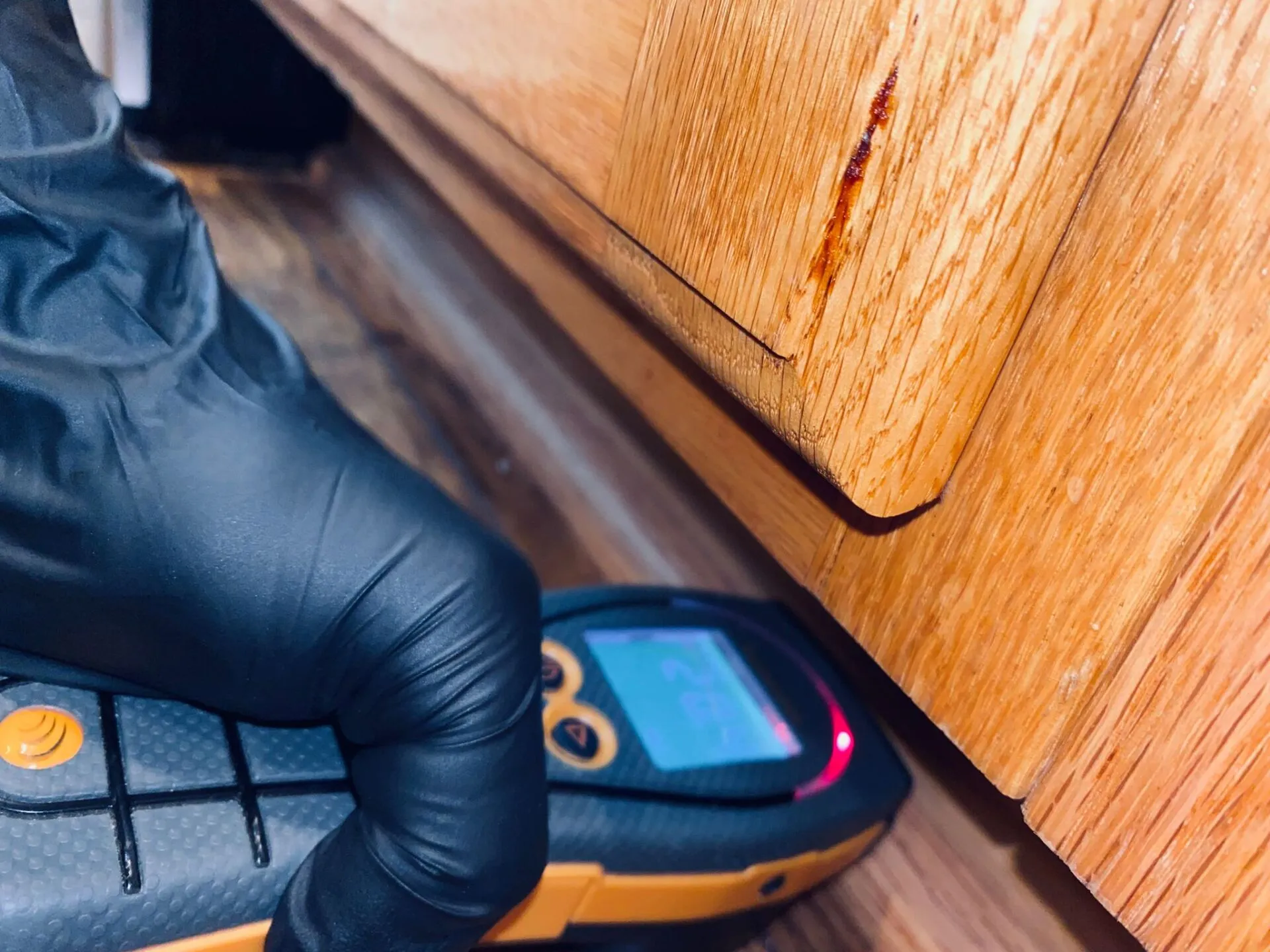
Material readings help compare affected and reference areas, track change, and support drying decisions. Readings do not by themselves establish structural safety, contamination, or insurance coverage.
Thermal imaging
Infrared patterns can help direct closer inspection toward temperature differences that may relate to moisture. Results require verification with appropriate readings and site observations.
Low-grain refrigerant dehumidifiers
LGR dehumidifiers remove water vapor from the air and support controlled drying. Quantity and placement depend on the space, moisture load, materials, access, and project conditions.
Professional air movers
Directed airflow supports evaporation from wet materials. Air movement should be selected carefully when contamination, mold, loose material, or unsafe electrical conditions may be present.
HEPA air scrubbers
HEPA filtration may be used for applicable particulate-control needs. It is one part of a site-specific work plan and is not a substitute for source control or appropriate containment.
Controlled containment
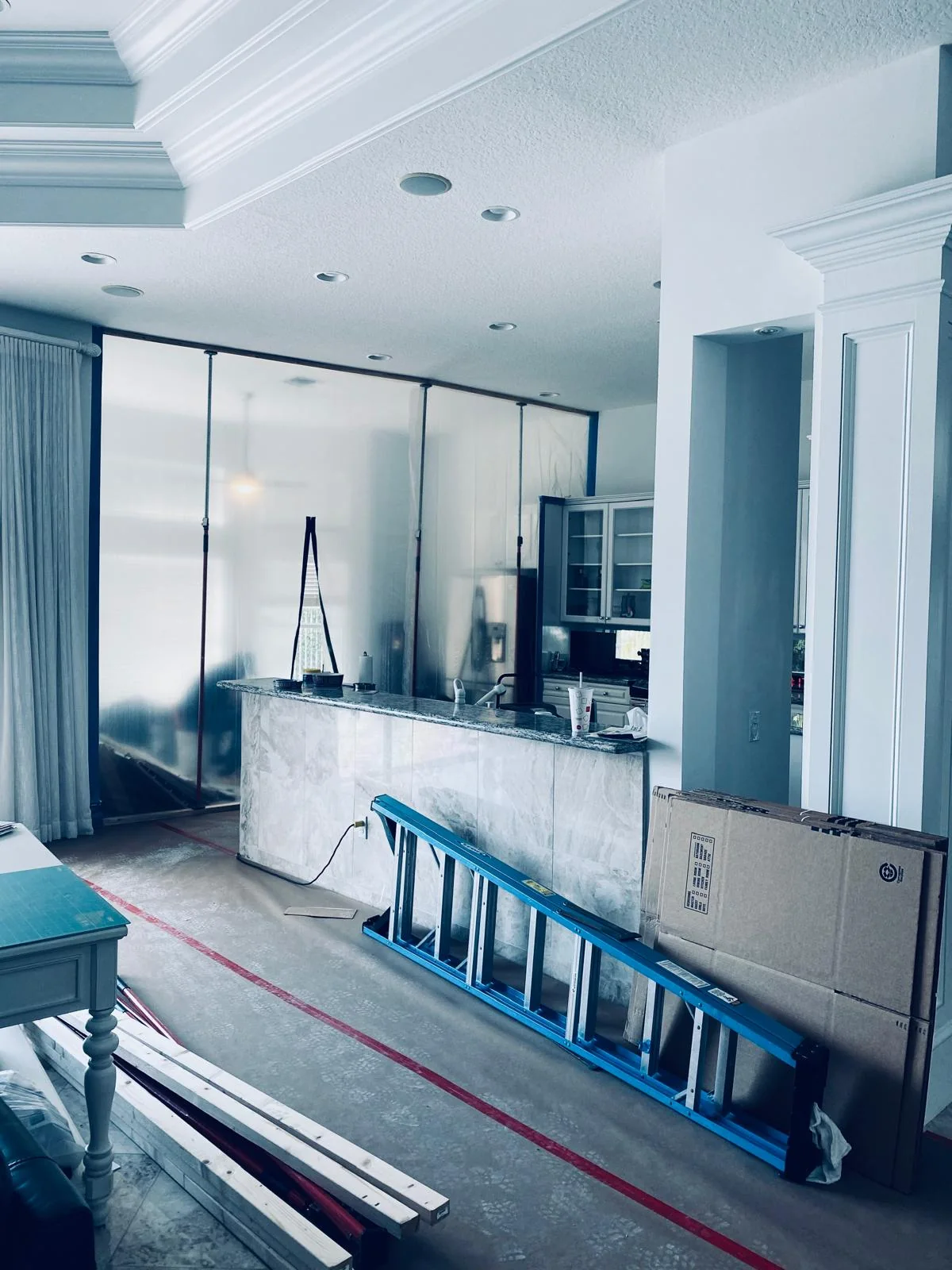
Temporary barriers can separate work areas, help manage pathways, and reduce disruption. The layout depends on occupants, egress, utilities, materials, and the work being performed.
Drying logs and material checks
Recorded readings, indoor conditions, equipment placement, and material-specific observations help show how the drying plan is progressing and why adjustments are made.
Residential and Commercial
Water Restoration for Different Osceola County Properties
Construction is only part of the plan. Occupants, access, shared systems, operating schedules, contents, and approval authority can change how work is coordinated.
Homes and managed residential properties
Residential water losses can involve occupants, remote owners, shared assemblies, belongings, pets, gates, keys, and approval from a manager or association. Hugo can coordinate water mitigation for single-family homes, condos, townhomes, apartments, HOAs, managed residential properties, and vacation rentals. The plan follows the actual source, construction, affected materials, safe access, and authorized scope.
Single-family homes
Condos and townhomes
Apartments and multifamily
HOAs and managed properties
Vacation and short-term rentals
Commercial and public-facing properties
Commercial planning should identify the authorized contact, occupants, operating hours, equipment, inventory, access, and areas that may need separation. Hugo accepts requests for hotels, restaurants, retail, offices, warehouses, medical offices, schools, hospitality properties, and other commercial buildings. Listing a property type does not imply a past client, specialty contract, or guaranteed ability to keep a building open.
Hotels and hospitality
Restaurants and retail
Offices and warehouses
Medical offices and schools
Managed commercial buildings
Why Hugo
What Makes Hugo's Water Response Useful
The strongest differences are practical: a real county base, a complete extraction-to-drying view, clear authorization, and records customers can review.
A St. Cloud base
Hugo is based in St. Cloud, inside Osceola County. Customers have a local company address and a team familiar with county communities, access routes, managed properties, and inland storm conditions.
Water removal plus drying decisions
Extraction addresses accessible water; restoration continues by evaluating materials, concealed spread, humidity, drying progress, contents, and next steps. That broader process helps avoid treating a wet surface as the entire loss.
Documented moisture work
Photographs, affected-area notes, moisture readings, equipment records, and drying logs can explain what was observed and performed. The records support communication without guaranteeing coverage, reimbursement, or a claim result.
Residential and commercial coordination
The intake process can account for homeowners, tenants, property managers, HOAs, remote owners, guests, facilities contacts, and business operations. Identifying decision-makers early reduces avoidable access and communication delays.
Credentials customers can review
Customers can review Hugo's licensed-and-insured status, IICRC-certified technicians, Florida mold-remediator license, company leadership, project gallery, and business profiles before choosing a provider.
Review the people and credentials behind the company
Hugo Garcia is the founder, CEO, and owner. Learn more about his restoration experience and company leadership.
Organize Restoration Records Without Claim Promises
A clear record can help the owner, property manager, restoration team, and authorized insurance representatives understand the loss and work performed. It does not decide coverage.
Hugo Fire & Water Restoration can assist with restoration and insurance documentation. Coverage decisions and claim outcomes are determined by the insurance carrier and policy.
Report the loss according to policy requirements and follow carrier instructions. Do not delay safety measures or reasonable emergency mitigation solely to wait for an adjuster, and do not enter a dangerous area to create records.
Available records depend on the authorized scope and what can be safely observed or performed.
Countywide Coverage
Water Damage Help Across Osceola County
Hugo serves the listed communities and surrounding Osceola County areas. Call with the exact property address, because weather, roads, access, hazards, demand, location, and crew availability affect routing.
Kissimmee
Dense residential, apartment, hospitality, retail, and managed properties can involve multiple occupants, unit access, business hours, and water movement into adjoining spaces.
Hugo's home base includes established and newer neighborhoods where plumbing, AC, appliance, roof, and storm-related water losses can affect varied building materials.
Call with the exact address because Poinciana extends across Osceola and Polk counties. Road, gate, occupancy, and property-management details help with routing.
Residential and multifamily water losses may involve shared walls, occupants, cabinets, flooring, ceilings, and concealed moisture beyond the source room.
East Osceola growth includes newer homes, managed communities, mixed-use areas, and varied access conditions. New construction can still experience plumbing, AC, appliance, and roof leaks.
Hugo's office is in St. Cloud. Crews serve Kissimmee, Poinciana, Celebration, Buenaventura Lakes, Narcoossee, and surrounding areas based on the exact property location and availability.
Related Restoration Services
Choose the Service That Matches the Damage
Water losses can overlap with roof openings, storm damage, mold concerns, contents, and documentation. Choose the service that matches the property conditions.
Water Extraction
Remove accessible standing water and excess moisture when conditions permit.
These answers provide general restoration guidance. The actual source, safety conditions, materials, access, authorization, and insurance policy control property-specific decisions.
Still unsure what applies? Call while the damage is active and describe what you can see from a safe location.
Hugo Fire & Water Restoration provides 24/7 emergency intake across Osceola County for water extraction, moisture mapping, structural drying, dehumidification, affected-material evaluation, contents support, and restoration documentation. Call (888) HUGONOW when damage is active.
Protect people first. Avoid standing water near electrical systems, sagging ceilings, and unstable materials. Stop the source only when safe, photograph visible conditions from a safe position, note when the damage was discovered, and call for extraction and drying guidance. Call 911 for immediate life-safety danger.
Discuss extraction and drying as soon as the property is safe and the source is being controlled. Water can move into adjoining rooms, flooring layers, cabinets, walls, ceilings, insulation, and contents. The response sequence depends on source conditions, safety, access, materials, and authorization.
Yes. Moisture may remain behind baseboards, inside drywall, under carpet or finished flooring, beneath cabinets, above ceilings, and in insulation or cavities after exposed surfaces look dry. Readings and material checks guide further evaluation, but no noninvasive tool confirms every concealed condition.
There is no universal drying time. The water source, materials, amount and spread of moisture, indoor humidity, access, equipment, concealed spaces, and progress readings all affect timing. Drying decisions should follow observed property conditions rather than a fixed promise.
Wet materials can create conditions that support mold growth. Source control, extraction, moisture evaluation, drying, and monitoring can reduce moisture-related risk, but no contractor should guarantee that mold will never develop. Avoid disturbing visible growth or using fans that could spread material.
Yes. Hugo accepts requests for vacation rentals, hotels, apartments, condos, HOAs, and managed portfolios. Intake can include remote owners, managers, guests or residents, gate and key access, unit or room records, authorized contacts, work-zone separation, and operating schedules.
Possibly, but the answer is property-specific. Safety, utilities, source conditions, affected materials, indoor conditions, egress, work-zone separation, occupants, and the decisions of the authorized property team or applicable authorities determine whether any area can remain in use.
Yes. Applicable support can include photographs, affected-area and source notes, moisture readings, equipment placement, drying records, contents information, estimates, invoices, and authorized communications. Hugo does not determine policy coverage, reimbursement, approval, or claim outcomes.
Hugo serves Osceola County, including Kissimmee, St. Cloud, Poinciana, Celebration, Buenaventura Lakes, Narcoossee, and surrounding communities. Call with the exact property address, because routing depends on current conditions, roads, weather, access, demand, location, and crew availability.
Official Public Resources
Check Current Hazards and Address-Level Flood Information
Use government sources for emergency instructions, active warnings, and property-level flood information. Hugo does not replace official alerts, floodplain determinations, emergency authorities, or qualified building professionals.
Osceola County Emergency Management
Official county preparedness, alerts, response, recovery, shelter, and emergency-program information.
Call Hugo Fire & Water Restoration for 24/7 water-damage intake in Osceola County. Share the exact address, source, affected rooms or units, known hazards, occupancy, and access details.
Hugo Fire & Water Restoration 4551 Hunting Lodge Dr, Saint Cloud, FL 34772
Call 911 first for immediate life-safety danger.
Practical customer guidance
Customer guide to water damage restoration in Osceola County
When your property needs water damage restoration in Osceola County, keep people away from hazards. Note when water damage restoration in Osceola County began and whether conditions are changing.
Reviewed by Hugo Fire & Water Restoration content team on 2026-07-31.
What is the safest first step for water damage restoration in Osceola County?
Before water damage restoration in Osceola County, leave unsafe areas. Describe only water damage restoration in Osceola County conditions that you can see safely.
Safety before water damage restoration in Osceola County
For water damage restoration in Osceola County, avoid wet electrical areas. Report whether water is still moving during water damage restoration in Osceola County.
Confirm which areas are safe to enter before water damage restoration in Osceola County
Report changing conditions connected to water damage restoration in Osceola County
Details to share about water damage restoration in Osceola County
For water damage restoration in Osceola County, share the address, source, affected rooms, and timeline. Also explain access and the authorized contact for water damage restoration in Osceola County.
List each space affected by water damage restoration in Osceola County
Explain when water damage restoration in Osceola County was first noticed
Records to keep for water damage restoration in Osceola County
Keep safe photos, dates, and room names for water damage restoration in Osceola County. Save contacts and completed-work notes about water damage restoration in Osceola County.
Photograph water damage restoration in Osceola County only from a safe location
Keep receipts and messages about water damage restoration in Osceola County together
Questions to ask before work begins: Water damage restoration in Osceola County
Can I call before I understand the full extent of water damage restoration in Osceola County?
Yes. Tell Hugo what you can safely see for water damage restoration in Osceola County. Explain when water damage restoration in Osceola County began and whether the source is still active.
Can Hugo document work related to water damage restoration in Osceola County?
Hugo can organize factual records for water damage restoration in Osceola County; your insurance policy and carrier determine coverage.
Talk with Hugo about water damage restoration in Osceola County
Call 24/7 when water damage restoration in Osceola County needs attention. Use the request form for safe water damage restoration in Osceola County details.