
Burst Pipe Water Damage in St. Cloud and Central Florida


Cleanup after a burst pipe starts with the water it left behind. Hugo helps St. Cloud and Central Florida property owners with extraction, moisture evaluation, structural drying, and restoration records for affected rooms and building materials.
If the release is active, call first and describe the source and safety concerns. Stop the water only if it is safe; pipe repair belongs to the appropriate plumbing professional.
Follow the release beyond the plumbing break
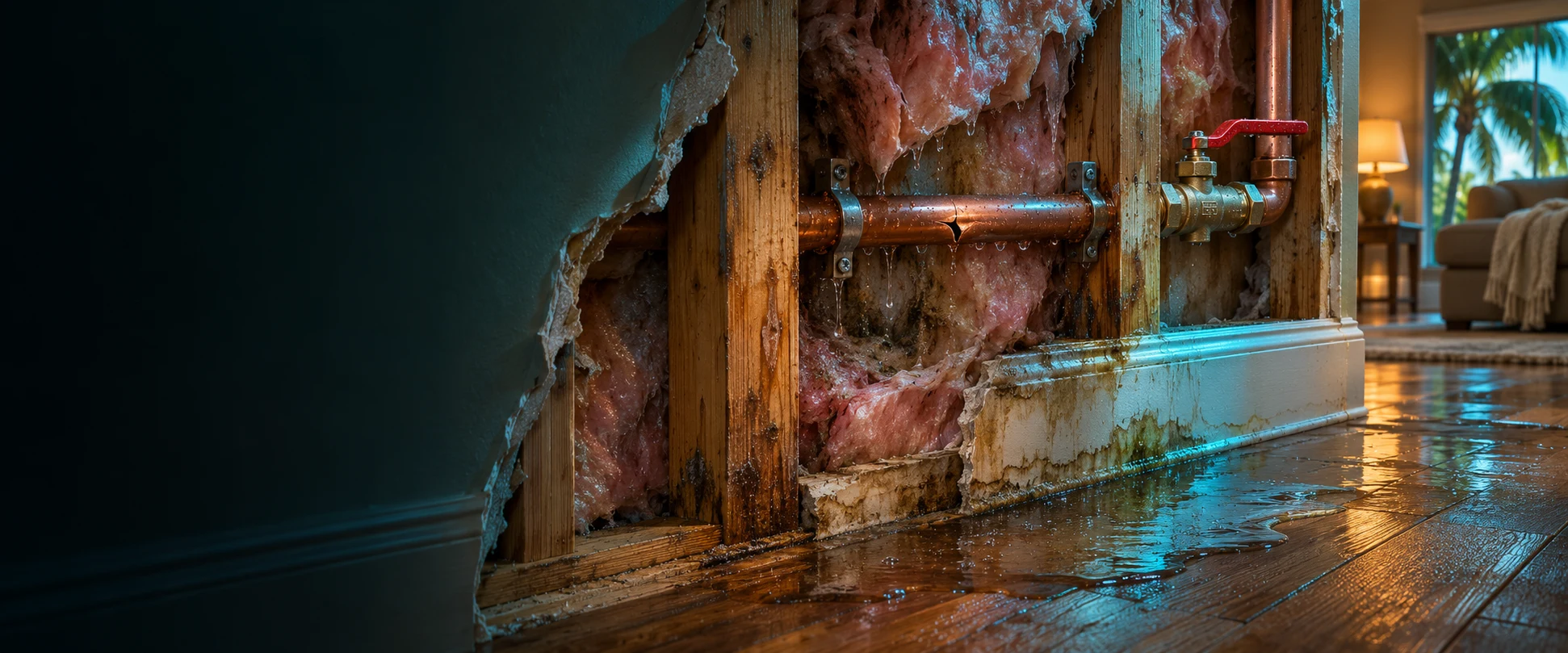
A failed pipe may be discovered in one room even though the water has already crossed into another. Wall cavities, flooring layers, ceiling spaces, closets, and cabinet bases can connect that path. The restoration review should account for the release history and the construction it reached, rather than stopping at the visible puddle.

Make safety the first boundary
Keep people away from standing water near electrical equipment and from ceilings or finishes that appear unstable. Shut off the supply only when it can be done safely. Call 911 for active fire, electrical danger, gas odor, structural collapse, medical risk, or other immediate life-safety danger.
Tell Hugo what is still changing
Call promptly if water continues spreading between rooms, dripping through a ceiling, or wetting cabinets and flooring. Say whether the supply is still on, whether a plumber has attended, and whether access or the source status remains uncertain.

Look beyond the point of failure
From a safe position, identify the rooms beside and below the break. A ceiling stain on a lower level or water at an adjoining closet can be relevant even when the failed pipe is upstairs or inside a different wall.
Describe the construction the water reached
Include soaked flooring and carpet padding, damp drywall and baseboards, wet insulation, cabinets, closets, ceilings, contents, and any concealed area that has already been opened by an authorized professional. Do not cut into walls or enter unsafe spaces to complete this list. The site evaluation can identify where additional access or readings are needed.
Across a floor
Water can travel along room edges and through openings between materials. Mention adjoining rooms and wet trim, not just the floor nearest the pipe. Different finishes and underlying layers may need different evaluation.
Down a wall or ceiling
Report active dripping, staining, sagging, and damage on the level below. Do not stand beneath a compromised ceiling or assume that a smaller stain means only a small cavity is affected.
Around cabinets and belongings
Cabinet backs, toe-kicks, stored contents, and nearby closets can conceal parts of the water path. Describe what is visible and any musty odor after the leak; odor alone does not diagnose mold or establish the scope.
What Hugo can do after a burst pipe
The restoration work can involve burst-pipe cleanup, water removal from floors and rooms, wet drywall and cabinet review, moisture mapping, structural drying and dehumidification, drying logs, and photographs with source notes. Inspection findings and authorization determine the actual mitigation, cleanup, treatment, material decisions, and restoration planning.
Hugo provides property cleanup and recovery after a pipe release. A plumbing professional handles the pipe repair. If the source is uncertain or involves excluded wastewater, black water, sewage, or biohazard conditions, describe that before arranging work.
Separate pipe damage from other damage
A property can have more than one source of moisture. Tell the team about any roof opening, storm exposure, slab or AC leak, or earlier water event that may overlap the pipe failure. Smoke residue, fire-suppression water, unsecured openings, and affected contents can also require a different service discussion. Central Florida humidity and hidden moisture remain relevant after the active release stops.
Hugo’s broader services include water, fire, mold, storm, board-up, roof tarping, contents, drying, cleanup, and restoration-documentation assistance. Describing connected damage helps the team identify which work belongs in the pipe-loss plan and which needs a separate scope or provider.
A short pipe-loss report helps the first conversation
Have the address, city, nearest major cross street, property type, and callback number ready. Identify the person authorized to arrange work and whether an occupant, owner, or property manager can provide access.
Share when the leak was discovered, where the break was reported, and which rooms were affected. State whether water reached a lower floor, whether the release continues, and what the plumber has already done. Standing-water depth is useful only if it can be described without approaching hazards.
Explain restrictions on entry and any electricity, odor, contamination, smoke, unstable material, roof opening, or security concern. If details are unknown, leave them unknown; you do not need a diagnosis to request assistance.
A repaired pipe can leave wet walls and flooring
After a burst pipe is isolated, the restoration question is how far the released water traveled. The pipe repair and the building’s recovery have different scopes: accessible water may need extraction, hidden areas may need moisture checks, and wet materials may need drying or removal before repairs can proceed.
Control the source and review access
Stay out of standing water near electricity. A plumbing professional may need to isolate and repair the failed line. Give Hugo the plumbing status and the affected rooms so access for restoration can be coordinated with that work.

Record the extent of moisture
The room containing the failed pipe is the starting point, not necessarily the limit of the affected area. Checks of accessible flooring, wall edges, cabinets and adjoining spaces help trace the loss. Findings guide the discussion about concealed access, extraction and which materials can remain in the drying plan.

Dry, check and plan the next stage
Once the source work and restoration access are coordinated, drying can be monitored against the materials involved. Keep the pipe-repair date with the restoration notes and ask about changes in the affected area. Review drying progress and the remaining wall, floor or cabinet decisions before replacement work closes those spaces.
Hugo does not provide wastewater cleanup or disposal, black-water cleanup or removal, sewage cleanup, or biohazard cleanup or disposal. Hugo also excludes cleanup of water with known or suspected contamination. Describe unknown water conditions before arranging work.
Questions after a burst pipe
The burst pipe is repaired. Why does the wall still need evaluation?
A repaired supply line prevents that failure from continuing to release water, but the surrounding construction can retain moisture. The area behind a baseboard or beneath a floor may need attention even when the plumbing is working again. Moisture evaluation helps separate a completed pipe repair from unfinished property restoration.
How do I know the building is ready after the pipe work?
The decision follows the condition of the affected building materials, supported by repeat observations and the relevant drying goals. It does not follow automatically from the plumber’s completion date. Ask which rooms and assemblies were monitored and whether further access or material work remains before the repairs are closed up.
How is the restoration scope separated from the plumbing repair?
The volume and duration of the release, affected rooms, water-source concerns and the materials reached all influence the restoration scope. Access around cabinets or within floors and walls may also matter. Request a proposal that separates pipe repair, water removal, drying and rebuilding, and explains how newly discovered damage will be reviewed.

Six stages after the supply is isolated
Stopping the release changes the emergency, but it does not finish the building’s recovery. The following stages connect the pipe history with the remaining water and material conditions.
Establish the immediate conditions
The first conversation identifies reported hazards, occupancy, spreading damage, and access. Safety restrictions take precedence over entering the property to inspect a pipe or collect photographs.
Review shutoff and plumbing status
Explain whether the supply has been isolated and whether the failed section has been repaired. Coordinate restoration access with the plumbing work; do not treat the plumber’s completion as proof that surrounding construction is dry.
Extract accessible standing water
When source conditions and the authorized work permit, remove accessible water from affected floors and rooms. Material condition and access influence the equipment and the sequence used.
Map the affected assemblies
Moisture checks help trace water through walls, ceilings, flooring, and cabinet areas. Adjoining rooms and lower levels may need attention, with concealed access discussed where findings justify it.
Dry and monitor material response
Structural drying and dehumidification address moisture remaining after extraction. Repeat observations and readings guide adjustments and help identify material issues that need a different decision.
Document progress and plan repairs
Keep the source history, extraction notes, moisture readings, drying logs, and affected-material decisions together. Review outstanding wall, floor, ceiling, and cabinet work before repair finishes close up the area.
Keep the pipe history beside the room-by-room record
A repair invoice and a drying record answer different questions. Keep both with the dates, photographs, receipts, and messages relating to the loss so the sequence is understandable: discovery, source isolation, pipe repair, extraction, material evaluation, and restoration follow-up.
Before the source is repaired
Record the discovery time, reported pipe location, water movement, and rooms you can safely observe. Retain any photographs already taken without entering hazardous spaces. Note who was contacted and when.
After the plumber attends
Keep the plumber’s findings and repair date. Tell Hugo if the location of the failure differed from the first report or if new wet areas became apparent during the plumbing work.
As restoration proceeds
Organize readings, photographs, extraction records, drying logs, completed-work notes, and messages by date and room. Keep the authorization and any agreed changes with the project documents.
Can I call before the full water path is known?
Yes. A description of the failed pipe, visible damage, timing, and source status is enough to start the conversation. Explain the limits of what you can see and any access restrictions. The restoration evaluation can address the uncertainty without asking you to investigate an unsafe cavity or lower-level room.
What can the records establish?
They can describe reported conditions, observed materials, authorized work, and the restoration steps performed. Hugo can help organize those factual records and communication, but the policy and insurance carrier determine coverage. Documentation assistance does not guarantee payment, reimbursement, or a claim outcome.
Review the restoration options
Explore cleanup, drying, contents, and related services when the pipe loss involves more than one part of the property.
Locate your community
Use the service-area directory alongside the exact property address when arranging the first conversation.
Send follow-up information
Share source-repair updates and access details through Hugo’s contact options after the initial emergency call.
EPA guidance on moisture control
Find broader building guidance covering moisture management through design, construction, and maintenance.
Keep the leak timeline with the restoration record
Keep the reported leak time, plumbing findings, affected-room photographs, mitigation notes, and adjuster communications in one chronological record. Insurance information is general and does not guarantee coverage, reimbursement, or claim approval.
What should I do first after a pipe bursts?
Protect people first, avoid electrical hazards, stop the water source only if safe, document visible damage from a safe position, and call for emergency water extraction and drying support.
Can a burst pipe create hidden moisture?
Yes. Water from a burst pipe can move behind drywall, under flooring, around cabinets, and into wall cavities before the surface looks damaged.
Can Hugo help document burst pipe water damage?
Yes. Hugo can help organize photos, source notes, affected-room details, extraction records, moisture readings, drying logs, and restoration notes for insurance communication.
Restoration support from St. Cloud

Company and credentials
Hugo Fire & Water Restoration serves Central Florida from St. Cloud. Ask for current licensing, insurance and technician qualifications relevant to your work. Its BBB, Google Business and Trustpilot profiles offer additional information.

Central Florida coverage
The service area includes Osceola, Polk, Brevard, Orange, Lake, Sumter, Volusia, and Seminole counties. Community links below include St. Cloud, Kissimmee, Orlando, Lakeland, Winter Haven, Davenport, Melbourne, Palm Bay, Daytona Beach, Ormond Beach, Sanford, and Clermont.

Emergency coordination
Pipe-loss calls can reach Hugo at any hour, including overnight. The 15-minute dispatch process describes coordination following intake; it is not a guaranteed travel or arrival time. For active damage, calling takes priority over preparing a form.
When selecting a restoration company, ask about direct emergency contact, coverage for the address, the proposed work, and how photos, readings, and notes will be communicated. For a managed building, include the property manager and the person who can authorize entry and changes.
Arrange cleanup after a burst pipe
Tell Hugo where the pipe failed, whether the supply is isolated, and which rooms or levels are wet. Request extraction, moisture evaluation, drying, and documentation support for the damage left behind.
Connected Restoration Services
County Service Areas
Burst Pipe Water Damage Service Areas
Select a community for local restoration information, then give Hugo the street address and the pipe-loss details. Access and the requested scope still need to be discussed.
Locate the property affected by the pipe break
Explore the county coverage, then explain the building location and how the water moved through it.
Additional safety references for water-damaged property
A pipe release needs advice appropriate to the actual conditions. These public references provide wider water-hazard and disaster-reentry context; they do not determine whether a particular room is safe or replace professional evaluation of a plumbing loss.
National Weather Service: Water Hazards
Review flood-safety information when outdoor flooding is also affecting access or the surrounding area.
National Weather Service: After a Flood
Review floodwater hazards and re-entry guidance if a broader flood event overlaps the indoor pipe loss.
CDC: Disaster Reentry
Read precautions for approaching and returning to a property after disaster damage.