Wind-driven rain, missing or lifted shingles, tree impact, punctures, and exposed decking can let repeated rain enter an Osceola County property. Hugo coordinates temporary roof protection, documents visible conditions, and can address accessible interior water and drying needs while permanent roof evaluation and repair are arranged.
Stay off the roof and away from sagging ceilings, wet electrical areas, downed lines, falling debris, and unstable rooms. Call 911 first for active fire, collapse, gas odor, electrical danger, medical danger, or another immediate threat.
The 15-minute timeframe refers to beginning dispatch coordination after intake and is not a guaranteed arrival time.
EMERGENCY ROOF TARPING
Who Provides Emergency Roof Tarping in Osceola County?
Hugo Fire & Water Restoration provides 24/7 emergency roof-tarping help throughout Osceola County. When weather, access, roof condition, and authorization allow safe work, the St. Cloud-based team can install temporary protection over some storm-created openings and coordinate interior water mitigation. A tarp is temporary protection, not permanent roof repair.
Temporary protection addresses an immediate opening. It does not replace permanent roofing, licensed trade work, or a structural or occupancy determination.
Temporary roof tarping can
Temporarily covers some accessible roof openings when conditions allow safe installation.
Can reduce additional rain entry while a qualified roofing professional evaluates permanent repair.
Records visible roof conditions, authorized temporary materials, and completed protection work.
Connects exterior stabilization with interior water mitigation when moisture has already entered.
Temporary roof tarping does not
Replace permanent roofing, roof replacement, structural repair, or a licensed roofing inspection.
Certify the roof, decking, attic, structure, electrical system, or property as safe.
Guarantee that every leak will stop, that no hidden opening exists, or that a tarp will last for a specific period.
Include tree removal, utility work, plumbing, electrical, gas, engineering, public adjusting, or specialty contamination services.
Temporary protection depends on safe access, weather, roof condition, opening size, surface configuration, surrounding hazards, authorization, and the work that can legally be performed. Permanent repair must be evaluated and completed by the appropriately licensed trade.
WHEN TEMPORARY PROTECTION MAY BE NEEDED
Roof Damage Conditions to Report
Describe what you can see from the ground or a safe interior position. Do not climb onto a damaged roof to confirm an opening.
Active ceiling drip
Rainwater is visibly entering through a ceiling, attic access, light opening, or wall transition.
Missing or lifted shingles
Wind has displaced shingles or other roof-covering material and exposed an underlying area.
Fallen limb or impact
A branch, tree section, or airborne object has struck the roof or remains against the structure.
Open puncture or torn covering
A visible hole, split, torn membrane, or exposed roof opening can admit more rain.
New water staining
Ceilings, walls, cabinets, or attic materials show fresh stains, dampness, bubbling, or discoloration.
Sagging ceiling materials
A ceiling bulge, falling texture, or bowed drywall may indicate water loading above. Keep the area clear.
Commercial roof exposure
Roof membranes, penetrations, rooftop equipment transitions, or parapet areas show storm-related openings.
More rain is forecast
An exposed opening may allow repeat intrusion before permanent evaluation and repair can be arranged.
SAFETY FIRST
What to Do—and Not Do—After Roof Damage
Roof damage can involve falls, unstable decking, electrical exposure, falling materials, and hidden structural damage. Protect people first and leave roof access to qualified workers.
Do
Move people and pets away from active drips, ceiling bulges, falling debris, and slippery floors.
Photograph visible exterior and interior conditions only from a safe position.
Note when the damage happened or was discovered, whether rain is still entering, and which rooms are affected.
Use buckets only where they can be placed without entering a wet electrical area or standing beneath a damaged ceiling.
Follow instructions from emergency authorities, utilities, building officials, and the property insurer.
Do not
Do not climb onto a wet, wind-damaged, punctured, or visibly sagging roof.
Do not touch wet lights, outlets, appliances, panels, extension cords, or switches.
Do not enter rooms beneath a bulging ceiling or obvious structural movement.
Do not pull limbs, roofing materials, or debris from the structure yourself.
Do not assume a tarp makes the roof structurally safe, permanently repaired, or safe to occupy.
For downed power lines, gas odor, active fire, collapse, medical danger, or another immediate threat, move to a safe location and call 911 or the appropriate utility before contacting a restoration provider.
WHAT TO EXPECT
Our Emergency Roof Tarping Process
The order can change with active weather, access, utilities, roof condition, hazards, and interior water. Temporary protection begins only when the work can be performed safely and within the authorized scope.
1
Emergency Request
Share the address, authorized contact, damage timing, visible roof condition, active rain entry, affected interior areas, access limits, and immediate hazards.
2
Dispatch Coordination
Hugo begins coordination through its verified 15-minute dispatch process. The timeframe starts coordination after intake and is not a guaranteed arrival time.
3
Safety and Access Review
Weather, roof condition, height, fall exposure, utilities, debris, structural concerns, access, and authorization are reviewed before roof work begins.
4
Visible Damage Review
When access is safe, the team records visible missing materials, punctures, exposed areas, water pathways, and conditions that may require another qualified provider.
5
Temporary Protection Plan
The proposed temporary covering reflects the accessible opening, roof geometry, surface condition, weather, safe attachment options, and approved scope.
6
Tarp Installation
When conditions permit, an appropriate temporary covering is positioned and secured to help reduce additional weather intrusion. It cannot guarantee every leak will stop.
7
Interior Water Review
If water has entered, accessible ceilings, walls, insulation, flooring, cabinets, and contents can be reviewed for extraction, moisture evaluation, drying, or cleaning needs.
8
Documentation and Handoff
Applicable photographs, observations, temporary work, moisture information, authorizations, and next steps are organized for the owner, manager, carrier, or qualified repair trade.
PROPERTIES WE HELP
Residential and Commercial Roof Tarping
The authorization, safety, access, communication, and interior-water plan should fit the property and the people responsible for it.
Homes, Condos, and Residential Buildings
Residential roof damage can affect occupied rooms, attics, insulation, ceilings, walls, flooring, and belongings. Hugo can coordinate authorized temporary protection with occupants, owners, associations, and managers while keeping permanent roofing and structural decisions with the appropriate qualified providers.
Commercial roof exposure can add tenant safety, inventory, guest, operating-hour, equipment, access, and business-continuity considerations. The temporary-protection plan should identify authorized contacts, affected areas, work-zone limits, and the permanent-repair handoff.
Osceola's relevant roof risks include tropical and thunderstorm wind, wind-driven rain, tree and debris impact, repeated rainfall, humidity, and access or discovery delays.
Inland Tropical Wind
Osceola County is inland, but tropical systems can still remove roof materials, drive rain through openings, and move limbs or debris into structures.
Severe Summer Thunderstorms
Fast-moving wind, intense rain, lightning, and localized power interruption can create or worsen roof and interior-water problems.
Wind-Driven Rain
Rain can move beneath lifted materials and through small gaps before a large opening is visible from the ground.
Tree and Debris Impact
A fallen limb or airborne object can puncture roofing, damage decking, or remain against the structure and require another qualified provider before access is safe.
Repeated Rainfall
A temporary opening may admit water again before permanent roof evaluation and repair can be completed.
High Humidity
Warm, humid conditions can slow interior drying after water reaches insulation, ceilings, walls, flooring, cabinets, or contents.
Delayed Discovery
Vacation rentals, seasonal homes, vacant units, and managed properties may have roof or interior water damage that is found after the initial weather event.
Access Coordination
Gates, remote owners, tenants, guests, parking, roof-access points, associations, and property managers can affect authorization and safe crew access.
Interior mitigation is a separate part of the response when water has already entered ceilings, walls, flooring, cabinets, insulation, or contents.
ROOF AND INTERIOR WATER
A Tarp Does Not Remove Water Already Inside
Exterior temporary protection and interior water mitigation solve different problems. Both may be needed at the same property.
A roof tarp addresses exterior exposure; it does not remove water already inside the building.
Water can follow roof layers, framing, insulation, walls, and other pathways before it appears indoors.
Ceiling stains, bubbling paint, damp insulation, wet flooring, cabinet swelling, or musty odor can signal affected materials.
Accessible standing water may require extraction after electrical and structural hazards are addressed.
Moisture observations, air movement, dehumidification, and monitoring may support structural drying when authorized.
Prolonged moisture can create conditions that support mold growth, but drying work does not guarantee that mold will not develop.
RELATED RESTORATION HELP
Services That May Follow Roof Damage
Choose the page that matches the actual condition: a storm loss, interior water, standing water, retained moisture, an exposed vertical opening, fire damage, prolonged dampness, or documentation needs.
Storm Damage Restoration
Coordinate temporary protection, water mitigation, drying, cleanup, and documentation after wind and rain damage.
Record only what can be reached safely. Do not climb onto the roof, enter an unstable room, or approach electrical hazards for a photograph.
Insurance coverage, claim approval, payment, and reimbursement are determined by the applicable carrier and policy. Hugo can organize restoration documentation and claims-support records but cannot guarantee an insurance outcome.
Safe exterior context and visible roof damage from the ground
Interior stains, active drips, sagging materials, and affected rooms
Damage timing, weather conditions, and when water was discovered
Authorized temporary-protection materials and work
Applicable moisture observations, readings, and drying records
Access, authorization, tenant, guest, and manager notes
Applicable progress and completion photographs
Qualified-trade handoff and remaining-work notes
PROJECT-SPECIFIC SCOPE
What Affects Emergency Roof Tarping Cost?
A responsible price depends on the actual roof, access, hazards, temporary materials, interior-water needs, and authorized scope. A page cannot provide a reliable property-specific quote.
Opening size, roof area, slope, height, and configuration
Missing materials, punctures, exposed decking, or multiple affected areas
Safe access, fall exposure, weather, debris, and structural conditions
Temporary materials, safe attachment options, and labor required
Interior water extraction, moisture evaluation, drying, or contents needs
Gates, parking, tenants, guests, associations, managers, and authorization
Documentation requirements and coordination with qualified repair trades
Active demand, road conditions, location, and other site restrictions
HUGO PROJECT MEDIA
Temporary Property Protection in the Field
Roof coverings are matched to accessible openings, roof conditions, weather, and safe attachment options. Board-up is a separate method for accessible vertical openings such as damaged windows and doors.
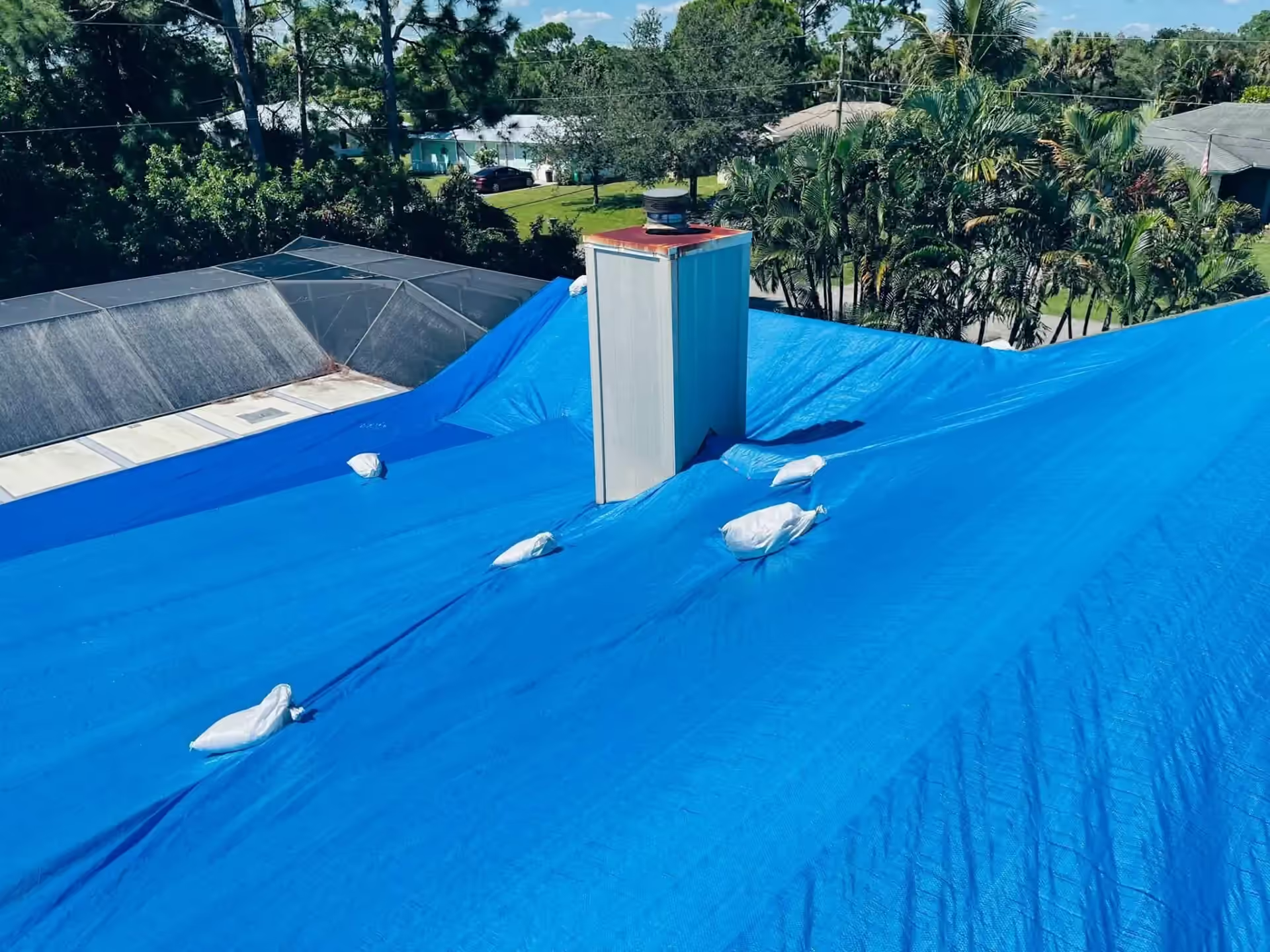
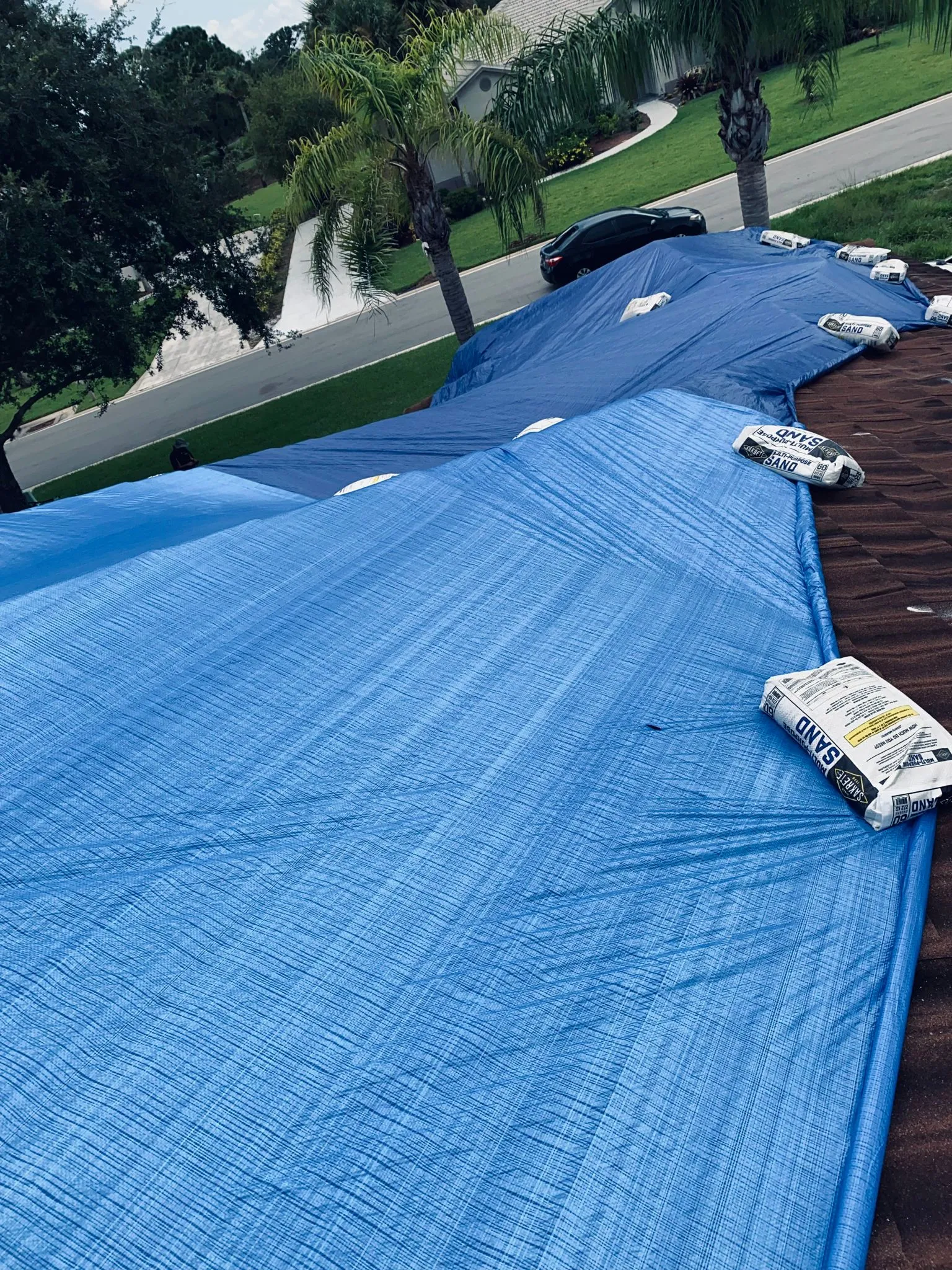
Large blue temporary tarp covering a damaged residential roof
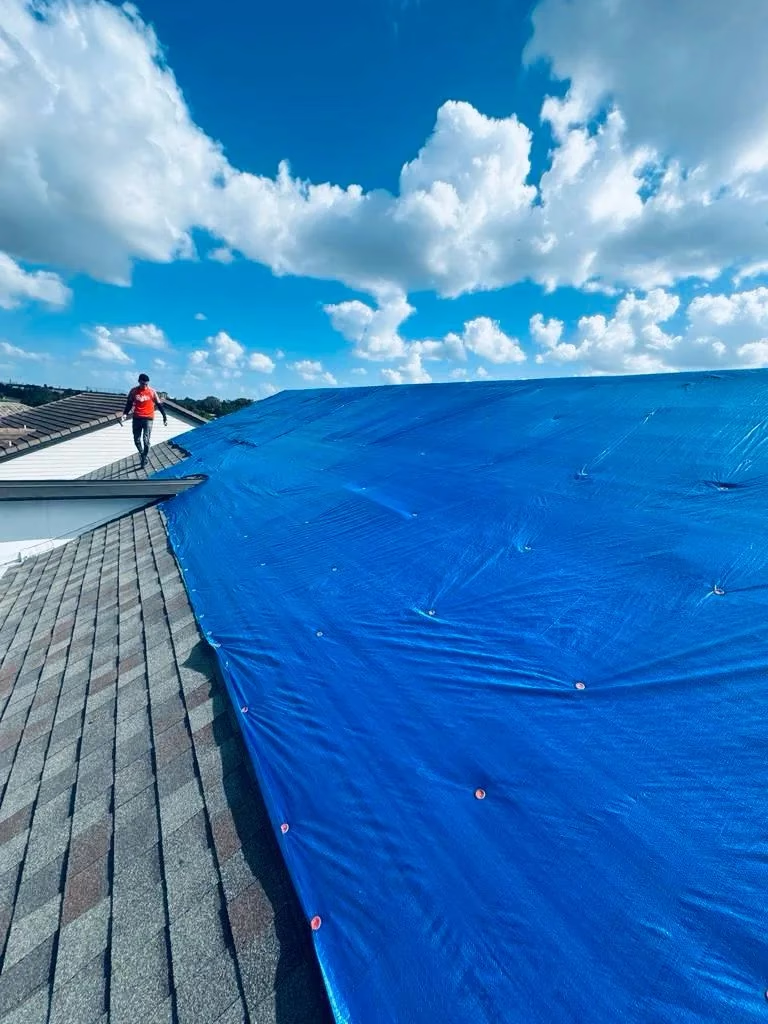
Restoration worker beside an installed blue emergency roof tarp
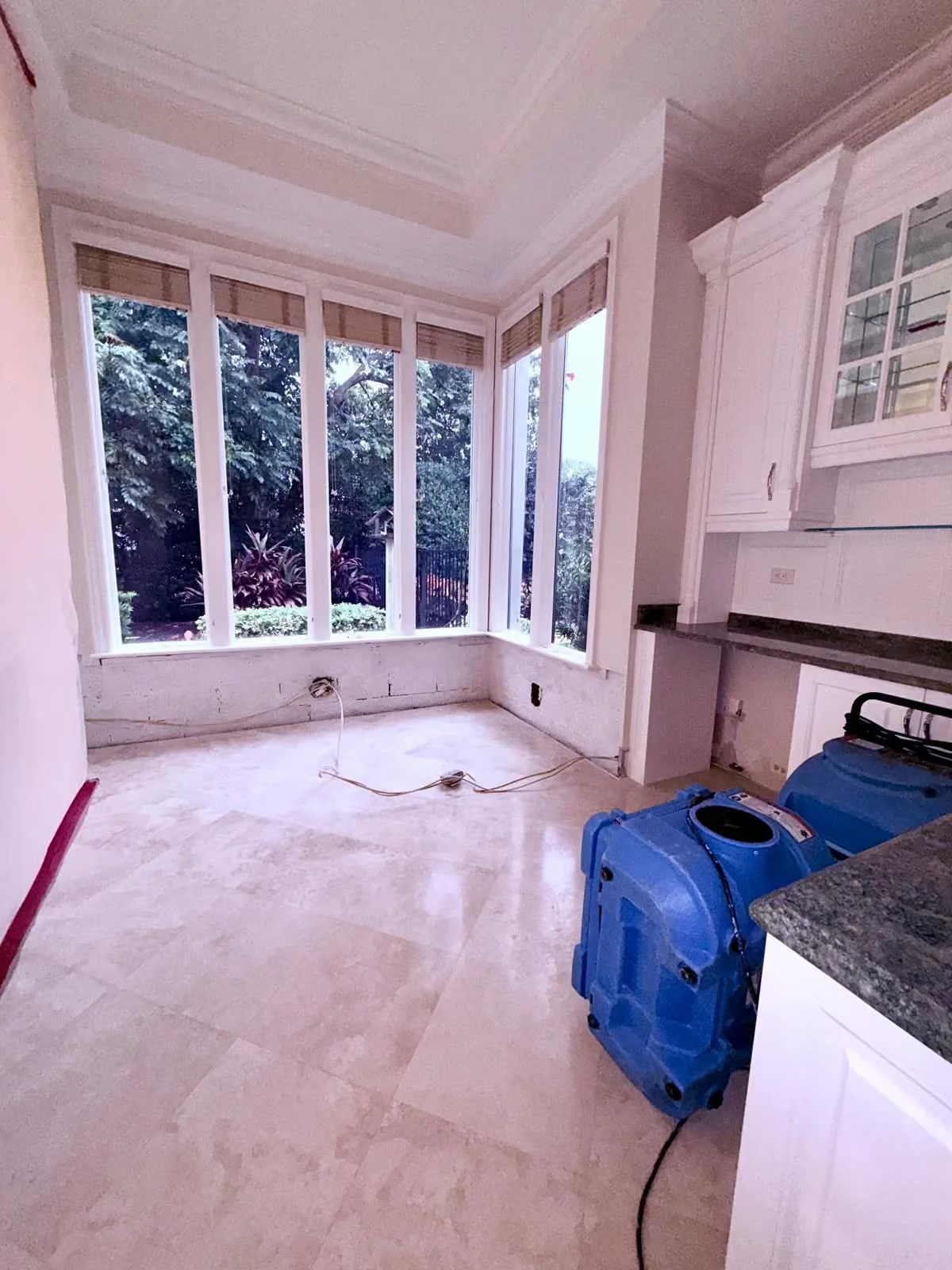
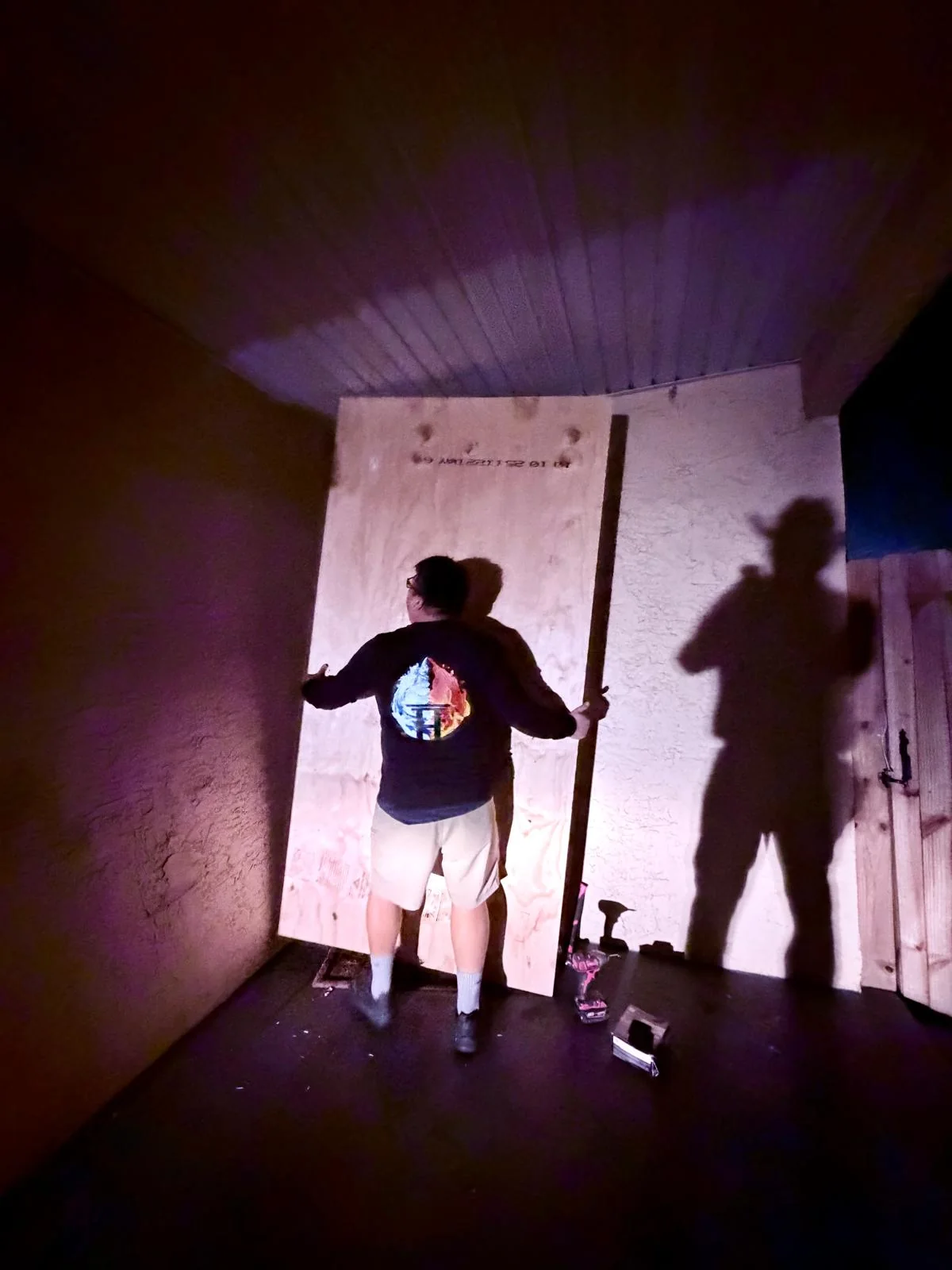
Hugo restoration worker preparing temporary board-up protection after dark
COMMON QUESTIONS
Emergency Roof Tarping FAQs
Safety, temporary-protection limits, interior water, dispatch coordination, property access, documentation, cost factors, and Osceola County coverage.
Hugo Fire & Water Restoration provides 24/7 emergency roof-tarping intake across Osceola County. When weather, access, roof condition, authorization, and site safety allow, the St. Cloud-based team can install temporary protection over some storm-created roof openings and coordinate related interior water mitigation.
No. A tarp is temporary protection intended to help reduce additional rain intrusion while the appropriately qualified roofing provider evaluates and completes permanent work. It is not roof replacement, structural repair, a roofing inspection, or a certification that the roof is safe.
Hugo's verified 15-minute process means dispatch coordination begins after emergency intake. It does not promise a specific arrival time. Weather, roads, location, access, hazards, authorization, active demand, and crew availability can affect timing.
No. Wet surfaces, wind, loose materials, hidden punctures, unstable decking, debris, and damaged edges create serious fall and collapse hazards. Stay off the roof and keep people away from the area below visible damage.
Temporary protection may be considered after missing or lifted shingles, a storm-created puncture, torn roof covering, exposed decking, tree or debris impact, a fire-created opening, or another accessible opening that can admit more rain.
No. Hidden openings, water already inside, roof geometry, changing weather, debris, material condition, and safe anchoring limits can affect performance. A temporary tarp cannot guarantee that every water pathway will stop or that the covering will last for a specific period.
Temporary roof protection addresses exterior exposure; it does not remove water already in ceilings, walls, insulation, flooring, cabinets, or contents. Accessible wet areas may also need extraction, moisture evaluation, structural drying, cleaning, and monitoring.
Report active rain entry, missing roofing, a fallen limb, a puncture, exposed decking, ceiling stains or sagging, wet electrical areas, affected rooms, standing water, access limits, occupancy, and whether emergency authorities or utilities are involved.
This service covers temporary roof protection and related restoration support. Permanent roofing, tree work, structural engineering or repair, electrical, gas, plumbing, and other regulated trade work require the appropriately qualified and licensed provider.
Hugo can organize factual photographs, observed conditions, temporary-protection notes, moisture information, drying records, and authorized restoration work. The carrier and applicable policy determine coverage, approval, payment, and reimbursement.
Yes, when site conditions, authorization, access, weather, and service scope permit. Hugo can coordinate with owners, managers, tenants, guests, vendors, and carrier contacts while keeping temporary stabilization separate from permanent roofing work.
Prolonged moisture in insulation, ceilings, walls, cabinets, flooring, and contents can create conditions that support mold growth. Timely source control and drying can reduce moisture, but they cannot guarantee mold will not develop. A separate mold-remediation path may be needed.
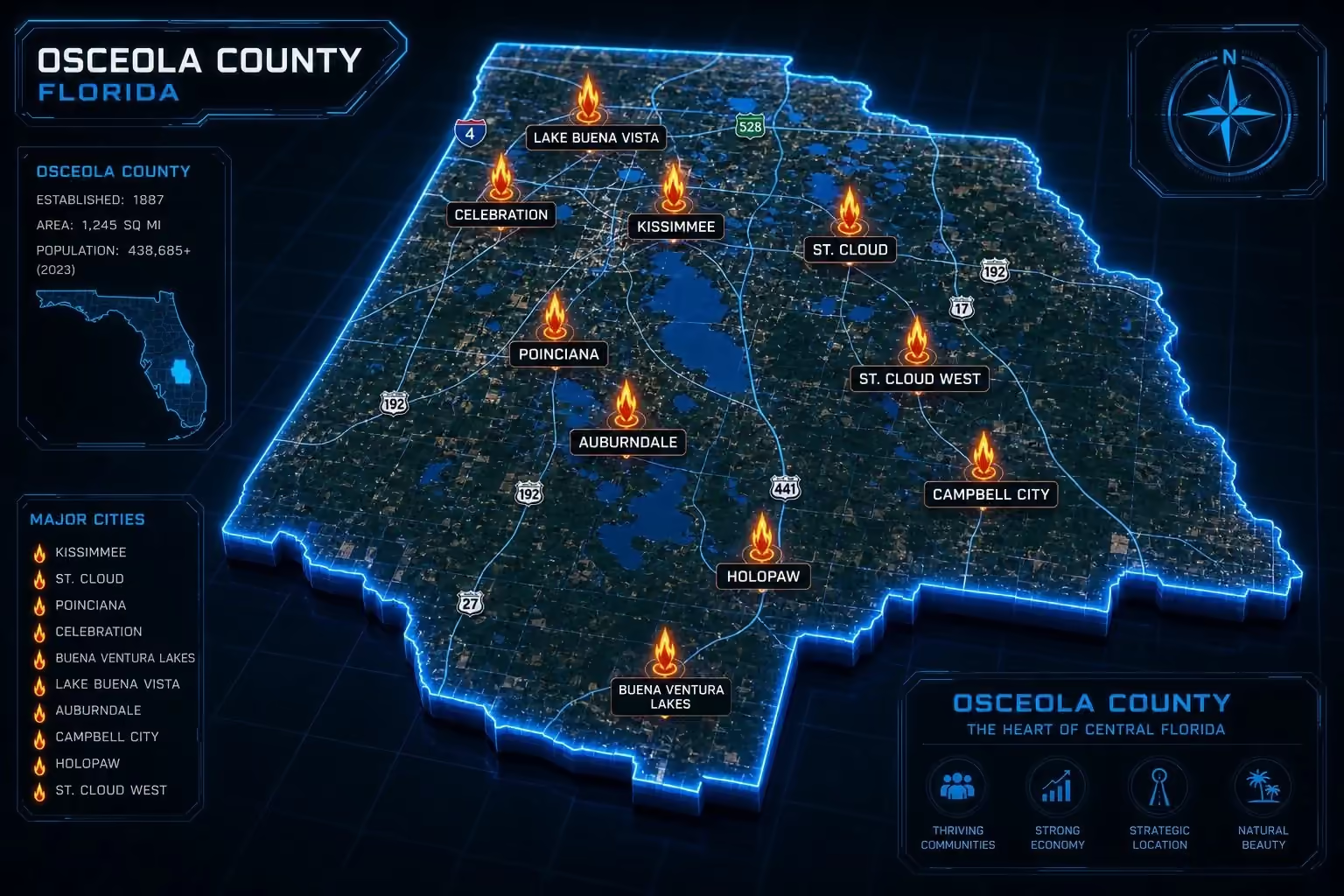
Hugo accepts emergency roof-tarping requests throughout Osceola County, including Kissimmee, St. Cloud, Poinciana, Celebration, Buenaventura Lakes, Narcoossee, and nearby communities. Timing depends on the exact address, safety, access, roads, weather, demand, and crew availability.
Service timing depends on the exact address, safe access, roads, weather, authorization, active demand, and crew availability.
COUNTY COVERAGE
Roof Tarping Help Across Osceola County
Find your community below for local restoration information. Call to discuss temporary roof protection and safe access at your property.
Kissimmee
Homes, apartments, hotels, vacation rentals, restaurants, retail, and managed properties.
Use these public sources for alerts, preparation, high-wind precautions, and fall-risk context. They do not verify Hugo's services and do not replace emergency authorities, utilities, building officials, or qualified on-site specialists.
Osceola County Emergency Management
County alerts, preparedness, shelter, response, and recovery information.
Call to discuss the visible roof damage, active rain entry, affected interior areas, safe access, authorized contact, and temporary protection the property may need.
Stay off the roof. Call 911 first for active fire, collapse, gas odor, downed lines, electrical danger, medical danger, or unsafe access.
Emergency roof tarping in Osceola County: your first call
Describe safe observations for emergency roof tarping in Osceola County. Note when you first noticed roof damage in Osceola County and whether conditions change.
Reviewed by Hugo Fire & Water Restoration on .
What should I do before arranging emergency roof tarping in Osceola County?
Leave unsafe areas and keep others away from hazards. Describe roof damage only from a safe location.
Safe observations before emergency roof tarping in Osceola County
Do not enter hazardous areas. Avoid wet electrical areas. Report active water only when safely observable.
Identify known access hazards when requesting emergency roof tarping in Osceola County
Explain what has changed since you noticed roof damage in Osceola County
Property details for emergency roof tarping in Osceola County
For emergency roof tarping in Osceola County, share the address, affected areas, and timing. For emergency roof tarping in Osceola County, identify known sources. For emergency roof tarping in Osceola County, provide access instructions and authorized contacts.
List rooms, units, or belongings affected by roof damage in Osceola County
Distinguish the damage timeline from completed emergency roof tarping work in Osceola County
Records supporting emergency roof tarping in Osceola County
Keep safe photos and dated area labels for emergency roof tarping in Osceola County. Save contacts, receipts, messages, and completed-work notes for Osceola County emergency roof tarping.
Take photos of roof damage only from a safe position
Group incident records separately from completed-work notes for emergency roof tarping in Osceola County
Questions to ask before work begins: Emergency roof tarping in Osceola County
Can I call early about emergency roof tarping in Osceola County?
Yes, discuss safe observations when asking about emergency roof tarping in Osceola County. Explain when you noticed roof damage in Osceola County. For emergency roof tarping in Osceola County, report whether any known source remains active.
What documentation can Hugo discuss for emergency roof tarping in Osceola County?
Hugo can organize factual incident and completed-work records for emergency roof tarping in Osceola County. Your policy and insurance carrier determine coverage.