Missing or Damaged Shingles
Wind can loosen or remove roof materials and allow rain beneath the exterior covering.
Wind-driven rain, roof openings, broken windows or doors, fallen limbs, and debris can leave a home or business exposed after a storm. Hugo Fire & Water Restoration provides 24/7 help with emergency board-up, temporary roof tarping, water extraction, structural drying, and restoration documentation. The work is matched to the conditions at the property, whether water is entering through a damaged opening, collecting on flooring, or moving into ceilings, walls, insulation, and other materials.
If there are downed power lines, electrical danger, structural instability, active flooding, fire, gas odor, a medical emergency, or another immediate threat, call 911 first.
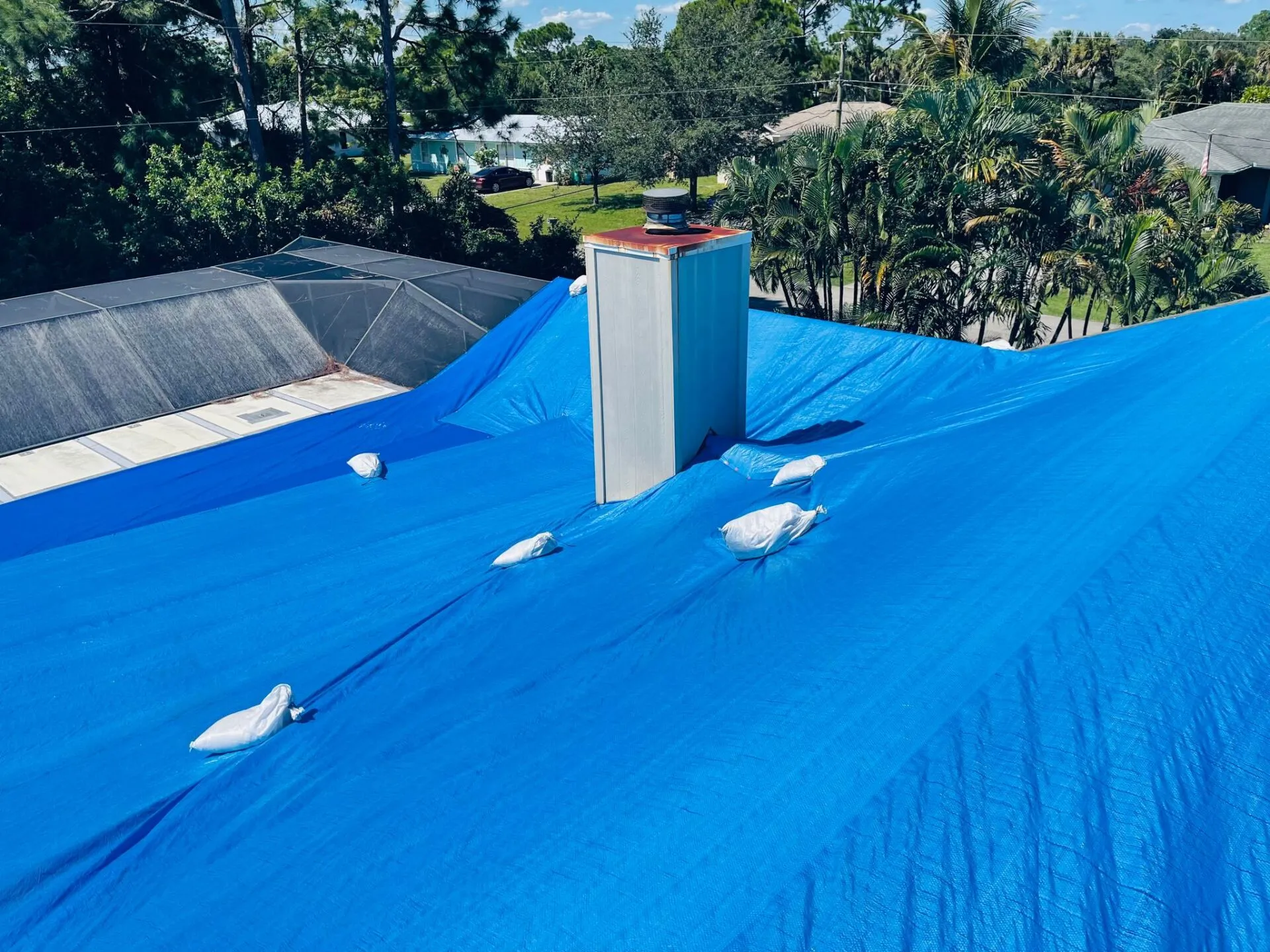
Hugo Fire & Water Restoration provides 24/7 storm damage restoration for homes, rentals, managed properties, hospitality buildings, and businesses across Osceola County. Available help includes temporary roof tarping, emergency board-up, water extraction, structural drying, and organized restoration documentation. Customers in Kissimmee, St. Cloud, Poinciana, Celebration, and nearby communities can call when storm-created openings or water intrusion require professional property protection and mitigation.
Call 24/7: (888) HUGONOWProtect people first, keep away from unstable areas, record visible damage safely, and call for the type of property protection or water mitigation the conditions require.
Keep clear of downed power lines, wet electrical equipment, damaged service panels, and standing water near outlets or appliances.
Do not enter areas with sagging ceilings, shifting walls, broken glass, falling material, or visible structural damage.
Do not climb onto a wet, punctured, wind-damaged, or visibly sagging roof to inspect or install temporary protection.
Keep occupants and pets away from wet rooms, exposed openings, debris, and other unstable areas.
Record visible roof, window, door, ceiling, wall, floor, and contents damage from a safe position.
Keep emergency receipts, photographs, notices, and insurance communications together for later reference.
Describe active water, damaged openings, standing water, and affected rooms so board-up, tarping, extraction, or drying needs can be discussed.
Look for clear emergency access, temporary-protection capabilities, water mitigation, safe customer guidance, useful records, and honest limits.
The place where water appears indoors may not be directly below the damaged exterior area. Water can follow roof layers, framing, insulation, walls, and other pathways before it becomes visible.
Wind can loosen or remove roof materials and allow rain beneath the exterior covering.
Fallen limbs or debris can create openings that admit water into attics, insulation, and ceilings.
Wind and impact can affect flashing near roof edges, walls, vents, and other transitions.
Broken glass and failed window openings can expose rooms, flooring, walls, and belongings.
Exterior and garage-door damage can create large openings for wind-driven rain and debris.
Rain can move through small exterior gaps even when no large opening is immediately visible.
Loose siding, damaged exterior finishes, and wall openings can admit water into layered materials.
Impact can affect roofs, walls, windows, doors, screens, and nearby exterior assemblies.
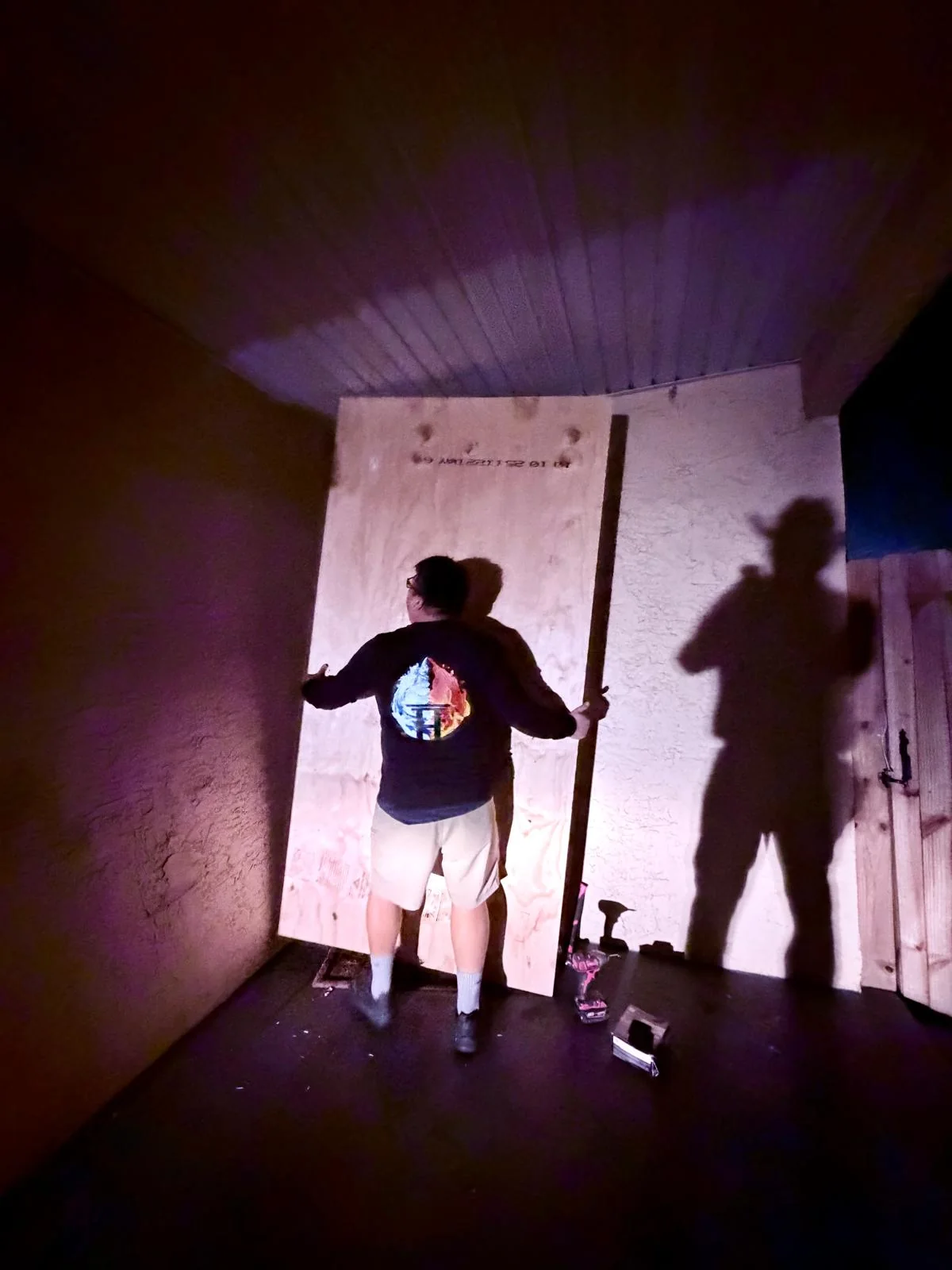
Several services may be needed at the same property, but not every project receives every service. The response depends on safe access, active weather, the damage observed, and the authorized scope.
A temporary roof covering may reduce additional rain intrusion when wind or impact creates an accessible opening and conditions permit safe work. Tarping is not permanent roof repair.
Emergency roof tarping in Osceola CountyTemporary panels can protect accessible broken windows, damaged doors, storefronts, or wall openings while permanent repair is planned.
Emergency board-up in Osceola CountyExtraction removes accessible standing water and excess water from affected flooring when electrical, access, and exposure conditions allow the work to proceed.
Water extraction in Osceola CountyAir movement, dehumidification, moisture observations, and monitoring support drying decisions for ceilings, walls, flooring, cabinets, and other affected materials.
How structural drying worksWhen storm damage allows water inside, mitigation addresses accessible water and affected materials after the entry pathway and immediate hazards are controlled.
Roof-leak water damage helpApplicable photographs, affected-area notes, moisture information, temporary-protection details, authorizations, and progress records can be organized for the restoration file.
Insurance documentation supportTemporary protection addresses where weather is entering. Water extraction removes accessible bulk water. Structural drying addresses moisture that remains inside materials. Several steps may overlap on one property.
Broken windows, damaged doors, storefront openings, or accessible wall openings
Missing roof materials, punctures, impact damage, or an active roof opening
Standing water or heavily saturated flooring that can be accessed safely
Moisture remains in ceilings, drywall, cabinets, floors, insulation, or other building materials
Damp materials or water pathways are not obvious from surface appearance alone
Depending on the conditions, water and moisture can continue moving after the strongest wind or rain has ended.
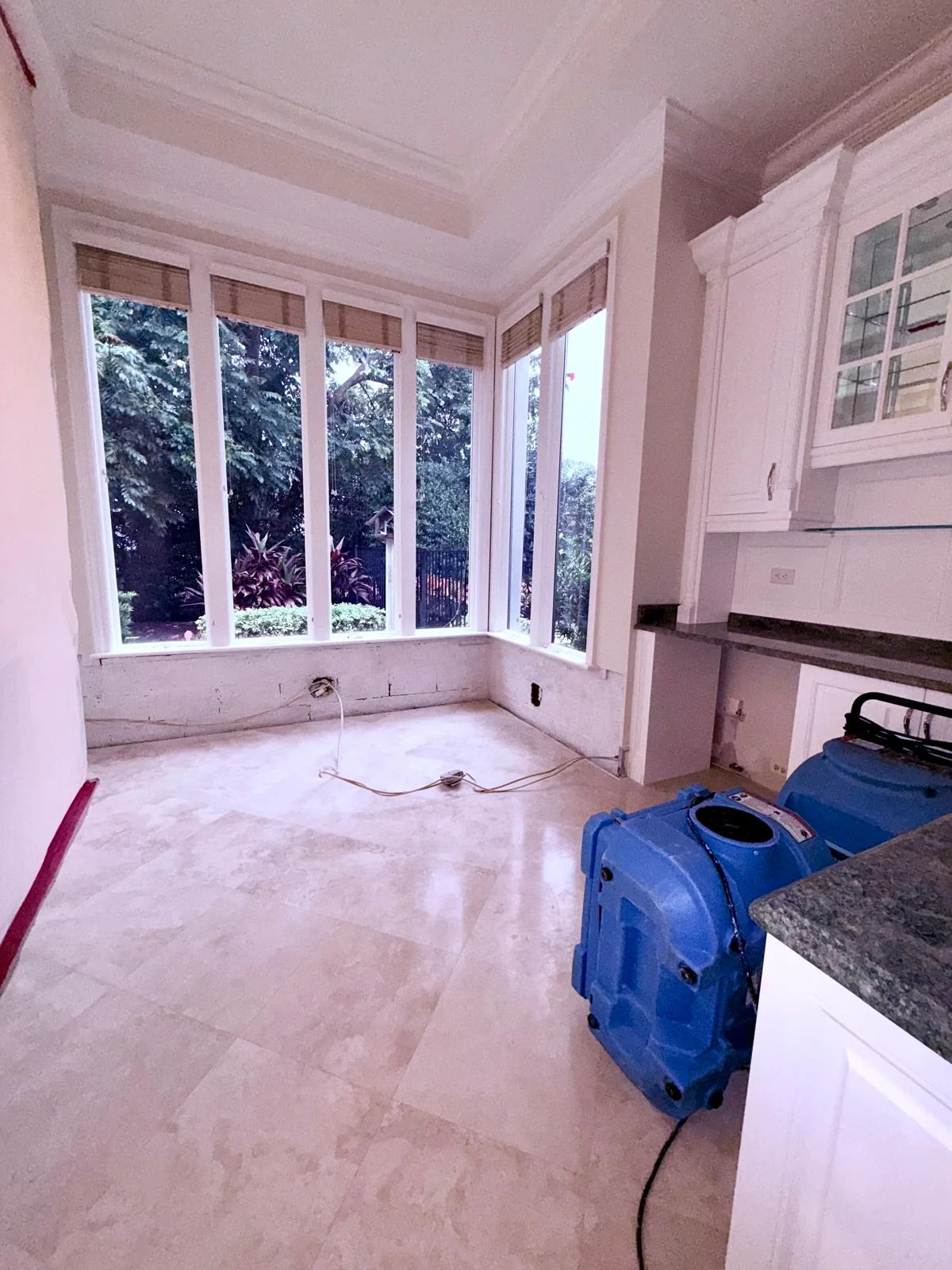
The exact sequence varies by property. Weather, safety, access, damage severity, construction type, utilities, and continuing water entry can change the order, and temporary protection, water removal, and drying may overlap.
The first conversation covers the address, occupants, active water, damaged openings, utilities, access restrictions, and any immediate hazards.
When safe access is available, the team records visible storm damage, water pathways, affected rooms, materials, and conditions that may require another qualified provider.
Authorized board-up or roof tarping may be used for accessible openings when weather, height, structure, utilities, and site conditions permit safe work.
Accessible standing water is removed when applicable, and affected materials are reviewed to guide drying and material decisions.
Air movement, dehumidification, and monitoring may be used according to the affected materials, moisture conditions, access, and authorized scope.
The team coordinates authorized storm cleanup, access, affected-area work, and communication with owners, residents, managers, or other project contacts.
Photographs, work notes, moisture information, equipment records, temporary-protection details, and project communications are organized as applicable.
The county's storm concerns include inland wind, heavy rainfall, thunderstorms, tornadoes, roof and opening damage, humidity, power loss, and delayed discovery.
Long periods of heavy rain can find roof, window, door, and exterior openings while ground conditions and drainage are already stressed.
Strong wind, frequent lightning, intense rain, and localized power interruptions can affect occupied homes and businesses.
Impact can damage roof coverings, screens, windows, doors, exterior walls, and outdoor structures.
Water entering from above can move beyond the visible stain and affect insulation, framing, lights, walls, and flooring.
Warm, humid air can slow drying, especially when electricity, ventilation, or air conditioning is interrupted.
Vacation rentals, seasonal homes, vacant units, and managed properties may have access or notification delays after a storm.
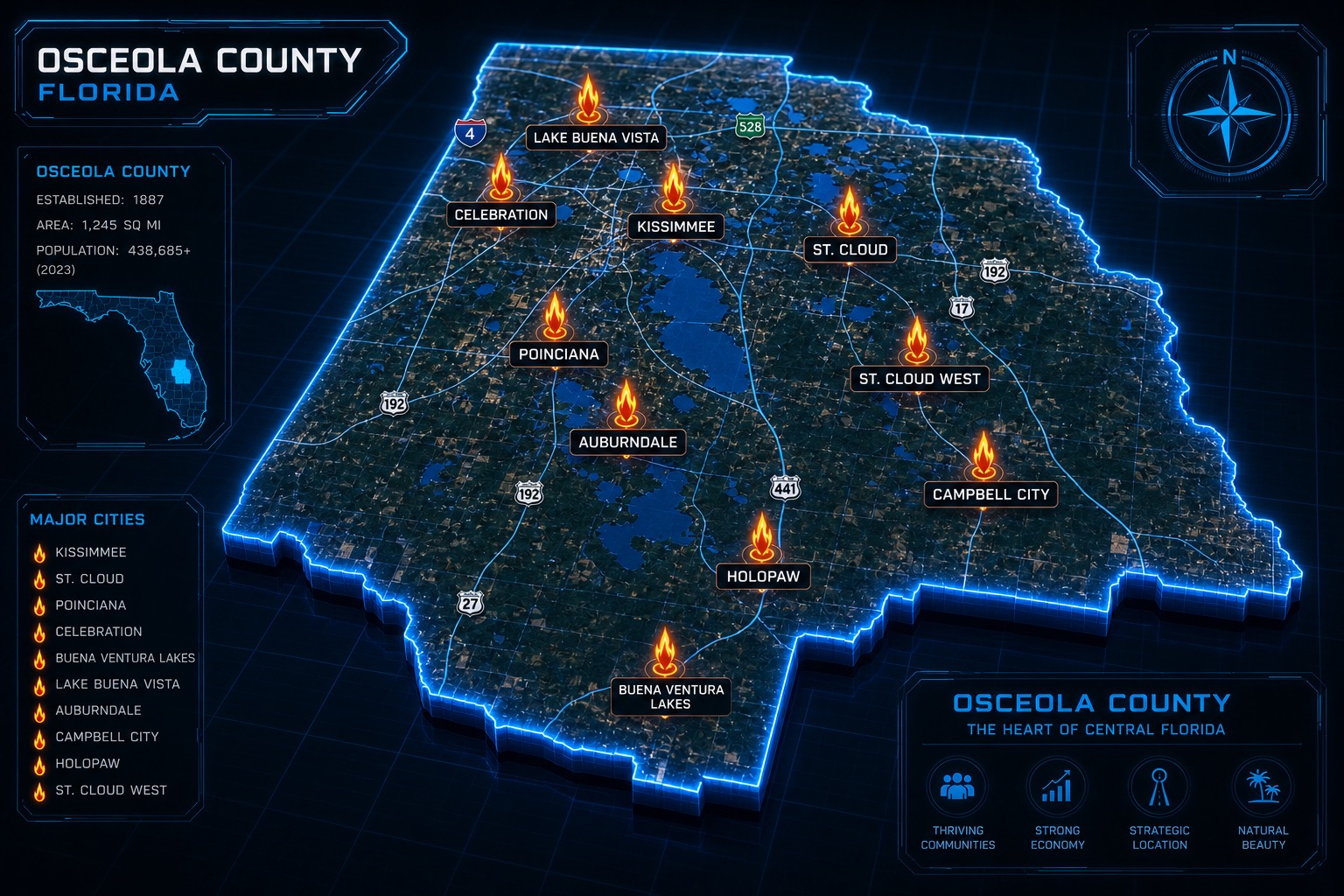
Use these links to review each community's general service area. The destination does not imply that every community has a separate storm-only page.
Homes, apartments, hotels, vacation rentals, retail, restaurants, and managed properties.
View Kissimmee service areaEstablished neighborhoods, growing subdivisions, rentals, commercial buildings, and managed properties.
View St. Cloud service areaResidential communities and managed properties near the Osceola-Polk boundary.
View Poinciana service areaHomes, condos, hotels, offices, and properties with association or manager coordination.
View Celebration service areaDense residential areas, apartments, rentals, and nearby commercial properties.
View Buenaventura Lakes service areaAcreage homes, established properties, and growing residential areas in eastern Osceola County.
View Narcoossee service areaStorm recovery can involve occupants, remote owners, associations, managers, guests, tenants, vendors, and business operations. The communication plan should fit the property.
Single-family homes, condos, and townhomes may need temporary protection, water mitigation, drying, and clear communication with occupants or associations.
Residential restorationApartments, multifamily buildings, and HOA communities can require owner, resident, manager, maintenance, and shared-area coordination.
Property-manager restorationRemote owners, guests, booking schedules, furnishings, housekeeping teams, and manager approvals can shape access and restoration planning.
Vacation-rental restorationRetail, restaurants, offices, warehouses, and other businesses may need phased access, temporary protection, area-specific records, and operational coordination.
Commercial restorationThese details focus on the storm-response capabilities supported for this page. Ask for current company documents and project-specific scope before authorizing work.
Hugo's public emergency line accepts active property-damage requests day and night.
Temporary protection is available for approved, accessible roof, window, door, storefront, and wall openings when conditions permit safe work.
Storm-created interior water can be addressed through extraction, moisture review, structural drying, and monitoring when applicable.
The restoration path can be coordinated for homes, rentals, managed buildings, hospitality properties, and businesses.
Applicable photographs, condition notes, moisture information, equipment records, and temporary-protection details can support the restoration file.
Hugo provides restoration documentation support without promising coverage, reimbursement, claim approval, or payment.
Photograph and record only what can be reached safely. Do not enter unstable rooms, approach electrical hazards, or climb onto a damaged roof for documentation.
Insurance coverage and claim decisions are determined by the applicable carrier and policy. Hugo does not guarantee coverage, reimbursement, or claim approval.
Helpful information about safety, temporary property protection, water intrusion, structural drying, prolonged moisture, documentation, and service coverage.
Hugo Fire & Water Restoration provides 24/7 storm damage help across Osceola County. Available services include emergency board-up, temporary roof tarping, water extraction, structural drying, and organized restoration documentation. The actual response depends on safe access, active weather, utilities, property conditions, and the authorized scope.
Call 911 first for downed lines, fire, gas odor, active flooding, medical danger, or structural instability. Keep people away from wet electrical areas, sagging ceilings, broken glass, and unstable rooms. Photograph visible damage only from a safe position, keep emergency receipts, and call for the property-protection or water-mitigation help you need.
No, do not climb onto a storm-damaged roof. Wet surfaces, hidden punctures, loose materials, wind, electrical hazards, and structural damage can make roof access dangerous. Describe what you can see from the ground or a safe interior location and allow qualified parties to determine whether access is appropriate.
Yes, Hugo provides emergency board-up for approved, accessible windows, doors, storefronts, and wall openings when conditions permit safe work. Board-up is temporary protection against weather exposure and unauthorized entry. It does not replace permanent glass, door, wall, security-system, or structural repair.
Yes, Hugo provides temporary roof tarping when an accessible roof opening can be approached safely and the work is authorized. Tarping may reduce additional rain intrusion while permanent repair is coordinated. It is not permanent roofing work and cannot guarantee that every water pathway will stop.
Rain can move through insulation, ceiling materials, wall cavities, cabinets, and flooring before it becomes visible. After immediate hazards and the entry pathway are addressed, the work may include water extraction, moisture observations, structural drying, material decisions, and documentation based on accessible conditions.
Technicians combine visible-condition review with material-appropriate moisture observations and readings when applicable. The goal is to identify accessible affected areas and guide drying decisions, not to certify structural safety or promise that every concealed condition has been found. Some assemblies require additional access or specialist evaluation.
Structural drying should be discussed once life-safety hazards, active weather, access restrictions, and continuing water entry are addressed. The sequence varies by property because board-up, tarping, water removal, moisture review, and drying may overlap. No single timing promise fits every storm loss.
Yes, prolonged moisture after a storm can create conditions that support mold growth. Roof openings, wet insulation, damp drywall, cabinets, flooring, high humidity, power outages, and delayed discovery can all contribute. Drying reduces moisture but does not guarantee that mold will not develop; a separate mold-remediation path may be needed.
Yes, Hugo can organize applicable photographs, affected-area notes, moisture information, equipment and drying records, temporary-protection details, authorizations, and project communications. The insurance carrier and policy determine coverage, reimbursement, approval, and payment, and Hugo does not guarantee any claim outcome.
Hugo serves listed communities throughout Osceola County, including Kissimmee, St. Cloud, Poinciana, Celebration, Buenaventura Lakes, and Narcoossee. Availability and timing depend on the exact address, active weather, road conditions, safe access, utilities, current demand, and crew availability.
Use these public sources for alerts, forecasts, preparedness, local stormwater information, and documentation guidance. They do not verify Hugo's services and are not a substitute for emergency authorities.
County emergency alerts, preparedness, shelter, response, and recovery information.
Open official resourceOfficial East Central Florida forecasts, radar, watches, warnings, and severe-weather information.
Open official resourceFlorida hurricane, household, warning, evacuation, and post-storm preparedness guidance.
Open official resourceLocal drainage, stormwater, localized flooding, floodplain, and reporting information.
Open official resourceFederal guidance about safely photographing damage and keeping records before cleanup changes the scene.
Open official resourceChoose the page that matches the immediate condition: an exposed opening, interior water, standing water, retained moisture, prolonged dampness, or documentation needs.
Central Florida storm-response guidance for temporary protection, water mitigation, drying, safety, and documentation.
Review this serviceTemporary roof protection when an accessible opening continues to admit rain.
Review this serviceTemporary protection for accessible windows, doors, storefronts, and wall openings.
Review this serviceWater removal, material review, structural drying, monitoring, cleanup, and documentation.
Review this serviceAccessible standing-water removal and the transition to structural drying.
Review this serviceMoisture observations, air movement, dehumidification, monitoring, and drying records.
Review this serviceA separate remediation path when prolonged storm moisture contributes to mold-related conditions.
Review this serviceOrganized restoration records without coverage, reimbursement, approval, or payment guarantees.
Review this serviceAvailable restoration services and community coverage across Osceola County.
Review this serviceCall to discuss damaged openings, roof intrusion, standing water, wet materials, safe access, and the restoration help the property may need.
Call 911 first for immediate electrical, structural, flood, fire, gas, or medical danger.
When your property needs storm damage restoration in Osceola County, keep people away from hazards. Note when storm damage restoration in Osceola County began and whether conditions are changing.
Reviewed by Hugo Fire & Water Restoration content team on 2026-07-31.
Before storm damage restoration in Osceola County, leave unsafe areas. Describe only storm damage restoration in Osceola County conditions that you can see safely.
For storm damage restoration in Osceola County, avoid downed lines, damaged roofs, and unstable openings.
For storm damage restoration in Osceola County, share the address, source, affected rooms, and timeline. Also explain access and the authorized contact for storm damage restoration in Osceola County.
Keep safe photos, dates, and room names for storm damage restoration in Osceola County. Save contacts and completed-work notes about storm damage restoration in Osceola County.
Yes. Tell Hugo what you can safely see for storm damage restoration in Osceola County. Explain when storm damage restoration in Osceola County began and whether the source is still active.
Hugo can organize factual records for storm damage restoration in Osceola County; your insurance policy and carrier determine coverage.
Call 24/7 when storm damage restoration in Osceola County needs attention. Use the request form for safe storm damage restoration in Osceola County details.