Safety and reported-source screening
Intake identifies hazards, restrictions, the reported entry pathway, occupancy, utilities, access, and possible specialist needs.
Hugo provides safety-first intake, flood-related water removal when conditions allow, affected-material assessment, controlled cleanup, moisture inspection, structural drying, odor evaluation, and restoration documentation for residential and commercial properties.
Call 911 first for immediate life-safety danger. Avoid floodwater when the source, depth, electricity, debris, or other hazards are unknown.
Dispatch coordination begins within 15 minutes after intake. Arrival time and service availability vary with safety, access, weather, roads, property location, demand, and crew availability.
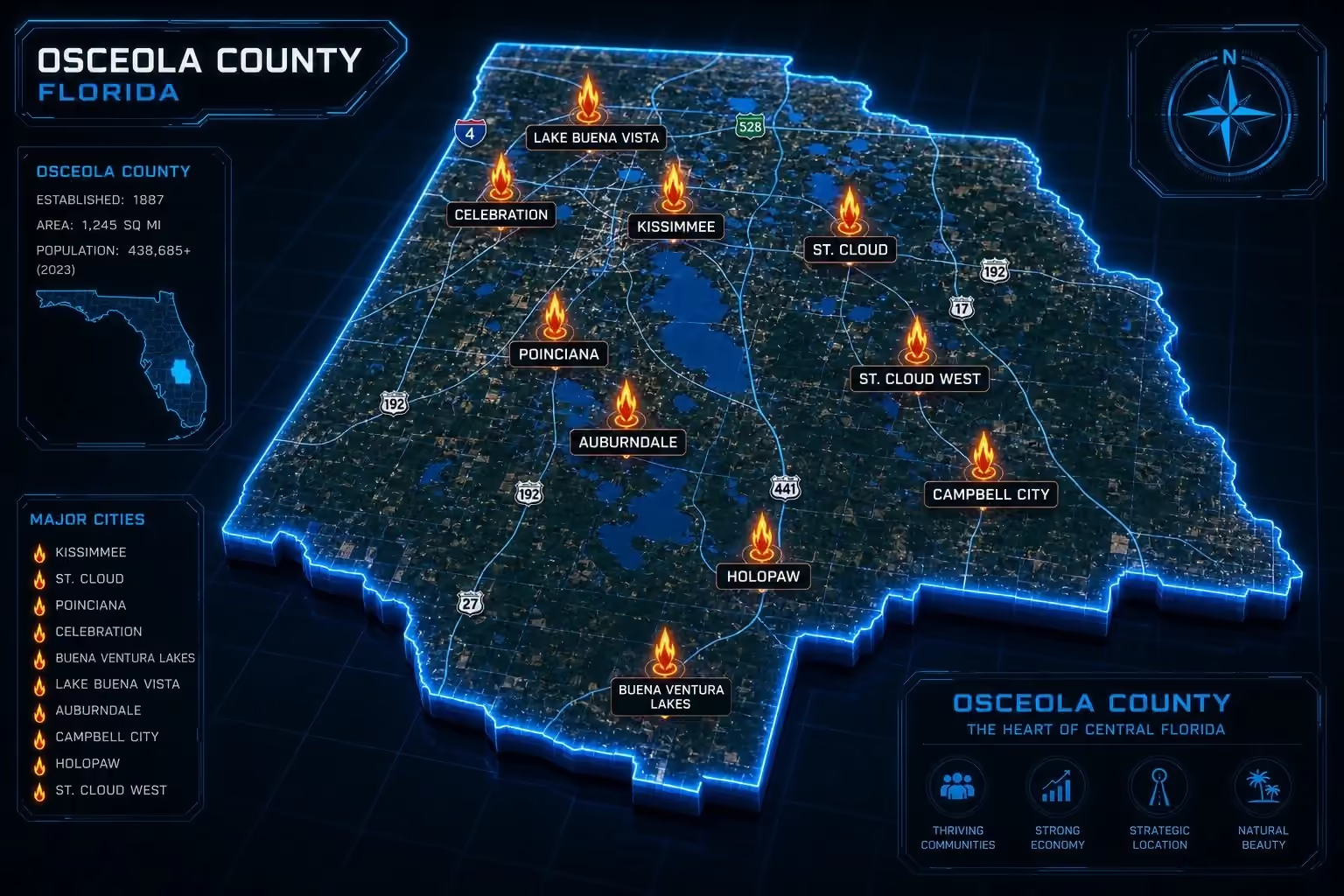
Hugo Fire & Water Restoration provides 24/7 flood-cleanup intake for homes and businesses across Osceola County, including Kissimmee, St. Cloud, Poinciana, Celebration, Buenaventura Lakes, and Narcoossee. Services may include water removal, affected-material assessment, controlled cleanup, moisture evaluation, structural drying, odor evaluation, and insurance documentation support after safety and scope screening.
Hugo evaluates flood-related damage before confirming the work it can provide. Services may include water removal, affected-material assessment, controlled cleanup, structural drying, odor evaluation, and documentation. Wastewater, hazardous substances, regulated contaminants, specialized environmental testing, or other conditions outside Hugo’s services may require an appropriately qualified specialist.
Do not self-classify water or contamination. Describe the reported source, entry pathway, visible conditions, odor, mud or debris, and known hazards during intake.
Protect people first. Floodwater, electricity, debris, instability, and unknown conditions can make cleanup unsafe.
Call 911 or the appropriate authority for electrical danger, instability, medical risk, fire, gas odor, trapped occupants, or another life-safety threat.
Do not enter water when its source, electrical conditions, depth, debris, or other hazards are unknown. Follow official access instructions.
Restrict affected rooms and water paths. Do not enter simply to retrieve belongings.
Do not touch wet outlets, appliances, cords, switches, panels, or equipment—or reach a shutoff through water.
Record water lines, entry points, rooms, mud, debris, and belongings without delaying urgent protection or approaching a hazard.
Avoid dragging wet debris, furnishings, or contents through unaffected rooms until a safe movement path is set.
Share the address, reported source, active water, affected rooms, mud or debris, known hazards, occupants, and access instructions.
Call first. Share the exact address, entry pathway, active water, affected rooms, visible water line, mud or debris, electrical concerns, occupants, and safe-access details.
Flood cleanup is a safety- and source-screened response to water entering occupied property from rain, stormwater, drainage overflow, or another flood pathway. Work can include water removal, mud and debris review, material decisions, drying, odor evaluation, and documentation after source, exposure, access, and contractor scope are understood.
Intake identifies hazards, restrictions, the reported entry pathway, occupancy, utilities, access, and possible specialist needs.
Accessible water may be removed when source conditions, utilities, access, handling, and authorized scope allow it.
Sediment, displaced contents, sharp material, and outdoor debris can change work-zone, cleaning, removal, and referral decisions.
Drywall, insulation, flooring, trim, cabinets, doors, contents, and inventory are considered by exposure, damage, odor, moisture, and access.
Compatible surfaces may receive controlled cleaning; not every flood-exposed material can be cleaned or restored.
Readings help locate remaining moisture and guide air movement, dehumidification, monitoring, and access decisions.
Evaluation connects remaining odor to residue, materials, cavities, contents, or damp assemblies before next steps are set.
Applicable photos, observations, readings, drying logs, cleanup notes, and handoff information explain authorized work.
These services can connect, but the water source and current property conditions determine the next service.
Begins with added source and safety screening. The work may lead to water removal, controlled cleanup, material decisions, drying, documentation, or specialist referral.
Flood cleanup in Osceola CountyFocuses on bulk-water removal, wet-carpet extraction, starting-condition records, and the transition to drying when property conditions allow.
Osceola water-extraction serviceMay combine extraction, moisture mapping, structural drying, cleaning, monitoring, affected-material work, documentation, and repair coordination.
Osceola water-restoration serviceAddresses storm-created property damage and may coordinate board-up or roof tarping before safe interior water work can proceed.
Osceola storm-restoration serviceOsceola is inland. Rain, saturated ground, drainage, lakes, wind-driven rain, humidity, and property access shape response.
Osceola County wet season
Intense rain can overload local drainage and create ponding. Address, elevation, construction, drainage, and the event determine actual risk.
Inland hurricane and tropical-storm exposure
Inland Osceola has no direct coastal surge. Prolonged rain, saturated ground, drainage overload, wind-driven rain, openings, and humidity matter here.
Lake Tohopekaliga, Shingle Creek, and the Kissimmee River system
These systems provide hydrologic context but do not prove that a specific property will flood.
Doors, garages, windows, and low openings
Water can cross thresholds and damaged openings, then move into floors, cabinets, walls, and adjoining spaces.
Kissimmee, Celebration, and managed communities
Remote owners, guests, HOAs, managers, gates, keys, and vendor authorization can affect safe access.
US 192 lodging, restaurants, retail, and public-facing properties
Guests, tenants, inventory, equipment, operating hours, and staged work zones can change sequencing.
St. Cloud, Narcoossee, Poinciana, and East Osceola growth
Newer, older, multifamily, manufactured, and mixed-use properties have different assemblies, utilities, access, and stakeholders.
Dry-looking surfaces can hide water, residue, or odor in connected and layered materials.
Water can remain below carpet, padding, laminate, wood, underlayment, or adhesives.
Drywall, trim, joints, and wall-floor connections can retain moisture or residue beyond the water line.
Cabinet boxes, backs, voids, and composite materials can restrict inspection and airflow.
Insulation can hold water against framing while cavities carry moisture beyond the first room.
Connected materials can remain damp after the surface feels dry; readings and access guide evaluation.
Slabs, jambs, casings, paint, and trim can swell, separate, stain, or retain moisture.
Furniture, boxes, textiles, records, stock, and equipment may need separate handling decisions.
Receded water can leave material that affects cleaning, removal, drying, and odor decisions.
Source and scope come first
Hugo can review the reported conditions, explain which restoration services may be appropriate, and identify when another qualified specialist may be needed.
Authorities, source, access, utilities, structure, hazards, and authorization can change the sequence. No fixed timeline is promised.
Intake identifies hazards, restrictions, occupants, utilities, source status, water depth, and affected areas.
What to expect: Share only what can be observed safely.
The team notes rainfall, stormwater, openings, drainage, backups, uncertain pathways, mud, debris, and odor.
What to expect: Describe visible conditions plainly; do not self-classify them.
When safe and authorized, accessible rooms, water lines, entry points, materials, contents, and constraints are documented.
What to expect: Authorities, gates, approvals, tenants, or weather may affect access.
Conditions are reviewed before extraction, cleaning, drying, or removal begins.
What to expect: The next step may be Hugo restoration work, limited stabilization, or specialist referral.
Accessible water may be removed with a method suited to depth, surface, source, access, and utilities.
What to expect: Removal does not prove concealed materials are dry.
Sediment, debris, porous materials, and contents are evaluated by exposure, condition, access, odor, and practicality.
What to expect: Outcomes are not promised before evaluation.
Compatible surfaces may receive controlled cleaning when conditions, methods, protection, and authorization support it.
What to expect: Unknown or specialized hazards can require referral.
Readings define accessible wet materials; air movement, LGR dehumidification, access, and monitoring support drying when appropriate.
What to expect: Equipment and duration follow measured progress.
Odors, damp assemblies, visible growth, changed materials, and newly exposed areas are reviewed.
What to expect: A separate specialist scope may be recommended.
Applicable records describe conditions, authorized work, readings, progress, limitations, and remaining needs.
What to expect: Coverage decisions remain with the carrier and policy.
Source, exposure, material, damage, residue, moisture, odor, access, safety, scope, and authorization guide the decision.
Used when exposure, safety, material compatibility, access, and the planned restoration work support controlled cleaning.
Used when an assembly is suitable for safe, monitored drying guided by readings and material response.
Used when material is damaged, unsuitable for in-place treatment, blocks access, or cannot remain in the plan.
Used when wastewater, regulated contaminants, testing, structural danger, or another condition requires an appropriately qualified specialist.
No material is guaranteed salvageable, cleanable, dryable, removable, or restorable before the property is evaluated.
Surfaces, seams, concealed layers, cavities, contents, and connected assemblies respond differently.
Lower sections, facings, joints, and wall-floor connections can absorb water or residue; source, readings, condition, and access guide decisions.
Type, exposure, access, compression, residue, and adjacent materials determine whether in-place drying is practical.
Trim can conceal wet edges, swell, separate, or collect residue; removal is not automatic.
Boxes, backs, voids, connections, and composite materials can trap moisture beyond visible faces.
Water can remain below the surface and move toward walls; carpet, padding, and subfloor need separate decisions.
Seams, underlayment, adhesives, and resistant layers can conceal moisture or show dimensional damage.
Boards, finishes, fasteners, subflooring, and moisture gradients respond differently; appearance cannot establish the outcome.
Structural layers may remain wet beneath finishes. Readings, access, source, and integrity guide evaluation.
Lower edges can absorb water, change dimension, or retain residue; construction and exposure affect the decision.
Furniture, textiles, documents, stock, and equipment require condition, ownership, documentation, and capability decisions.
Equipment is selected for the property's conditions and drying needs. Not every project uses every item.
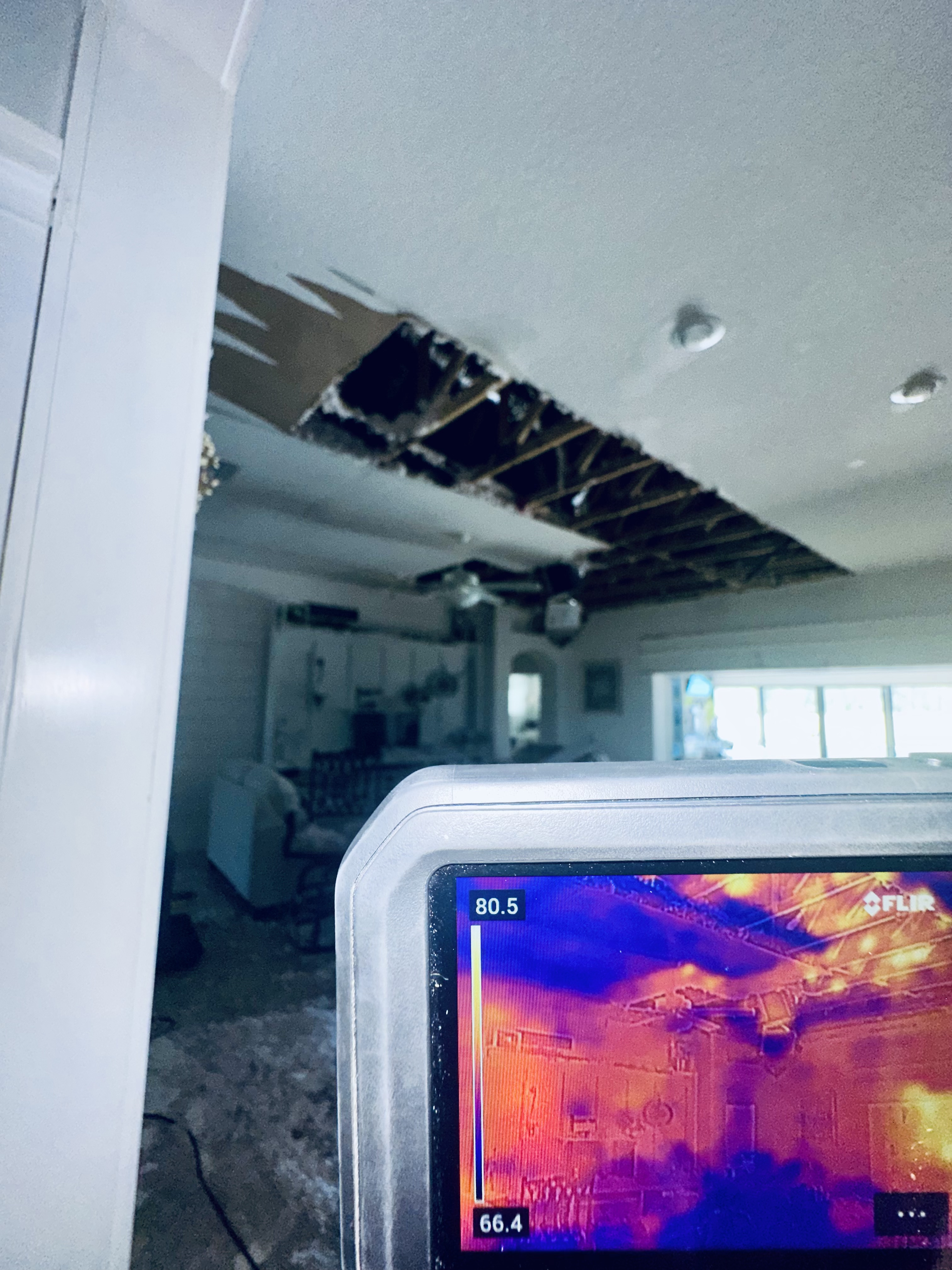
Pumps or extraction tools may remove accessible water when depth, source, access, utilities, handling, and scope permit.
Material readings define affected areas, track change, and support drying or removal decisions.
Infrared patterns direct closer inspection but do not prove moisture without confirming readings.
Directed airflow can support evaporation when source, material, occupant, electrical, and work-zone conditions allow it.
Low-grain refrigerant units remove vapor from controlled drying areas; selection follows conditions and progress.
Worker protection, work-zone controls, and material-appropriate tools depend on conditions and authorized scope.
Property use changes authorization, occupants, operations, utilities, communication, and access.
Residential flood response may involve occupants, pets, belongings, shared assemblies, remote owners, associations, gates, keys, and multiple decision-makers.
Commercial planning considers employees, tenants, guests, operating hours, inventory, equipment, utilities, access authority, and work zones that may need temporary separation.
Hugo combines local intake, professional credentials, material evaluation, documentation, bilingual support, and clear referrals.
Hugo considers source, exposure, access, hazards, materials, and service needs before describing the work.
Hugo is based in St. Cloud and serves homes and businesses throughout Osceola County.
Coordination begins within 15 minutes after intake; arrival time varies with the property and conditions.
IICRC-certified technicians support applicable restoration work. Specialized conditions may require another qualified provider.
Visible water removal does not prove concealed assemblies are dry or suitable to remain.
Wastewater, regulated contamination, testing, structural danger, and other specialized conditions may require a qualified party.
Applicable photos, observations, readings, equipment information, progress records, and limitations help explain the authorized work.
Bilingual intake helps callers describe sources, hazards, affected rooms, and access.

Company leadership
Hugo Garcia leads Hugo Fire & Water Restoration as founder and CEO, guiding the company's restoration operations and customer service.
Meet Hugo GarciaSee what customers say about working with Hugo for restoration services.
Read Customer ReviewsA factual record helps authorized stakeholders understand observed conditions and performed work.
Hugo Fire & Water Restoration can assist with restoration and insurance documentation. Coverage decisions and claim outcomes are determined by the insurance carrier and policy.
Available records depend on the authorized scope and what can be safely observed or performed. Do not enter a dangerous area or delay emergency protection solely to create documentation.
Insurance Documentation Details
Call with the exact address. Safety, access, roads, demand, and crew availability affect routing.
Hospitality, multifamily, vacation-rental, and commercial properties can add guest, tenant, manager, and scheduling needs.
Flood cleanup in KissimmeeHugo’s base serves residential, lake-adjacent, commercial, and managed properties across eastern Osceola.
Flood cleanup in St. CloudThe exact address, access route, drainage, and county jurisdiction help with intake near the Osceola–Polk line.
Restoration services in PoincianaManaged communities, multifamily, hospitality, associations, and remote stakeholders add access dependencies.
Restoration services in CelebrationResidential density, rentals, retention systems, and drainage make property-specific conditions important.
Restoration services in Buenaventura LakesEstablished acreage, new subdivisions, lake and wetland context, and gates shape access in east Osceola.
Restoration services in NarcoosseeHugo is based at 4551 Hunting Lodge Dr in Saint Cloud and serves communities throughout Osceola County. Call with the exact property address to confirm service availability. For property-specific flood risk, use official address-level flood maps.
Source and current conditions determine the next focused service.
Central Florida safety, scope, extraction, drying, and referral guidance.
Service detailsStanding-water removal and the transition to drying.
Service detailsThe broader indoor water-loss recovery path.
Service detailsReadings, air movement, dehumidification, monitoring, and records.
Service detailsWind, roof, opening, debris, and rain-intrusion response.
Service detailsTemporary roof protection when access and conditions allow.
Service detailsTemporary protection for accessible windows, doors, storefronts, and openings.
Service detailsA separate licensed path when mold conditions require it.
Service detailsRestoration records without coverage, reimbursement, or payment promises.
Service detailsActual conditions determine the safe cleanup, drying, material, documentation, and referral scope.
Flood cleanup begins with safety, source, exposure, access, and service screening. Work may include standing-water removal, affected-material assessment, controlled cleaning, moisture mapping, structural drying, odor evaluation, documentation, and next-step planning. Specialized conditions may require a qualified provider.
Hugo Fire & Water Restoration provides 24/7 flood-cleanup intake for homes and businesses across Osceola County, including Kissimmee, St. Cloud, Poinciana, Celebration, Buenaventura Lakes, and Narcoossee. Services depend on safety, source conditions, access, affected materials, and the work required.
Do not enter when water depth, source, electricity, structure, debris, or other hazards are unknown. Follow emergency, utility, evacuation, and reentry instructions. Call 911 or the appropriate authority for immediate life-safety danger.
From a safe location, photograph visible water lines, entry points, affected rooms, flooring, lower walls, cabinets, mud, residue, debris, contents, and exterior conditions. Do not enter water, delay emergency protection, or approach a hazard solely to document it.
Yes. Moisture can remain in flooring assemblies, lower drywall, baseboards, cabinets, toe-kicks, insulation, subflooring, framing, wall cavities, and contents after visible water is gone. Material-specific readings help evaluate accessible conditions.
Drywall and insulation are evaluated by water source, exposure conditions, physical damage, residue, moisture, access, adjacent materials, and practical restoration options. They are not automatically promised cleanable, dryable, removable, or salvageable before evaluation.
Mud, residue, and debris are reviewed for source, exposure, sharp or unstable material, access, affected surfaces, and worker protection. Controlled cleanup or removal may be possible; unknown or specialized hazards may require another qualified provider.
Structural drying may follow water removal and controlled cleanup when source, exposure, safety, material, power, and access conditions allow it. Readings, air movement, dehumidification, monitoring, and final drying decisions depend on the property.
Water extraction focuses on removing accessible liquid water. Flood cleanup begins with broader source and safety screening because outdoor water can bring mud, residue, debris, unknown exposure conditions, material decisions, and possible specialist-referral needs.
Yes. Hugo accepts requests from homes, condos, apartments, managed communities, vacation rentals, hotels, restaurants, retail, offices, warehouses, schools, medical offices, and other commercial properties within its service area. Scope and scheduling depend on actual conditions and authorization.
Depending on the authorized work, records may include photographs, water-line and source notes, affected-room and material observations, extraction details, moisture readings, drying logs, cleanup notes, material-removal records when applicable, communication, limitations, and handoff notes.
Hugo does not offer specialized cleanup for wastewater, infectious materials, chemical spills, environmental testing, or regulated contamination. Report any odor, visible waste, chemicals, medical sharps, or other concern during intake so the team can direct you to an appropriately qualified specialist when needed.
Use official sources for preparedness, drainage, maps, weather, safety, and address-specific floodplain information.
County emergency notifications, preparedness, response, shelter, and recovery information.
Open official resource (opens in a new tab)Local stormwater systems, drainage responsibilities, floodplain questions, localized flooding, and reporting channels.
Open official resource (opens in a new tab)Address-level map assistance, flood-zone information, elevation-certificate context, and county contacts.
Open official resource (opens in a new tab)The official federal source for searching current flood hazard maps and related products by address or location.
Open official resource (opens in a new tab)Official East Central Florida forecasts, flood and severe-weather warnings, radar, and safety information.
Open official resource (opens in a new tab)Public-health guidance about floodwater, electrical hazards, cleanup precautions, and post-disaster safety.
Open official resource (opens in a new tab)Call Hugo for 24/7 flood-cleanup intake across Osceola County. Share the exact address, reported source, active water, affected rooms, water line, mud or debris, known hazards, occupancy, and safe-access details.
Hugo Fire & Water RestorationCall 911 first for life-safety danger. Conditions requiring specialized cleanup or testing may need a qualified specialist.
Describe safe observations for flood cleanup in Osceola County. Note when you first noticed flooding in Osceola County and whether conditions change.
Reviewed by Hugo Fire & Water Restoration on .
Leave unsafe areas and keep others away from hazards. Describe flooding only from a safe location.
Do not enter hazardous areas. Avoid wet electrical areas. Report active water only when safely observable.
For flood cleanup in Osceola County, share the address, affected areas, and timing. For flood cleanup in Osceola County, identify known sources. For flood cleanup in Osceola County, provide access instructions and authorized contacts.
Keep safe photos and dated area labels for flood cleanup in Osceola County. Save contacts, receipts, messages, and completed-work notes for Osceola County flood cleanup.
Yes, discuss safe observations when asking about flood cleanup in Osceola County. Explain when you noticed flooding in Osceola County. For flood cleanup in Osceola County, report whether any known source remains active.
Hugo can organize factual incident and completed-work records for flood cleanup in Osceola County. Your policy and insurance carrier determine coverage.
Call Hugo 24/7 about flood cleanup in Osceola County. Send safe flood cleanup in Osceola County details through the request form.